
You go before me and follow me. You place your hand of blessing on my head. [Psalm 139:5 (NLT)]
 Our recent trip to the Canadian Rockies reminded me of a hiking trip I took there with my daughter more than twenty years ago. With two guides for our group, one acted as lead and tied orange ribbons along the trail to mark the way. Knowing that we are to leave nothing in the forest but footprints, a second guide (the sweep) followed the last hiker and removed the trail markers. That morning’s hike was a trek up to a mountainside teahouse and my daughter and I (both fast walkers) wanted to have time at the top to explore. Confident we couldn’t get lost, we shot ahead of the guide, promising to meet at the teahouse. Apparently, there was a fork in the trail we missed in our haste; we veered left when we should have stayed right. After a while, it occurred to us that we seemed to be going down when the trail should be going up. Nevertheless, expecting an uphill just around the next turn and unwilling to admit we may have erred, we continued down. When we arrived at the same lake from which we’d started, we saw the error of our ways, turned around, and made the hike back uphill. By the time we reached the main trail, the trail markers placed by the lead guide had already been removed by the sweep. Knowing we needed to go further uphill, we continued our trek and eventually rejoined our group at the teahouse. In our case, the first really were the last and we barely had enough time to eat lunch before starting back down the mountain.
“You go before me and follow me,” David said about God in Psalm 139. Had my daughter and I allowed the lead to set the pace, the same could have been said about our hiking guides. Sure that we knew the way, however, we charged ahead, lost our way, and went down instead of up. Sarah charged ahead of God by giving Hagar to Abraham, Saul charged ahead by making a sacrifice without waiting for Samuel, and the prodigal son charged ahead when he demanded his inheritance before his father’s death. As so often happens when people take matters into their own hands rather than waiting for God, they discovered that things can go downhill quickly and often with tragic consequences.
Fortunately, God is in front of us—leading us, marking the way, lighting the path ahead, and smoothing the trail. He also is behind us—lifting us when we stumble, strengthening us when we weaken, encouraging, correcting and protecting us. Like our hiking guides, however, He will allow us to barge ahead and make mistakes along the trail. Fortunately, along with allowing us the freedom to turn the wrong direction, God allows us to make U-turns! Unlike our hiking guides, however, we can never leave Him in the dust nor will He ever leave us behind Him. Moreover, He won’t remove the signs that show us the right path. He is right there, both in front and behind us, leading and sweeping, like the extraordinary guide that He is.
Then I will lead the blind along a way they never knew; I will guide them along paths they have not known. I will make the darkness become light for them, and the rough ground smooth. These are the things I will do; I will not leave my people. [Isaiah 42:16 (NCV)]
If you go the wrong way—to the right or to the left—you will hear a voice behind you saying, “This is the right way. You should go this way.” [Isaiah 30:21 (NCV)]
Copyright ©2017 jsjdevotions. All rights reserved.
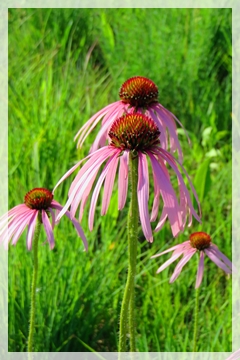 Not all of us have the benefit of eighty years’ experience as did Moses when God called on him. Take David, for example, he was just a young shepherd boy when called on to become both warrior and king. Peter and John were fishermen; nothing in their backgrounds prepared them for their roles as Apostles and founders of a church. Mary was just a girl, in the town of Nazareth, engaged to be married to a local carpenter. What preparation did she have to become the mother of God? Gideon was a farmer, hiding from the Midianites in a wine press while threshing wheat, when God called to him. In fact, Gideon protested that, as the most insignificant member of the weakest clan, he couldn’t be the one to rescue Israel.
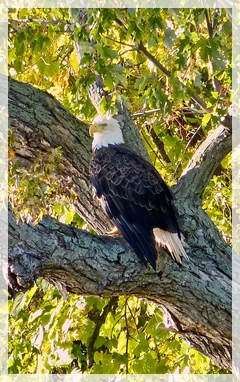 The eagle is mentioned more than any other bird of prey in the Bible. References are made to its swiftness of flight, ability to soar high in the air, excellent vision, the way it sets its nest in high places, and the strength of its wings. The above two verses about eagles, however, are more figurative than literal and have no scientific basis. Although mother eagles do hover over their young, they cannot carry them. A bald eagle’s lifting power is only about a third of its weight. An eaglet ready to fly is as heavy as its parents. If Mrs. Eagle tried to carry junior, they’d both fall! The second verse about being renewed like an eagle is probably connected to an ancient belief that every ten years the eagle disappeared into the sun, dove down into the sea with the setting sun, and emerged young again. There’s a similar urban myth that at 30 years of age, the eagle flies to a high mountain top and makes the difficult decision between death or the painful plucking out of all of its feathers and the destruction of its beak and talons. After waiting several months for everything to grow back again, it will be transformed and the refreshed bird will be able to live another 30 years. Not so; like the rest of us, when it’s time to grow old and die, the eagle has no choice. Like other birds, however, when the eagle molts, old worn feathers will drop and new ones will replace them.
 I passed on to you what was most important and what had also been passed on to me. Christ died for our sins, just as the Scriptures said. He was buried, and he was raised from the dead on the third day, just as the Scriptures said. [1 Corinthians 15:3-4 (NLT)]
 We all know the speed limit, but most of us break it. Obviously knowing a law is not enough to make us obey it. We know the guidelines for a healthy lifestyle, but most of us still eat and drink more than we should and exercise far less than recommended. Evidently, self-determination is not enough to make us behave as we should. We may believe in Jesus, but we still succumb to sin. Clearly, calling oneself a Christian doesn’t create an invisible shield against temptation and bad behavior.
 Devotions of the Heart