
If God is for us, who can ever be against us? Since he did not spare even his own Son but gave him up for us all, won’t he also give us everything else? Who dares accuse us whom God has chosen for his own? No one—for God himself has given us right standing with himself. Who then will condemn us? No one—for Christ Jesus died for us and was raised to life for us, and he is sitting in the place of honor at God’s right hand, pleading for us. [Romans 8:31-34 (NLT)]

Around 520 BC, the prophet Zechariah revealed God’s future deliverance through the Messiah to the Jews who had just returned to Jerusalem from Babylonian captivity. In Zechariah’s fourth vision, the high priest Jeshua stood before an angel of the Lord. Instead of being attired in the spotless white linen robe and turban of a priest, Jeshua’s clothing was filthy (the Hebrew word used was tsow’ and referred to the filth of excrement). Standing to the angel’s right, in a court prosecutor’s position, was Satan. The Hebrew word śāṭān means “accuser” or “adversary” and Satan was living up to his name by making accusations that the unclean priest was unworthy of standing before the Lord. Calling the priest “a burning stick that has been snatched from the fire,” the Lord rejected the accuser’s charges.
In Zechariah’s vision, Jeshua symbolized the nation of Israel, his foul clothing the sins of the people, and his rescue from the coals the nation’s release from their Babylonian exile. Satan, of course, had a vested interest in his accusations; if he could get God to reject Israel, God’s plan of redemption would be thwarted. It wasn’t as if God didn’t recognize Israel’s sin; they’d been punished with seventy years of captivity. God, however, hadn’t turned from His people because of their sins; having delivered them back to Jerusalem, they were still His people.
After the angels around Jeshua took off his filthy garments, the priest was told that his sins were removed and he was given new clothes and a clean turban. On the front of the priest’s turban would have been a medallion with the words “Holy to the Lord.” Just as Jeshua was reinstated as a priest with his clean priestly attire, the nation of Israel was cleansed and restored as a priestly nation and made holy to the Lord! What an amazing image this is. The filthy robe of sins was removed and replaced with garments of God’s righteousness.
What followed was a Messianic vision in which the Lord of Heaven’s Armies promised the coming of a servant called “the Branch,” the removal of all the land’s sins in a single day, and an era of peace and blessings when “each of you will invite your neighbor to sit with you peacefully under your own grapevine and fig tree.” [3:10]
What do Zachariah’s words from over 2,500 years ago mean to us? God’s chosen servant was Jesus; He was the promised Branch stemming from Adam, Abraham, and David. The day Jesus died on the cross was the single day when all our sins were removed! Although Satan continues to accuse us, Jesus is now at God’s right hand and, instead of indicting us, He is pleading for us!
Just as God didn’t reject Israel, He hasn’t rejected us. Because of God’s grace, like Jeshua, we can hand off our sin-covered garments to the Lord and have robes of righteousness returned. Our robes, however, are washed in the blood of the Lamb. Social distancing may have kept us from sitting under a tree with our neighbors, but that promised day of peace and plenty will happen when Jesus returns and reigns as King.
God will not lightly or easily lose His people. He has provided well for us: blood to wash us in; a Priest to pray for us, that we may be made to persevere; and, in case we foully fall, an Advocate to plead our cause. [John Bunyan]
 Death is the consequence of sin—of living in a fallen world—but Jesus promised that all believers have eternal life. In the Apostles’ Creed, we affirm our belief in this “life everlasting.” Eternal life, life in perpetuity, life forever and ever: how can that be? For centuries thousands of inventors have attempted to make a perpetual motion machine that will run indefinitely with no input of energy and have failed every time. Apparently perpetual motion violates the first and second laws of thermodynamics. If perpetual motion is an impossibility, perpetual life seems improbable, as well. It seems to violate all sorts of natural laws let alone human logic. God, however, isn’t limited by thermodynamics, any other law of nature, or human understanding; after all, He’s the author of them all!
 A family of mockingbirds has moved into a nearby bush and they frequently serenade us from their vast repertoire of songs. Hearing their exuberant and joyful warbles is a perfect antidote to the sameness of life during this pandemic. While being charmed by their avian concerts, I thought of Emily Dickenson’s poem “‘Hope’ is a thing with feathers.”
 With just 31,164 verses in the entire Bible, a Canadian schoolteacher named Everett R. Storms questioned claims that it held around 30,000 promises. During his 27th reading of the Bible in 1956, the inquisitive Mr. Storms compiled a list of all Scripture’s promises. Given that the books of prophecy are filled with promises (Isaiah, Jeremiah, and Ezekiel have over 1,000 each) and the psalms are steeped in promises, no wonder it took 18 months to complete this massive task! When finished, Storms had recorded 8,810 promises: 7,487 of which were made by God to man and 290 by man to God. Other promises were made by one man to another, by God the Father to God the Son, by angels to people, by man to an angel, by an evil spirit, and by Satan (all nine of which were lies).
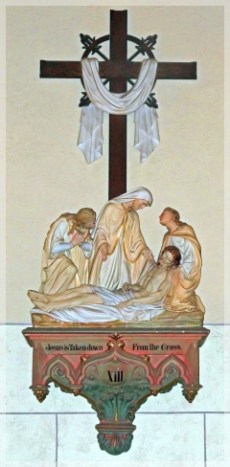 Easter will be a little different this year. Instead of getting up early for the sunrise service, we’ll have all day to go to online church and, rather than new Easter attire, we can attend church in sweats or jammies and our proverbial Easter bonnet can be a baseball cap. The kids won’t have brunch with the Easter Bunny, no family or friends will come for dinner, and, instead of hunting for Easter eggs, we’ll search for hand sanitizer or face masks on the Internet. Fortunately, we don’t need new clothes, eggs, brunch, jelly beans, Peeps, parades, Easter lilies, chocolate bunnies, beautiful hymns, or even a church service for Easter. All we really need is the Resurrection!
 Devotions of the Heart