
So we do not lose heart. Though our outer self is wasting away, our inner self is being renewed day by day. For this light momentary affliction is preparing for us an eternal weight of glory beyond all comparison, as we look not to the things that are seen but to the things that are unseen. For the things that are seen are transient, but the things that are unseen are eternal. [2 Corinthians 4:16-18 (ESV)]
 No matter what translation is used for the above verses, I find it difficult to picture something that is described as suffering, trouble, affliction, or tribulation as being small, little, or light. Moreover, while I’d like afflictions to be so, they rarely seem to be temporary or momentary. Perhaps, I’m splitting hairs but what exactly is “momentary” and “light” when it comes to suffering and affliction?
While Paul was writing about his persecution as a follower of Christ, what of other hardships and woes? Does “light and momentary” describe the twelve years of constant bleeding and painful treatments endured by the woman with the “issue of blood,” the thirty-eight years the man lying by the pool at Bethesda had been an invalid, or Job’s grief at the loss of his family and the agony of his illness? Is “temporary” the sixteen years Anthony Broadwater spent in prison after being wrongfully convicted of rape or the thirty years Michael J. Fox has suffered from Parkinsons? Is “momentary, light distress” the three hours Jesus suffered on the cross, the nine months during which Elizabeth Smart experienced being raped by her kidnapper, or the six years John McCain was tortured as a prisoner of war? Does “passing trouble” describe the mental anguish of my bipolar uncle who spent the last twelve years of his life in a mental hospital? Could the twenty years my brother-in-law struggled with Parkinson’s or the thirty my sister dealt with MS be described as “short-lived”? What of the nearly fifty-five years Joni Eareckson Tada has spent as a quadriplegic and the chronic stabbing pain, COVID complications, and two cancer diagnoses she’s endured? Is her suffering merely “momentary, light distress”? When we’re the ones hurting, even if only from an abscessed tooth or a pinched nerve, nothing about it seems light or momentary!
Paul knew what he was talking about; he’d been whipped, beaten, stoned, imprisoned, and shipwrecked and his life was in continual jeopardy because of his ministry. He knew struggle, hunger, betrayal, hardship, persecution, pain, and affliction first-hand. Nevertheless, he also knew that every trial, no matter how he suffered, was just a prelude to the resurrection power of Jesus!
Regardless of its length or severity, for a believer, our suffering here on earth is light and momentary, especially in light of the many blessings we receive in the midst of our afflictions or the adversities suffered by others. Our suffering is small and momentary when compared to what we actually deserve or to what Jesus did for us. Most of all, whatever our afflictions may be, they are “but for a moment” in the light of eternity. No matter how long we live or how difficult our lives are, our years here are a mere dot on God’s eternal timeline. Though our afflictions may last a lifetime, they will not have the last word! What waits for us is eternal not temporary and, rather than light, it is heavy because it is the entire weight of God’s glory!
 What do you hope to find tucked into your Christmas stocking or deposited under the tree Christmas morning? From the above words, it’s easy to think God is promising something like Christmas morning every day. Although He promises to hear and answer our prayers, let’s remember that He’s not so specific as to how He’ll answer them.
 Ask, seek, and knock—three easy instructions. Ask. Ask as if we mean it, as if we truly care about the answer. Ask as if we believe we’re being heard. Ask with the hunger of a beggar begging bread. Ask with the fervor of someone sinking in quicksand pleading for help. Ask with the thirst of a dying man in the desert requesting water. Ask as if our very lives depend on the answer. Ask.
 This is what the Lord says: “Because you have obeyed me and have not withheld even your son, your only son, I swear by my own name that I will certainly bless you. I will multiply your descendants beyond number, like the stars in the sky and the sand on the seashore. Your descendants will conquer the cities of their enemies. And through your descendants all the nations of the earth will be blessed—all because you have obeyed me. [Genesis 22:16-18 (NLT)]
 When speaking to the Pharisees, Jesus delivers what could be called the ultimate good news/bad news scenario. The good news is that, no matter how evil, vicious or long-lasting the sin, any sin (even blasphemy) is forgivable. The good news, however, comes with a “but” when Jesus says blasphemy against the Spirit will never be forgiven.
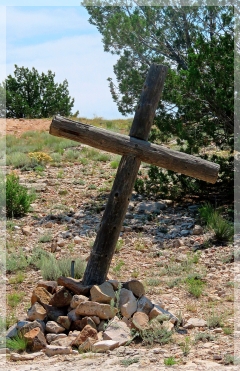 While Scripture tells us about Martha and Mary, the first mention of their brother is when his sisters sent a message to Jesus that Lazarus had taken sick. By the time Jesus returned to Bethany, Lazarus had been dead four days and placed in a tomb. After Jesus called for him to come out, the once dead man, still wrapped in his graveclothes, emerged. The next we know of Lazarus is that he was present when Martha served a dinner in Jesus’ honor. Because the testimony of those who’d witnessed his miraculous resurrection had spread like wildfire, people gathered there to see the living Lazarus and Jesus, the man who brought a dead man back to life with just a few words.
 Devotions of the Heart