
God made you alive with Christ. He forgave us all our sins, having canceled the charge of our legal indebtedness, which stood against us and condemned us; he has taken it away, nailing it to the cross. [Colossians 2:13b-24 (NIV)]
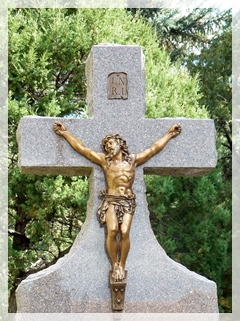 According to the Boston Globe, the college class of 2015 graduated with an average of over $35,000 in student debt. That’s a mammoth $56 billion in student debt, giving them the dubious honor of being the most indebted class in history. It’s likely that honor will pass to the class of 2016 come June. While a few occupations may qualify for student loan forgiveness programs, one way or another, that debt must be repaid. Recent college grads aren’t the only ones in debt. According to NerdWallet, the average American household carries nearly $131,000 in debt for such things as student loans, credit cards, mortgages, and both auto and personal loans. Even if we are fortunate enough to have no personal debt, the national debt of over nineteen trillion dollars still weighs heavily on each and every one of us. With a nation that has clearly spent more than it can afford, it’s too bad we no longer follow the laws in Deuteronomy for the Israelites that prohibited charging interest and canceled all debts every seven years.
Even if this was the seventh year and all of our nation’s debt was cancelled, that financial forgiveness wouldn’t come close in comparison to the debt payment Jesus made for all of mankind. Far greater than the national debt, that debt had nothing to do with dollars and cents but everything to do with sin. No amount of work, tears, shame, guilt, or even repentance could cancel it. No matter how few or great our sins, regardless of what we did or how long we worked, none of us could do enough to make things right or pay the debt of sin to God. The good news is that, when Christ hung on that cross and triumphantly announced, “It is finished!” that debt was paid in full. When the Lamb of God was sacrificed to take away the sin of the world, His work of salvation and redemption was complete; Jesus satisfied man’s debt to God. By dying on that cross, Christ paid a debt He didn’t owe because mankind owed a debt they couldn’t pay. His payment plan isn’t based on works but rather on grace through faith. Like any payment plan, however, there are strings attached—to qualify for God’s debt forgiveness plan, we have to accept Jesus as our Lord and Savior and be willing to forgive the sins of others. That seems a small price to pay for salvation and eternal life. If someone came along and offered to make you whole with everyone to whom you owe money, you’d probably jump on that proposal. Why, I wonder, are people so hesitant to accept Christ’s offer of making us right with God?
By his death he paid our debt, in his resurrection he received our acquittance. [Matthew Henry]
 Jehovah Rapha, the “Lord who Heals You,” was the name of God proclaimed to the Israelites through Moses at Marah. Indeed, a God who could make the blind see, the lame walk, the lepers clean and raise Lazarus from the dead can heal any physical ailment.

 We’d taken my daughter and grand-daughter to a magic show and both my husband and grand had participated in two rather impressive illusions. On the way home, we three adults tried to figure out how each trick had been done. We explored various scenarios that might explain how the $50 bill with my husband’s signature on it ended up in the middle of an uncut orange, in a paper bag, and in a locked box that was in another locked box across the stage. We also tried to figure out how the magician used an elaborate series of mathematical calculations to know the age of our grand’s dog in dog years. (The dog, not there and being 105 in dog years, was most definitely not your average dog.) While we pondered various scenarios, my grand piped up, “Stop trying to figure it out. It was magic!” While it was an entertaining show, we know it wasn’t magic; it was just a carefully orchestrated and well-executed series of tricks. Nevertheless, we continued to want to know how each had been done. There is something about us all that wants to make sense of that which makes no sense. Sometimes, however, that can’t be done.
 It’s springtime in the mountains and I’m thrilled to see that it’s snowing. Although I was hoping for at least one more powder day on the mountain, that’s not why I’m pleased. I’m happy because, once again, everything looks pristine and clean. You see, March’s warmer temperatures and sunshine have been busy melting the nearly 300 inches of snow we’ve had this season. As that white stuff gradually disappears, ugliness is uncovered. Hidden under those mounds of snow is four months’ worth of unsightly litter, pollution, exhaust and smoke residue, scoria and gravel. That filthy accumulation is now making its appearance along the roadways. As the snow recedes along the footpaths, it’s not just lost mittens, discarded tissues and cigarette butts that emerge but also the dog dirt and moose and elk pellets from the animals who have ventured onto the trails. As beautiful as springtime in the mountains can be, this ugliness is part of what we call “mud season.” Today’s snow covers it all up again and I can briefly forget the filth hiding beneath it. It’s sort of like sweeping dirt under the carpet or painting over handprints on the wall; although the grime is still there, it doesn’t bother us because it can’t be seen.
 Recently, we provided dinner for a local skateboard church ministry that serves teens and young adults. If church is a hospital for wretched souls, this one is a MASH unit for them! Most of the youth have troubled pasts and few come from faith-based homes or with any knowledge of the Bible. Many, however, have transformed their lives as they have come to know Jesus through this ministry.

