
For the life of the body is in its blood. I have given you the blood on the altar to purify you, making you right with the Lord. It is the blood, given in exchange for a life, that makes purification possible. [Leviticus 17:11-12 (NLT)]
 For most of us, the meat we purchase arrives at the grocery store prepackaged. We’re not used to seeing animals slaughtered, skinned or butchered and, unless we’re phlebotomists, rarely see large amounts of blood. As a result, much of Leviticus makes for rather gory reading since the temple, a place of worship, also served as a ritual slaughterhouse. Perhaps it’s my vegetarian sensibilities but, when the Bible refers to the pleasing aroma of sacrifice, I wince when thinking of the stench of dried blood and burnt meat.
Biblical sacrifices go as far back as Cain and Abel but it is in Leviticus that we read of the sacrifices God required of the Israelites. The book gives complicated instructions for each of the sacrificial rituals: everything from the kind of animal offered and the draining of its blood to splashing that blood around the altar and what to do with the meat. Nowadays, these bizarre rites seem sickening and gruesome. Then again, perhaps that is exactly what they were supposed to be even back then. Watching one’s best lamb have its throat slit and seeing its blood pour out was probably as awful 3,400 years ago as it seems today. Seeing the animal’s life offered as a substitute for the sinner’s symbolized the high cost of sin and could not have been taken lightly. Moreover, as offensive as all that blood and butchering seems, think of how offended God is by our sins! Sin is far uglier and more repugnant than any abattoir.
My 21st century self has difficulty understanding why blood had to be shed in the first place and how blood—something that stains—could ever be considered cleansing. Caught up in picturing all of that blood, gore and smell, it’s easy to forget that the reason for those sacrifices was atonement. The Israelites sacrificed what was precious to them to satisfy God as atonement for their sins. A price had to be paid for mankind’s sins and, without blood, there could be no forgiveness. For God, the aroma was not that of blood and seared meat but of repentance. Those bloody offerings, however, were temporary substitutes. Even though the animal died rather than the sinner, the sacrifice had to be repeated again and again. It is those sacrifices, however, that foreshadowed the one true and everlasting sacrifice that took place on Calvary. Our sins against a holy and infinite God required a holy and infinite sacrifice: the flawless lamb, Jesus Christ. Our atonement is now found in our faith in Christ—the one perfect and final sacrifice.
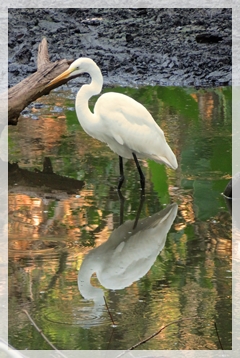 From the viewing platform at the marsh, I watched a Cooper’s hawk soar high in the sky. When I turned to leave, I looked down and saw several white egret feathers on the ground below. Whether it was the hawk, a raccoon, or some other predator, the park had one less egret in the pond. Those beautiful white feathers were a stark reminder of how precarious life is, not just for wild birds, but for us all. I was reminded of Ecclesiastes: “For people and animals share the same fate—both breathe and both must die.” [3:19]
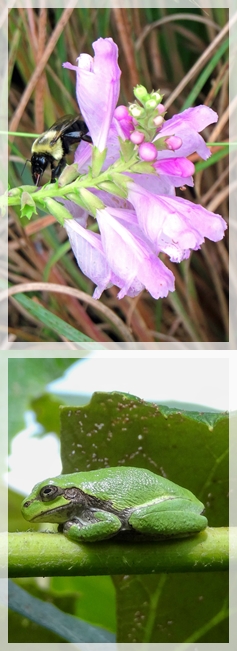 We’re sure to notice God in the Grand Canyon, the multitude of stars in the night sky, or when watching two million wildebeest, zebra and gazelles migrate through the Serengeti. We sense Him in extraordinary or exotic things like the peacock’s splendid tail, Devil’s Tower, or spectacular sunsets and sunrises. But do we notice Him in the commonplace and unremarkable?
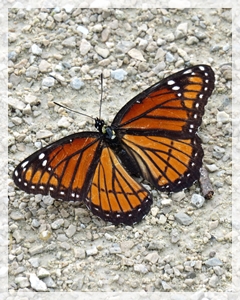 Unlike the bruised and broken butterflies in yesterday’s devotion, this one looked perfect as it lay on the trail. When we approached, the Viceroy fluttered its wings but only managed to skim a few inches across the gravel. As intact as it looked, one wing was entirely useless. To protect it from walkers’ feet and speeding bicycles, we managed to get the creature off the trail into the grass. Unfortunately, without some sort of butterfly super-glue to reattach the loose wing, while we could help, we couldn’t save it.
 You will experience all these blessings if you obey the Lord your God: Your towns and your fields will be blessed. Your children and your crops will be blessed. The offspring of your herds and flocks will be blessed. Your fruit baskets and breadboards will be blessed. Wherever you go and whatever you do, you will be blessed. [Deuteronomy 28:2-6 (NLT)]
 There’s probably no end of sermons and commentary on the swine that went plunging into the lake after Jesus saved the demoniac. “Why pigs?” some ask while others focus on the death of the animals rather than the salvation of a man. Non-believers criticize Jesus for his “wanton destruction” of other people’s property without realizing their criticism implies their belief in the miracle. Theologians respond that since Jesus is God, those pigs actually belonged to Him. I don’t know what the demons wanted when they asked to be sent into the pigs, why they plunged down the hillside to their death, or what happened to the demons after that. What I do know is that the value of 2,000 pigs does not exceed the value of one human soul.
 Devotions of the Heart