
The thief comes only to steal and kill and destroy; I came that they may have life, and have it abundantly. [John 10:10 (RSV)]
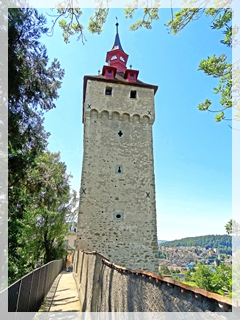 Mankind falls within the first few pages of Genesis as does Mansoul within the first few pages of John Bunyan’s allegory The Holy War. Resembling real life, Bunyan’s King Shaddai sends his son, Prince Emmanuel, to rescue the fallen city. Under Diabolus and his minions Lord Will-be-will and Misters Lustings, Forget-good, No-truth and Unbelief, Mansoul refuses to listen to Shaddai’s captains. The gates to the city are double-locked and Mr. Prejudice and his band of Deafmen guard Ear-gate (the most likely place the King’s forces will try to enter). Nevertheless, Prince Emmanuel delivers Mansoul from the tyranny of Diabolus, Mansoul repents, and Emmanuel forgives. The story, however, is far from over because Diabolus is not done with Mansoul.
Just as the Israelites failed to rid the land of Canaanites and idolatry, Mansoul failed to rid the city of the many Diabolonians who remained in strongholds after Emmanuel’s victory. Lords Blasphemy, Adultery, and Mischief along with Misters Profane and Deceit plot Mansoul’s destruction. Mr. Self-secure misleads Mansoul into thinking it is strong and invincible, beyond the reach of any foe, and not dependent on Emmanuel. Diabolus returns with his army of Doubters and assaults Ear-Gate with incessant drumming. Captains Brimstone and Sepulcher are placed at Nose-Gate; the grim faced Past-Hope at Eye-Gate; and Captains Cruel, Torment, and No-Ease at Feel-gate. Diabolus seeks to fill Mouth-gate, the voice of prayer, with dirt. The town resists but its gates are weak. Diabolus and his Doubters again take possession of the city; this time, however, they cannot take the castle, the heart of Mansoul. On the third day, Emmanuel returns to them and Diabolus and his Doubters are routed from the town. The city again seeks to rid itself of any remaining Diabolonians such a Misters Mistrust, Flesh, Sloth, Legal-life, and Self-love. Mister Unbelief, however, is far too nimble to be caught and Carnal-sense escapes from prison.
Bunyan’s allegory is more than a story of man’s fall and redemption; it tells of the continuing conflict between good and evil for the possession of man’s soul. Starting with innocence, followed by temptation, sin, and repentance, the story doesn’t end there. Sadly, there is more temptation and sin followed by more repentance. With Unbelief and Carnal-sense still at large, the reader is left to believe that will not be the last time temptation and sin rear their ugly heads.
In Emmanuel’s final commission to Mansoul, he warns them not to live by their senses but by his Word. When explaining why Diabolonians are allowed to exist, he says, “It is to keep you awake, to test your love, to make you watchful… My design is that they should drive you, not further off, but nearer to my Father, to teach you war, to make petitioning desirable to you, and to make you little in your own eyes.” He adds, “Love me against temptation, and I will love you notwithstanding your infirmities … I have taught you to watch, to fight, to pray, and to make war against my foes, so now I command you to believe that my love is constant to you.”
 When we’re told to “Be still” in Psalm 46, we tend to think in terms of stopping movement—our busyness, frantic activity, or agitated actions. We associate it with a director yelling, “Cut!” the ref blowing his whistle, or a frustrated parent’s “Cut it out!” Being still can entail all of that, but it is much more. The root of the original Hebrew word used for “still” is the verb rapa which means to be faint, forsake, or sink down. When used as the imperative ra’pha’h, as it is in Psalm 46, it means to drop or release our concerns, to become weak, or surrender. While most Bible versions translate this as “Be still,” some translate as desist, stop fighting, cease striving, be quiet, or be at peace. In short, we’re being told to stop anxiously fighting a situation and leave the matter to God—to relax our grip on things, stop worrying and let it be.
 As a friend’s father used to say, “I couldn’t have made the day any better myself!” The temperature was perfect, the humidity had dropped, the pink of the sunrise tinged the early morning sky, and the aroma of jasmine made every breath a pleasure. When I looked one way, I still could still see the full moon and, when I looked the other, I saw the golden fire of the rising sun. Like a mirror, the lake reflected the clouds and colorful sky. Mocking birds were singing their joyful songs, rabbits were munching the grass, squirrels were chasing one another, ducks effortlessly glided through the water, and a few woodpeckers were tapping on the palms. It seemed like God had given me the beautiful morning as a special birthday gift. Of course, I know He didn’t do it just for me but it felt that way. I was especially appreciative of these little everyday things because I knew it would be my last walk for many weeks; the following day I was having foot surgery and faced a long recovery. As I tried to gather in the morning’s memory to keep me content for the next several weeks of inactivity, I wondered why I didn’t appreciate every morning as much as that day’s.
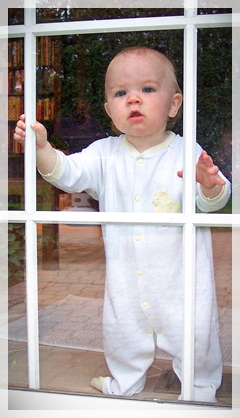 Although my husband attended law school, there is one law he never knew until he became a father: the Toddler Property Law. Starting out with the basic premise of “What’s mine is mine!” it then defines exactly what is meant by “mine.” The toddler defines “mine” as the following: it’s mine if I like it; if I think it’s mine, it is; if it’s yours, it’s mine; if I can take it from you, it’s mine; if I had it but put it down, it’s still mine; if you had it but put it down, then it’s mine; and, if it is broken, it’s yours.
 Sent by God to warn the people of Nineveh of God’s judgment, Jonah went in the opposite direction. After he survived three days in the belly of a fish, God gave Jonah another chance to deliver His message to the people of Nineveh. This time, Jonah delivered the news that God intended to destroy the city in forty days. When Nineveh’s king heard Jonah’s warning, he called for fasting, praying, and repenting their evil ways. People and animals were to cover themselves with sackcloth (a coarse fabric of goat’s hair) as a sign of grief, submission, and contrition. Seeing their repentance, God was merciful and gave them another chance.
 Legend had it that an angel of the Lord occasionally would come into the pool at Bethesda, stir up the water, and that the first person to enter the pool would then be healed. Jesus, however, simply said to the crippled man lying there: “Stand up, pick up your mat, and walk!” and the man did just that. Since it was the Sabbath, the man later was stopped by the Jewish leaders and condemned for carrying his mat and working on the day of rest. According to the law, either he should have stayed and watched his mat or left it behind and walked away. When he explained that the man who’d healed him told him otherwise, they wanted him to identify his healer. Their curiosity, however, had nothing to do with knowing who had performed this amazing miracle; they wanted to know who’d broken the law!
 Devotions of the Heart