
There is no judgment against anyone who believes in him. But anyone who does not believe in him has already been judged for not believing in God’s one and only Son. [John 3:18 (NLT)]
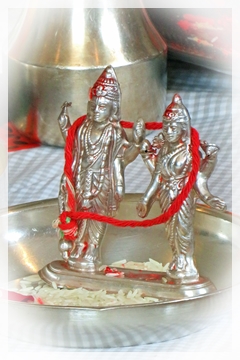 When writing about the prayers of Malala Yousafzai’s mother yesterday, I don’t want there to be any misunderstanding. Although she was praying to Allah, it was the one true God—our Triune God of the Father, Son and Holy Spirit—who heard and answered her prayers. While God is not a fan of Islam, He loves all of His children, whether Muslims, Hindus, Christians or others. Just because the Yousafzais don’t believe in Him doesn’t mean He doesn’t believe in them and their efforts to make our world a place where every girl can learn and lead.
If we believe that Christianity’s major claims are true, then the claims of any other religions must be false wherever they contradict it. Islam condemns the Trinity and denies the Fatherhood aspect of God, the deity of Jesus, and His death. By denying Jesus’s death, Islam denies His resurrection and ascension, His atonement for our sins, His Holy Spirit, and the salvation of His believers: the cornerstones of our Christian creeds! Islam and Christianity can’t both be correct any more than Buddhism, Hinduism or a whole lot of other isms and Christianity can.
My Hindu friends often say, “Well, it’s all the same God!” but it isn’t. Christianity recognizes one God in three person but my Hindu friends believe in a multitude of gods who are a manifestation of various aspects of one god, Brahma. Omnipotent, unknowable and impersonal, he may exist in three separate forms: Brahma (Creator), Vishnu (Preserver), and Shiva (Destroyer). While Hinduism views mankind as divine and believes each person is judged and punished by his own karma, Christianity believes that only God is divine, Jesus is the only way and there will be a final Judgment Day.
Saying we all worship the same God is what David Limbaugh calls “intellectual laziness.” The claim that all paths can lead to God is a statement we should never make or accept. It’s an insult to Jesus: God incarnate who came, suffered, and died on the cross for our sins—something totally unnecessary were there another way to God. Jesus definitively said, “I am the way, the truth, and the life. No one can come to the Father except through me.” [John 14:6] In spite of the Universalists’ claims, all religions do not lead to God. Then again, no “religion” leads to God; only faith in Jesus Christ does!
Our God is a God of love and His benevolence and mercy is extended to everyone. It was our Triune God, not Allah, who heard Mrs. Yousafzai’s prayers and extended His hand of healing to her daughter. Unfortunately, that mercy won’t be extended in the world to come. Simply put, for those who do not believe in Jesus Christ as their Savior, death means punishment and eternal separation from God. Let us remember, however, that the exclusive truths of Christianity do not mean that we are exclusive in our love. Everyone, regardless of race, faith, ethnicity, sex or culture, is our neighbor and a person to be loved!
 What shall we say about such wonderful things as these? If God is for us, who can ever be against us? Since he did not spare even his own Son but gave him up for us all, won’t he also give us everything else? Romans 8:31-32 (NLT)]
  Mankind falls within the first few pages of Genesis as does Mansoul within the first few pages of John Bunyan’s allegory The Holy War. Resembling real life, Bunyan’s King Shaddai sends his son, Prince Emmanuel, to rescue the fallen city. Under Diabolus and his minions Lord Will-be-will and Misters Lustings, Forget-good, No-truth and Unbelief, Mansoul refuses to listen to Shaddai’s captains. The gates to the city are double-locked and Mr. Prejudice and his band of Deafmen guard Ear-gate (the most likely place the King’s forces will try to enter). Nevertheless, Prince Emmanuel delivers Mansoul from the tyranny of Diabolus, Mansoul repents, and Emmanuel forgives. The story, however, is far from over because Diabolus is not done with Mansoul.
 When we’re told to “Be still” in Psalm 46, we tend to think in terms of stopping movement—our busyness, frantic activity, or agitated actions. We associate it with a director yelling, “Cut!” the ref blowing his whistle, or a frustrated parent’s “Cut it out!” Being still can entail all of that, but it is much more. The root of the original Hebrew word used for “still” is the verb rapa which means to be faint, forsake, or sink down. When used as the imperative ra’pha’h, as it is in Psalm 46, it means to drop or release our concerns, to become weak, or surrender. While most Bible versions translate this as “Be still,” some translate as desist, stop fighting, cease striving, be quiet, or be at peace. In short, we’re being told to stop anxiously fighting a situation and leave the matter to God—to relax our grip on things, stop worrying and let it be.
 As a friend’s father used to say, “I couldn’t have made the day any better myself!” The temperature was perfect, the humidity had dropped, the pink of the sunrise tinged the early morning sky, and the aroma of jasmine made every breath a pleasure. When I looked one way, I still could still see the full moon and, when I looked the other, I saw the golden fire of the rising sun. Like a mirror, the lake reflected the clouds and colorful sky. Mocking birds were singing their joyful songs, rabbits were munching the grass, squirrels were chasing one another, ducks effortlessly glided through the water, and a few woodpeckers were tapping on the palms. It seemed like God had given me the beautiful morning as a special birthday gift. Of course, I know He didn’t do it just for me but it felt that way. I was especially appreciative of these little everyday things because I knew it would be my last walk for many weeks; the following day I was having foot surgery and faced a long recovery. As I tried to gather in the morning’s memory to keep me content for the next several weeks of inactivity, I wondered why I didn’t appreciate every morning as much as that day’s.
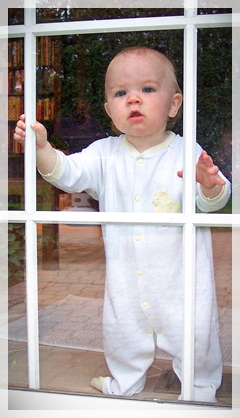 Although my husband attended law school, there is one law he never knew until he became a father: the Toddler Property Law. Starting out with the basic premise of “What’s mine is mine!” it then defines exactly what is meant by “mine.” The toddler defines “mine” as the following: it’s mine if I like it; if I think it’s mine, it is; if it’s yours, it’s mine; if I can take it from you, it’s mine; if I had it but put it down, it’s still mine; if you had it but put it down, then it’s mine; and, if it is broken, it’s yours.
 Devotions of the Heart