
Dear brothers and sisters, when troubles of any kind come your way, consider it an opportunity for great joy. For you know that when your faith is tested, your endurance has a chance to grow. So let it grow, for when your endurance is fully developed, you will be perfect and complete, needing nothing. … God blesses those who patiently endure testing and temptation. Afterward they will receive the crown of life that God has promised to those who love him. [James 1:2-4,12 (NLT)]
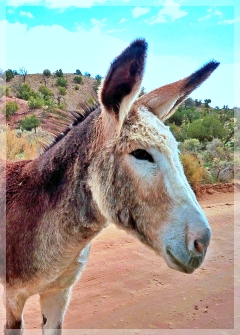 The story is told of a donkey who fell into a deep pit. Unable to get out, the animal brayed loudly until the farmer came to investigate. Seeing no way to get his donkey out of the pit, the farmer decided the only thing he could do was to put the poor animal out of its misery. Since the pit needed to be filled anyway, he got a spade and started to shovel dirt into it. When the donkey felt those first clods of dirt on his back, he lost all hope of rescue and brayed even louder. As he shook the dirt off his back, however, he discovered a growing mound of dirt beneath his feet. Seeing a possible solution, the donkey grew silent as he continued to shake dirt off his back and started tamping it down with his hooves. As the dirt piled up beneath his feet, the donkey got higher and higher in the pit. Paying no attention to the now silent animal, the farmer kept shoveling until he finally stopped for a rest. When he turned around, the man was shocked to see the donkey step out of the pit and trot away. The animal could have chosen to wallow in his misery—simply hung his head and let that dirt cover him up—but he didn’t. Instead, he took steps to change his situation.
Giving up is often our first response when we get buried in our troubles. Deciding the marriage can’t be saved, the situation is hopeless, we’ll never beat the addiction, we’re worthless sinners, we failed, no one understands, or that the pain will never end, we don’t even try to find a fix! That, however, means we’ve ceded control of our lives to something or someone other than God. By giving up, we’ve stopped living God’s will because we’re not letting Him shape and mold us in our circumstances. God’s not done with us until He says so!
When I look back at some of my worst experiences, heaviest trials, and most heartbreaking times, I see my greatest emotional and spiritual development. Growth seems to occur in the valleys (or pits) rather than on the hilltops. Perhaps that’s because we want to maintain the status quo in the good times; when all is going smoothly, we certainly don’t want to rock the boat with any change. Bad times, however, make us as uncomfortable as that trapped animal. Like the donkey, when we are buried in trouble, we have a choice: wallow in misery or make a change.
Instead of letting the dirt bury him, the donkey turned it into a gift. We can see our troubles as penalties or gifts, endings or beginnings, impediments or opportunities. The choice is ours. Life is always going to try to weigh us down; the trick is in deciding to get out of the pit. The donkey did it by shaking off the dirt. As people of hope who know that Jesus can do within us that which we can’t do for ourselves; let us do the same!
We are always on the anvil; by trials God is shaping us for higher things. [Henry Ward Beecher]
 Days bled into weeks, weeks into months, and every day seemed the same for much of the last eighteen months. Life became a series of postponements, rebookings, cancelations, setbacks, inconveniences, letdowns, and disappointments. Visiting Grandma meant waving at her through a window, final farewells were FaceTime calls on a nurse’s cell phone, and we mourned from a distance while attending celebrations of life virtually. Weddings were postponed, family reunions put on hold, shut-downs and travel restrictions kept loved ones apart, theaters and concert halls went dark, vacations were delayed, businesses closed, jobs were lost, and junior year abroad became junior year on Zoom.
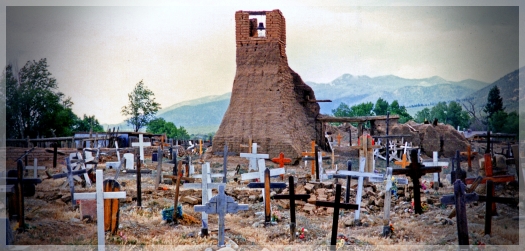 Then he said to me, “Speak a prophetic message to these bones and say, ‘Dry bones, listen to the word of the Lord! This is what the Sovereign Lord says: Look! I am going to put breath into you and make you live again! I will put flesh and muscles on you and cover you with skin. I will put breath into you, and you will come to life. Then you will know that I am the Lord.’” [Ezekiel 37:4-6 (NLT)]
 Writing about pesky mosquitoes yesterday reminded me of a story told by Corrie ten Boom in her book The Hiding Place. As part of the Dutch resistance during World War II, Corrie’s family harbored Jews and others hunted by the Gestapo in their home. After being betrayed by a Dutch informant, the ten Boom family was arrested and imprisoned. Corrie and her sister Betsie ended up in the Ravensbrück concentration camp. That first night, as they shared a bed in the crowded barracks, Corrie discovered their bedding was infested with fleas. Betsie reminded her sister of the Scripture passage they’d read that morning from 1 Thessalonians: “Give thanks in all circumstances.” As they began praying, Betsie listed the things for which they could give thanks, such as their remaining together and having smuggled a Bible into the barracks. But, when she mentioned the fleas, Corrie’s response was, “There’s no way even God can make me grateful for a flea.” Betsie explained that the verse said all circumstances and not just the pleasant ones, so Corrie reluctantly joined her in a prayer of thanksgiving that even included the fleas.
 Although Elisha once worked his land with a plow and oxen, after he accepted Elijah’s cloak, he burnt his plow and oxen, left home, and joined Elijah as an itinerant prophet who depended on others for food and shelter. We know that every time Elisha passed through Shunem, he was fed and sheltered by a family there and Scripture tells us that pious Israelites commonly brought gifts to the prophets they consulted. So why wouldn’t Elisha accept any of Naaman’s generous gifts?
 Devotions of the Heart