
He said, … “For I am the Lord who heals you.” [Exodus 15:26b (CSB)]
 For three days, Israel traveled across the desert without finding any water. When they arrived at Marah, the exhausted and thirsty group was disappointed to find the water undrinkable because of its bitterness. When Moses cried out to the Lord, God told him to throw a piece of wood into the water to make it sweet. It was then that God proclaimed His name to be Jehovah Rapha, the “Lord who Heals You.” Jehovah Rapha took the bitter out of the Israelites’ water and made it palatable.
Jehovah Rapha does more than turn bitter water sweet. He can heal any physical ailment. Scripture tells us He made the barren fertile, the blind see, the lame walk, the lepers clean, and even raised people from the dead. While the hands that do the work may be mortal (as were Moses’ when he tossed that wood into the water, Isaiah’s when he applied a poultice to Hezekiah’s head, and a surgeon when he successfully removes a tumor), the healing always comes from God! Jehovah Rapha, however, is more than the Great Physician (and water purifier)!
The Hebrew word rapha means to heal, to cure, to restore or repair. Originating from Arabic and Ethiopic words meaning to darn, stitch together or mend, rapha occurs about sixty-seven times in the Hebrew Scriptures. Rapha conveys the sense of restoring wholeness where destruction, harm, disease, unrest, or confusion have made inroads. It isn’t limited to making foul water drinkable or healing physical ailments. Rapha is used for restoring land, cities, broken hearts and minds, and covenant relationships as well as bodies. Emphasizing that it is the Lord’s choice to fix what has been broken or tainted, the subject of the verb rapha usually is the Lord.
In the true sense of the word, Jehovah Rapha is more than the Great Physician. He’s the tailor who stitches up the tears in the fabric of our lives. He’s the restoration specialist who scrubs out the gunk and mold left from life’s devasting storms and the handyman who fixes what’s no longer working in our lives. Instead of darning socks, He’s the one who weaves together the fibers that hold us together. He’s the mason who rebuilds our fallen walls and the contractor who brings back structural integrity to our crumbling foundation.
Bitterness, anger, shame, fear, depression, loss of faith, and guilt can poison our hearts and take away life. We still may be breathing but we’re dead inside. Just as the God who Heals, can provide healing to our broken bodies here on earth, Jehovah Rapha can take our ailing embittered minds, hearts, and souls and restore them to health. As He did with the water at Marah when he made the unpalatable palatable, Jehovah Rapha can transform the bitter in our lives into something bearable.
Christ is the Good Physician. There is no disease He cannot heal; no sin He cannot remove; no trouble He cannot help. He is the Balm of Gilead, the Great Physician who has never yet failed to heal all the spiritual maladies of every soul that has come unto Him in faith and prayer. [James H. Aughey]
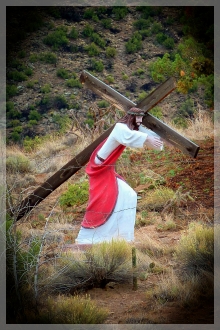 Last February, we celebrated love with the secular holiday Valentine’s Day. We may have given or received flowers, candy, or a card—tokens of someone’s love for us or our love for them. Seven weeks later, however, the flowers are dead, the candy is eaten, and the card in the recycling bin. The day dedicated to “love” is forgotten until next February when the ads for jewelry and flowers remind us.
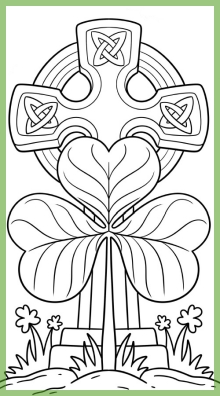 When we celebrate St. Patrick’s Day tomorrow, I suspect the revered bishop who brought Christianity to Ireland in the 5th century wouldn’t recognize this day in his honor. Originally a religious feast, it’s now a day for parades, sales, “Kiss Me I’m Irish” t-shirts, corned beef and cabbage, music, dancing, and lots of green (including hair, cookies, the Chicago River, milk shakes, and kegs of beer). St. Patrick, however, would recognize the common symbol of the day: the shamrock. Of course, to Patrick, the shamrock, with its three leaflets bound by a common stem, was a metaphor for the Holy Trinity. The shamrock’s three leaflets also came to symbolize faith, hope, and love.
 Remember the Sabbath day, to keep it holy. Six days you shall labor, and do all your work, but the seventh day is a Sabbath to the Lord your God. On it you shall not do any work, you, or your son, or your daughter, your male servant, or your female servant, or your livestock, or the sojourner who is within your gates. [Exodus 20:8-10 (ESV)]
 Every year a friend sends me a bayberry candle to burn on New Year’s Eve. Legend has it that lighting a bayberry candle when the first star appears, burning it past midnight into the new year, and letting it burn all the way down will bring good luck, wealth, and prosperity to a home. We can’t stay awake past midnight and allowing an unattended candle to burn down to its socket seems more a guarantee of fire and disaster than good luck. Nevertheless, in honor of our friend, we light our candle every New Year’s Eve and extinguish it shortly after the new year begins in Greenland (three time zones east).
 Back in the days before coronary artery bypass surgery and angioplasty, my father had heart disease and often suffered from the burning chest pain of angina. When that occurred, he would stop briefly, place a nitroglycerin tablet under his tongue, and his pain would ease. Medical nitroglycerin acts as a vasodilator by dilating or expanding the blood vessels so the heart doesn’t have to work as hard to pump blood through those vessels.
 Devotions of the Heart