DOWN BUT NOT OUT

Share each other’s burdens, and in this way obey the law of Christ. … Therefore, whenever we have the opportunity, we should do good to everyone—especially to those in the family of faith. [Galatians 6:2,10 (NLT)]

damaged cypress trees - corkscrew swampHurricane Irma did quite a number on our southwest Florida bird sanctuary. Unfortunately, much of the boardwalk was damaged (some of it beyond repair) and there were several casualties among the trees, including two 100-foot cypress trees that proudly stood for over 400 years. Like them, many smaller trees were uprooted and now lie dead on the forest floor. Irma’s high winds did some violent and cruel pruning as it stripped bark, tore off branches, and splintered mature trees as if they were mere matchsticks. Cypress trees that were over 40-feet tall are now little more than stumps. Nevertheless, trees I thought were goners are recovering and greening up; new foliage is emerging out of their fractured tops and sides. In spite of the incredible damage they suffered, their roots still support and feed them with life giving water and they’re surviving. They may be down but they’re certainly not out.

I thought of the storms we endure in our lives; while some may be no worse than a noisy thunderstorm, others can be as devastating as a hurricane. Age and size certainly can’t keep us from falling. Nevertheless, the storm couldn’t defeat all of the trees and the setbacks and storms of life don’t have to defeat us. Like the damaged cypress trees with their new growth, we can stay rooted, survive and even thrive.

We do that through the church. Just as roots aren’t optional for trees, the church really isn’t an option for the Christian. I’m not talking about a building or a specific denomination; I’m speaking of a community of believers who belong to Christ and are bound together by both the gospel and the presence of the Holy Spirit. The church is what supports us when we start to fall, grounds us when we falter, and nurtures us with living water when we’ve been weakened.

God revealed himself to mankind when he became incarnate as Jesus Christ. As Christ’s followers, we reveal Him to mankind through the church—the church actually is Christ incarnate. As His hands and feet, heart and voice, we are the ones who keep, support, encourage, lift and comfort the broken and bruised. We are the ones who provide the nourishment and water that allow the damaged to grow and blossom once again. Like a tree that supports another one or the roots that ground and nourish it, the living breathing church is what makes it possible for our brothers and sisters to say, “I may be down, but I’m not out!”


All of you together are Christ’s body, and each of you is a part of it. [1 Corinthians 12:27 (NLT)]

Copyright ©2018 jsjdevotions. All rights reserved.


GONE IN A FLASH – EASTER MONDAY

And just as each person is destined to die once and after that comes judgment, so also Christ was offered once for all time as a sacrifice to take away the sins of many people. He will come again, not to deal with our sins, but to bring salvation to all who are eagerly waiting for him. [Hebrews 9:27-28 (NLT)]

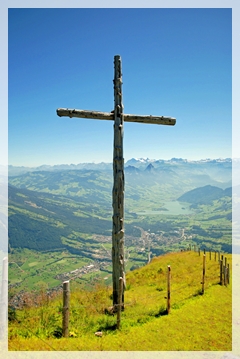
Zermatt - Switzerland - crossAfter warning us not to put them in our pockets and accidentally take them home (or put them in the dryer if we did), small pieces of paper were given to everyone in attendance at last week’s Good Friday service. Following the sermon, we were asked to write a sin (or sins) for which we repent on the papers, come forward, and nail them to a cross resting on the steps before the altar. Listening to the hammering echoing in the sanctuary, I thought of what it must have sounded like two thousand years ago when Jesus and the others were hammered to their crosses: the loud pounding of the hammers, the commotion of the crowd, the mockery of the soldiers, and the cries of agony from the men as those blunt tipped nails pierced their bodies.

Those slips of paper were made of nitrocellulose; often used by magicians, they are commonly known as flash papers. Once we’d nailed our papers to the cross, the pastor ignited them and they instantly disappeared in a brilliant display of fire. Nothing, neither smoke nor ash, was left of them. What a powerful illustration of the way Jesus’s blood, shed on the cross as those nails were hammered into Him, made our sins disappear forever.

Next to the small olive wood cross on my desk, I now have a three-inch square-cut nail, a souvenir from Good Friday’s service. The cross, with its distinctive grain, artistic shape, and smooth finish, is so beautiful that it’s easy to forget it represents an instrument of torture. The dark rustic nail beside it will better remind me of the sacrifice Jesus made for all of us. Paying the price for our sins, His death brought us back into fellowship with God the Father. After the joy of Resurrection Sunday, however, it’s easy to forget the magnitude of that sacrifice until Lent rolls around next year. Let us never forget the miracle of forgiveness that occurred when a suffering bleeding and totally sinless Jesus endured torture and death for the forgiveness of our sins.

He has redeemed me, a lost and condemned human being. He has purchased and freed me from all sins, from death, and from the power of the devil, not with gold or silver but with his holy, precious blood and with his innocent suffering and death. [Martin Luther]

Christ suffered for our sins once for all time. He never sinned, but he died for sinners to bring you safely home to God. He suffered physical death, but he was raised to life in the Spirit. [1 Peter 3:18 (NLT)]

Now all of us can come to the Father through the same Holy Spirit because of what Christ has done for us. [Ephesians 2:18 (NLT)]

Copyright ©2018 jsjdevotions. All rights reserved.

HONOR THY FAMILY

mute swans and cygnetsThey [the Pharisees] asked him, “Why do your disciples disobey our age-old tradition? For they ignore our tradition of ceremonial hand washing before they eat.” Jesus replied, “And why do you, by your traditions, violate the direct commandments of God?” [Matthew 15:1b-3 (NLT)]

When the Pharisees asked Jesus why his disciples ignored tradition and didn’t wash their hands before eating, theirs was not a sanitation or health question. Rather than dirt, they were concerned about defilement. More interested in washing their hands than purifying their hearts, they believed hands could become ritually unclean even by touching someone as “unclean” as a Gentile or tax collector. Eating with unwashed hands meant that the sinner’s impurity was passed to the food which would defile the person eating it. Some Pharisees even considered eating with unwashed hands as sinful as sex with a prostitute. Although Salmonella and E. coli can be passed along on someone’s hands to their food, someone’s sins certainly can’t.

Jesus responded to their question with one of His own when He asked the Pharisees why they violated God’s commandments. After all, breaking a man-made tradition is hardly the same as breaking one of God’s direct commands. The Pharisees had a tradition called korban (meaning “a gift” or “offering”).  When a korban vow was made, the Pharisee transferred all of his assets to the temple but retained the use of them until his death (sort of a “life estate”). Those assets could not be transferred or used to benefit anyone else. As a result, while the Pharisee could live quite comfortably, he could not help the poor, disadvantaged or even his parents. The commandment they were neglecting was the fifth one—that of honoring one’s father and mother. A wealthy Pharisee’s parents could be in dire financial straits and yet he could self-righteously ignore their pleas for help. As so often happened with the Pharisees, they supplanted God’s command of honoring parents with a law that gave them prestige and honored only them!

Willing to neglect their family responsibilities in the name of religion, the Pharisees had misplaced priorities. I thought of them when one of our pastors proposed we ask ourselves what things we value the most, in what order we put them, and how we allot our resources to them. He then shared his experience of being called into a council meeting at another church several years ago. When questioned about the amount of time he gave the church, his response was that he lost one family when he put the church first and he was not about to lose his new one the same way. Family would always come before the church. Note—he didn’t say God but “the church” and there can be a big difference between the two.

In effect, the Pharisees put the church or religion before both God and family. If we look at those Ten Commandments, the first four have to do with our relationship with God; the rest have to do with our relationship to other people and parents are at the top of that list. It would seem that, after God, our next priority should be family; after all, once done with creation, God created the family unit (and not the church).

While we probably won’t pledge our entire estate to the church while watching our parents lose their homes or beg on the street, I wonder if, as our pastor once did, we occasionally misplace our priorities. Do we allow our church responsibilities to overshadow our family ones? There are lots of worthy causes and, sometimes, we’re torn as to where to put our resources. While we’re never too busy for God, God work and church work aren’t always the same; there is a fine line between the two. Although I don’t pretend to know where it is, I think the Holy Spirit will let us know when we’ve crossed it. The Pharisees turned a deaf ear to the needs of their families; we must never do the same.

If God cared only about religious activities, then the Pharisees would have been heroes of the faith. [Francis Chan]

But those who won’t care for their relatives, especially those in their own household, have denied the true faith. Such people are worse than unbelievers. [1 Timothy 5:8 (NLT)]

Copyright ©2018 jsjdevotions. All rights reserved.

GONE BANANAS

Passion flowerI have told all your people about your justice. I have not been afraid to speak out, as you, O Lord, well know. I have not kept the good news of your justice hidden in my heart; I have talked about your faithfulness and saving power. I have told everyone in the great assembly of your unfailing love and faithfulness. [Psalm 40:9-10 (NLT)]

We recently attended a program at our local zoo about giant armadillos. The speaker has spent the last seventeen years in the Brazilian Pantanal wetlands conducting research on several species ranging from peccaries to iguanas. Seven years ago, he became enamored by the elusive giant armadillo and it has been his focus ever since he realized this prehistoric creature (about five feet long and weighing up to 130 pounds) is a keystone species. With its many burrows (a new one every two days), it plays a crucial engineering role in the ecosystem; many other animals depend upon those burrows for their survival. The biologist’s enthusiasm for his topic was compelling and contagious. With his incredible passion for these amazing and endangered animals, he admitted to speaking about them whenever and wherever the opportunity arises.

Like many other scientists, prior to meeting the giant armadillo, this biologist did research, wrote a paper, published it, and went on to another project. The more he learned about the giant armadillo, however, the more concerned he became about its survival. Realizing that academic research alone would not save them, he began sharing his passion. He educated people about these secretive and endangered animals and lobbied for changes in land management, conservation, hunting practices, superstitions and even bee keeping. Scientific treatises alone won’t save this animal but sharing its story just might!

Listening to this biologist speak with such fervor, I couldn’t help but wonder why we Christians rarely demonstrate such passion for Jesus. Much of the time, we seem rather lukewarm about God and rarely show that same zeal about our Savior. Moreover, like research scientists, we are often content to limit our activities to the theoretical rather than the practical. But, just as field work and scientific papers alone will not save the giant armadillo, our neighbor will not get saved by our church attendance and Bible study. Our passion, like that biologist’s, must be evident. He’s trying to save animals, but we’re trying to save souls!

The late Christian musician Keith Green is reported to have said the definition of a Christian is someone who’s bananas for Jesus! I imagine that within an hour of meeting this biologist, anyone would know that he’s bananas for giant armadillos. I wonder, within an hour of meeting me, would anyone know I’m bananas for Jesus? How about you?

Jesus replied, “‘You must love the Lord your God with all your heart, all your soul, and all your mind.’ This is the first and greatest commandment.” [Matthew 22:37-38 (NLT)]

Copyright ©2018 jsjdevotions. All rights reserved.

STUDENTS FOR LIFE

He also told them a parable: “Can a blind man lead a blind man? Will they not both fall into a pit? A disciple is not above his teacher, but everyone when he is fully trained will be like his teacher.” [Luke 6:39-40 (ESV)]

roseate spoonbill - corkscrew swampIn Pieces of Eight, columnist Sydney Harris tells the story of a dinner party at which an elderly Albert Einstein was seated next to an eighteen-year-old girl. Unaware of his identity, she asked the famed professor what he did for a living. “I devote myself to the study of physics,” he responded. Shocked that he still studied physics at his age, she told him she’d finished her physics studies the previous year! Without a doubt, Albert Einstein knew more about physics than anyone else of his time and yet he continued to study physics until his death. Harris’s explanation is that the physicist recognized that what he didn’t know far outweighed all that he did.
In Jesus’s day, the word disciple referred to a student or apprentice and was usually associated with people who devotedly followed a religious leader or philosopher. Christian writer Dallas Willard suggests replacing the word disciple in our Bibles with apprentice or student to get the true meaning of the word. Just as Einstein continued to be a student of physics, if we are true disciples of Christ, we must continue to be His students. Discipleship doesn’t end with accepting Christ; it begins. It requires commitment to be with and know Him, to grow more like Him, and to continually learn from Him.

Einstein continued to spend time in his physics laboratory. We must continue spending time with Jesus through prayer and Bible study. In studying the Gospels and Acts, we find His words, repeat His words, and reflect on them. In the Epistles, we learn how to apply those words. We then turn our attention from the New to the Old Testament to learn our history and how Jesus fulfilled the prophecies. Finally, we fulfill the commission given to the original disciples. The students are to become the teachers and find new students. Since the blind can’t lead the blind, we will continue to study and, after reading from Genesis to Revelation, start over again! We are life-long disciples who, like Albert Einstein, recognize that what we don’t know far outweighs what little we do.

Any fool can know. The point is to understand. … Learning is not a product of schooling but the lifelong attempt to acquire it. [Albert Einstein]

Jesus came and told his disciples, “I have been given all authority in heaven and on earth.  Therefore, go and make disciples of all the nations, baptizing them in the name of the Father and the Son and the Holy Spirit. Teach these new disciples to obey all the commands I have given you. And be sure of this: I am with you always, even to the end of the age. [Matthew 28:18-20 (NLT)]

Copyright ©2018 jsjdevotions. All rights reserved.

IT TAKES ALL KINDS

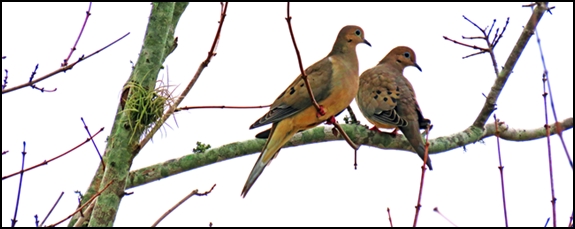
murning dovesBut whoever is building on this foundation must be very careful. For no one can lay any foundation other than the one we already have—Jesus Christ. [1 Corinthians3: 11 (NLT)]

Last Sunday, while worshipping in the beach gazebo, my attention was drawn to a nearby tree. A pair of doves kept disappearing into the branches only to reappear a few moments later. Back and forth they went, building their new house one twig at a time. Like the doves, those of us in the gazebo are slowly building something—a new church. Rather than twigs or bricks, we’re building it with people—one person at a time.

After worship two Sundays ago, we saw a fellow sitting alone on a park bench strumming his guitar. My husband walked over to him, listened for a while, and, introduced himself. The men chatted and the guitarist, Jimmy, said he was in the park that morning for his NA meeting. My husband then invited him to bring his guitar and join us for worship the next week. Self-taught, Jimmy is not much of a musician and both his story and attire told me that, while he’s not exactly homeless, he lives on the fringe of society. Lord, forgive me, I wasn’t happy about that invitation nor was I especially thrilled Sunday when our new friend was there at the gazebo. I’m ashamed to admit that I was afraid Jimmy’s presence would offend others in attendance.

While watching those doves build their nest, however, the Holy Spirit did some much needed work on my heart and I saw how judgmental and self-righteous I’d been. The birds didn’t examine each twig to see if it was perfect or ask its history or lineage. They just kept bringing twigs into the tree. Wondering how to build a church, I’d forgotten about the cornerstone: the first stone set into a foundation, the stone that keeps the walls upright and strong. The church’s cornerstone is Jesus and the answer to how to build a church is simple: Do what Jesus would do.

Jesus brought healing to the sick, forgiveness to the condemned, hope to those in despair, faith to those who doubted, and love to the unloved. Jesus neither ignored nor tolerated sin but He welcomed all sorts and conditions of people. He didn’t ask Peter, John or James about their pasts before calling them and not everyone around Him was what could be called “respectable.” Criticized by the Pharisees for the company He kept, He welcomed tax collectors, prostitutes, the unclean, zealots, Gentiles and Samaritans. He gladly spent time with sinners who wanted to learn from him or put their faith in him. Jesus welcomed me and I’m no different than Jimmy—my tarnished past just hasn’t taken the heavy toll on me that it has on him. Moreover, I still have plenty of work to do on the sin of self-righteousness!

So, how do we build a church? We do it by living the truth of the gospel, connecting with one another, serving, and speaking and acting in love. Most of all, we build a church by seeking the lost and welcoming all who come! When I asked my husband why he invited Jimmy, he answered, “That’s what Jesus would have done!” and he was right. Sunday, after Communion, I wondered how long it’s been since Jimmy felt welcome and appreciated, took the Sacrament, or was reminded that God loved him enough to die for him. As we finished our service and gathered our things to leave, his NA group came in to use the gazebo. We offered them our remaining coffee and rolls and invited them all to join us for worship next week. “Hope to see you next Sunday,” I called to Jimmy and, this time, I meant it!

For the Son of Man came to seek and save those who are lost. [Luke 19:10 (NLT)]

Jesus answered them, “Healthy people don’t need a doctor—sick people do. I have come to call not those who think they are righteous, but those who know they are sinners and need to repent.” [Luke 5:31-32 (NLT)]

Copyright ©2018 jsjdevotions. All rights reserved.