NATIONAL DAY OF PRAYER – 2017

Lord, you are great and deserve respect as the only God. You keep your promise and show mercy to those who love you and obey your commandments. We have sinned, done wrong, acted wickedly, rebelled, and turned away from your commandments and laws. We haven’t listened to your servants the prophets, who spoke in your name to our kings, leaders, ancestors, and all the common people. You, Lord, are righteous. But we—the men of Judah, the citizens of Jerusalem, and all the Israelites whom you scattered in countries near and far—are still ashamed because we have been unfaithful to you. [Daniel 9:4-7 (GW)]

National Day of Prayer - American flagThe book of Daniel was written during the Babylonian captivity. Nebuchadnezzar had assaulted Judah, destroyed Jerusalem and the temple and exiled the people of Judah to Babylon. Jeremiah had prophesized that Jerusalem’s desolation would last seventy years and Daniel realized that their time of exile was nearly complete. After fasting, donning sackcloth, and covering himself with ashes, Daniel passionately prayed and pled with God to return His people to their land.

Found in Daniel 9, his prayer starts with worship and praise but quickly moves into confession—admitting that the people were rebellious and disobedient and had ignored God’s prophets, abandoned his word, and disregarded his commandments. Admitting that they’d been warned time and time again, He acknowledges the justice of Jerusalem’s desolation and the righteousness of God’s severe judgment. He concludes with a plea to God to forgive them and restore Judah and Jerusalem.

Today, the first Thursday in May, is the National Day of Prayer, and many of us will meet in front of courthouses or in houses of worship and pray for our nation. If there ever was a time our nation needs prayer, it is now! This year’s theme is “Hear us…Forgive us…Heal us! For the Glory of Your Great Name” and is taken from Daniel 9:19. Today’s prayer was written by Anne Graham Lotz and, like Daniel’s prayer, clearly acknowledges the sins of our nation’s people. I have included just a few of the highlights (actually our low points) of her prayer, but I urge you to read and pray the entire prayer for yourselves.

We confess our foolishness of denying You as the one, true, living God, our Creator to whom we are accountable, living as though our lives are a cosmic accident with no eternal significance, purpose or meaning. … We confess we no longer fear You, and thus we have not even the beginning of wisdom with which to handle the vast knowledge we possess. … We confess our arrogance and pride that has led us to think we are sufficient in ourselves. … We confess to believing that the prosperity of our nation has been great because we are great while refusing to acknowledge that all blessings come from Your hand. … We confess that we have allowed the material blessings You have given us to deceive us into thinking we don’t need You. … We confess that we live as though material wealth and prosperity will bring happiness. [Anne Graham Lotz]

Unlike Judah, our nation is not yet in ruins and we haven’t been taken captive by a pagan army, but not much else is very different. Have we learned nothing in over 2,500 years? What will it take for God to get our attention? We still put ourselves before God, commit crimes against both God and people, defy and disobey our Lord, and have turned away from His word. We should be ashamed. The sole hope for us and our nation is found in God. Today’s prayer ends with these words:

Therefore, we turn to You with tears of shame and a heart of fear for the judgment we are provoking. We repent of our sin. Please, God of Our Fathers, do not back away from us. Do not remove Your hand of blessing on us. As we return to You with humility…With sincerity…Out of necessity…With a desperate sense of urgency.  Please! Return to us! Hear our prayer. Forgive our sin. Heal our land. … For the Glory of Your Great Name…JESUS. [Anne Graham Lotz]

Lord have mercy upon us!

We are not requesting this from you because we are righteous, but because you are very compassionate. Listen to us, Lord. Forgive us, Lord. Pay attention, and act. Don’t delay! Do this for your sake, my God, because your city and your people are called by your name. [Daniel 9:18b-19 (GW)]

Copyright ©2017 jsjdevotions. All rights reserved.

THE DESIGNATED WORRIER

Dear friend, guard Clear Thinking and Common Sense with your life; don’t for a minute lose sight of them. They’ll keep your soul alive and well, they’ll keep you fit and attractive. You’ll travel safely, you’ll neither tire nor trip. You’ll take afternoon naps without a worry, you’ll enjoy a good night’s sleep. No need to panic over alarms or surprises, or predictions that doomsday’s just around the corner, Because God will be right there with you; he’ll keep you safe and sound. [Proverbs 3:21-26 (MSG)]

upland gorillaI have a friend who worries. Her husband says that even when she has nothing about which to worry, she worries about whatever next could go wrong long before it possibly can. He added that having a “designated worrier” has made his life much easier—while she worries, he can relax and enjoy himself! His comment made me remember a trip we took to the Cayman Islands nearly forty years ago. We were accompanied by a worrying friend.

The morning of our departure, we awoke to several feet of unexpected snow. Although we’d allowed more than enough time to arrive at the airport in normal conditions, traffic was at a snail’s pace that morning. Our friend Josh would look from his watch to the speedometer and then announce by how many minutes we’d miss our plane’s departure. “At seven miles per hour, we’re precisely twenty-two-and-a-half minutes late!” he’d declare, only to modify his prediction when the traffic sped up or slowed down. Once at O’Hare, we discovered the weather had delayed our plane’s take-off and we had just a few minutes to get to the gate. As we checked luggage and ran through the airport, Josh continued to analyze by how many minutes we’d miss our flight. Fortunately, our plane was still at the gate and we managed to board. Josh then calculated how late we’d be for our next connection. When we arrived in Miami, however, our plane, also having been delayed by weather, was still at the gate and we again boarded in the nick of time. That’s when Josh started fretting about our luggage. He was sure it was never loaded in Chicago and, even if it was, it couldn’t have been transferred to the second plane before our speedy departure. Along with clothing, we’d packed a cooler of frozen steaks and Josh was certain that the meat, if it ever arrived, would be thawed and spoiled. This was back in the days long before TSA, airport security and luggage screening and planes occasionally were being hijacked to Cuba. Not satisfied with worrying about connections and luggage, Josh, apprehensive that we’d end up hijacked and in Cuba (without our luggage), began to nervously scrutinize every man as he boarded the plane.

We arrived at our destination, a little later than planned, with our luggage and without international incident. Unfortunately, Josh was a wreck and needed at least a day to chill out and “decompress” before he start enjoying his vacation. On the other hand, since he’d been our designated worrier, we’d slept on the flights and were ready to roll. He’d done the worrying while we enjoyed the ride!

While we can joke about having a designated worrier, what that anxiety does to the worrier is no laughing matter. Studies show that even slight distress and worry are linked to an increased risk of heart attack and stroke and can cut several years off one’s life expectancy. Simply put, the more disheartened and anxious we are, the sooner we’ll die. Moreover, even if we don’t die early, when we’re fretful, discouraged or worried, it’s highly unlikely we’ll truly enjoy the time with which we are blessed!

There was absolutely nothing that worrying could accomplish throughout our travel scenario—it couldn’t stop the snow, plow the roads, speed up traffic, hold the plane, load or transfer the baggage or even stop a hijacker. It was all in God’s hands—as is everything. While it’s nice to have a designated worrier to do our worrying, worry (whether ours or some else’s) is an insult to God. It means we don’t trust Him, we doubt His reliability and effectiveness, and we mistakenly believe that we, rather than He, are the ones in control.

It’s inevitable that our days will meet with mistakes, failures, oversights, barriers, disappointments, inconveniences, and complications. Jesus pretty much promised that. Nevertheless, He also promised that we’d never be alone as we faced each day. Rather than being the designated worrier, perhaps we could try being the designated prayer warrior!

Worry and faith are mutually exclusive. [Karol Ladd, from “The Power of a Positive Mom”]

Don’t fret or worry. Instead of worrying, pray. Let petitions and praises shape your worries into prayers, letting God know your concerns. Before you know it, a sense of God’s wholeness, everything coming together for good, will come and settle you down. It’s wonderful what happens when Christ displaces worry at the center of your life. [Philippians 4:6-7 (MSG)]

P.S. Fortunately, Josh has changed through the years. He doesn’t worry about anything and prays about everything; he’s gone from designated worrier to pray warrior! Praise God!

Copyright ©2017 jsjdevotions. All rights reserved.

CHITCHAT (GOSSIP – Part 1)

Watch the way you talk. Let nothing foul or dirty come out of your mouth. Say only what helps, each word a gift. [Ephesians 4:29 (MSG)]

Black Skimmers - Clam Pass“I’ve never seen eye to eye with Mary since we were neighbors,” said the woman harshly. Her statement begged us to ask, “Why?” The woman beside her, however, refused the invitation with the comment, “Well, we can’t get along with everyone!” and promptly changed the subject. Gossip was avoided that time but it’s not always so easy; the line between conversation and gossip is a fuzzy one at best.
I asked a friend how to distinguish between gossip and conversation. She’d been doing a Bible study on Proverbs and that week’s topic had been gossip; surely she knew the difference. After telling me our words should be true, useful, respectful, necessary and kind, she added, “If we wouldn’t say it in front of the person, it shouldn’t be said!” Almost immediately, she went on to speak of someone in her study group with words that never would have been said had the woman been present! In a few short sentences, her lesson on gossip became an example of it!

Last month, we were together with four of my husband’s college friends. As expected, conversation turned to “Whatever happened to…?” and “Where’s so-and-so?” When you put the research capabilities of two lawyers and a journalist together with a few iPads, you’re bound to discover many of the answers. That friendly curiosity and reminiscing became intrusive prying when court records were found that included the juicy details of a fraternity brother’s hotly contested divorce. Yes, the records were public but we had no need to see them, less reason to discuss them and no right to gloat over them! I’m not sure when recalling their college days and catching up with one another deteriorated into gossip, but it did. Gossip has a way of sneaking its way into conversations without our even being aware of it. It was only later that afternoon that I recognized how wrong we all had been.

We can call it shooting the breeze, chewing the fat, catching up, dishing or chitchat but, when it’s about other people, most likely it’s gossip. I’m not sure why we do it. Maybe it’s herd mentality that makes us think of gossip as a way to bond with others when we speak of those not present. Perhaps we’re jealous, angry or unable to find anything interesting about which to talk. We all love a good story, especially when it reassures us that we’re not the most messed up person in the room. It seems human nature to savor bits of information about others and to want to offer a few tasty bits of our own when we can. Whatever our reasons, it isn’t right. Moreover, God doesn’t care whether the words spoken are true or false—if it’s gossip, it’s wrong! Just as we don’t have to attend every argument to which we’re asked, we don’t have to attend every gossip fest that sends an invitation. We must learn to recognize gossip’s arrival and refuse to attend its iniquitous party. We also might want to remember that old Spanish proverb: “Whoever gossips to you, will gossip about you.”

Don’t talk out of both sides of your mouth; avoid careless banter, white lies, and gossip. [Proverbs 4:24 (MSG)]

Mean people spread mean gossip; their words smart and burn. [Proverbs 16:27 MSG)]

Copyright ©2017 jsjdevotions. All rights reserved.

THE HOUSE OF LOST DREAMS  (Part 1 – Gone)

He [Job] knelt on the ground, then worshiped God and said: “We bring nothing at birth; we take nothing with us at death. The Lord alone gives and takes. Praise the name of the Lord!” [Job 1:20b-21 (NLT)]

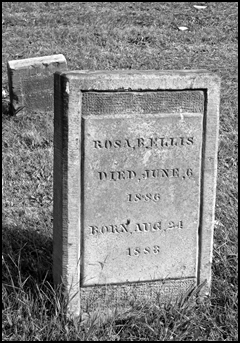
trumbull-cemetery-ohioFor the last several years, we’ve frequently driven by a house we called the “House of Lost Dreams.” Apparently forsaken by both bank and borrower, we watched as tarps blew off windows, roof tiles grew black with mold, and ivy and kudzu grew on the walls. Eventually, plants nearly obscured the deteriorating house from view as Mother Nature took back ownership of the land.

I think of the people who abandoned their dreams along with that house many years ago. They’re not alone—many people lost homes when the housing bubble burst. At some point in time, we’ve all faced disappointment and, while not necessarily made of brick and mortar, we’ve had to abandon more than one house of dreams. I think of a friend who lost both baby and womb the same day or the friends who lost the spouses with whom they planned to spend their golden years. I know parents who lost children to drugs, an athlete who lost her ability to walk, a family whose dreams were lost to dementia and a mother whose child’s future was taken by cancer. Lost dreams all—financial woes and a foreclosed house are only two of many ways we lose our dreams.

Job could be the poster boy of lost dreams. He still had his house but that was about all he had after losing livestock, servants, children, health and the hopes and dreams that went along with those things. There was Joseph—the favored son sold into slavery. Having lost one dream, he must have thought his future much improved when he became administrator over all that Potiphar owned. Slavery didn’t seem so bad until Mrs. Potiphar accused him of rape and he ended up languishing in an Egyptian prison. Moses spent forty years leading the Israelites and then, because of his lack of faith, had to forsake his dream of ever entering the Promised Land; his forty years of faithful service went down the drain.

It’s not easy to accept that our dreams will not be fulfilled—that they are not part of the future God has for us. Sometimes, like Moses, we cause the loss of our dreams but, other times, like Job and Joseph, we do all the right things and life still goes terribly awry. While circumstances can seem cruel, we must remember that God is never cruel. We may have to abandon our dreams but God will never abandon us. When we’re disappointed, we can despair or continue to hope and trust in God’s plan for us. Like Job, we may lose everything but we don’t lose our faith in God. Like Joseph, we make the best of a bad situation and find God’s purpose in our circumstances and, like Moses, who continued to lead the Israelites to a land he would only view from a distance, disappointment won’t stop us from doing God’s work.

You intended to harm me, but God intended it all for good. He brought me to this position so I could save the lives of many people. [Genesis 50:20 (NLT)]

I have told you all this so that you may have peace in me. Here on earth you will have many trials and sorrows. But take heart, because I have overcome the world. [John 16:33 (NLT)]

Copyright ©2017 jsjdevotions. All rights reserved.

GOOD INTENTIONS

This is why I remind you to fan into flames the spiritual gift God gave you when I laid my hands on you. For God has not given us a spirit of fear and timidity, but of power, love, and self-discipline. [2 Timothy 1:6-7 (NLT)]

flowerFor two years, I was part of a women’s ministry. One of its purposes was to host a web site for twelve Christian writers. We were a diverse multi-generational group and the site offered hyperlinks to our individual blogs. All were women who felt they’d been called by God to expand His kingdom through their writing. We regularly shared our prayer concerns with one another and a month rarely passed without one or more women requesting prayers for their writing or asking for divine inspiration. Sadly, the ministry disbanded this past year, in great part due to the lack of writing by most of the authors.

When God calls us to a task, He will provide us with the talent, tools, situation, time, assistance and spiritual gifts necessary for that task. The one thing He won’t provide is the finished product. He expects us to do the labor and, as powerful as prayer is, it is no substitute for work. When speaking about the value of hard work, retired NBA star Ray Allen said, “God will give you a lot of things in life, but he’s not going to give you a jump shot.” When writer Jodi Picoult can’t write a good page, she revises a bad one, pointing out that “You can’t edit a blank page.” If we want a good jump shot, we’ve got to practice; if we want a page filled with words, we’ve got to sit down and write them; and if we want to do God’s work, we need more than good intentions or even prayers.

God gave man the gift of work, a sense of purpose, in the Garden. After the fall, however, thistles and thorns appeared and man’s work became difficult. Work was still good; it just wasn’t easy. When faced with a garden full of weeds, we can wait for divine intervention and pray they’ll disappear or, while praying, we can put on our work gloves and start pulling them out!

Opportunity is missed by most people because it is dressed in overalls and looks like work. [Thomas Alva Edison]

Pay careful attention to your own work, for then you will get the satisfaction of a job well done, and you won’t need to compare yourself to anyone else. For we are each responsible for our own conduct. [Galatians 6:4-5 (NLT)]

Copyright ©2017 jsjdevotions. All rights reserved.


FLYING

Then he said to the crowd, “If any of you wants to be my follower, you must give up your own way, take up your cross daily, and follow me. If you try to hang on to your life, you will lose it. But if you give up your life for my sake, you will save it. [Luke 9:23-24 (NLT)]

trapeze high
While watching my 16-year old granddaughter fly on the trapeze, I thought about trust. She clearly trusted the rigging, ropes, safety harness, net and her coach. I, however, was not so confident as she climbed up to a platform more than 25 feet above the ground. Her coach, acting as the line-puller, held the lines to her safety harness. She listened carefully as he called out various instructions in trapeze lingo: “listo..ready…hep!” and off she flew.

No longer a novice, my grand was working on a couple of tricks that required her to let go of the fly bar (and not just to drop onto the net.) In one, she reversed her position, requiring her to let go with one hand, swing around and then readjust her grip with the other hand. She had to trust her coach to call directions correctly and to have a good hold on the lines if she missed her grab. In the second trick, she had to trust both the coach and the catcher as she went from her fly bar into his hands. One novice flyer, however, was not so willing to trust anyone. In spite of the safety harness and net below, she refused to let go of the fly bar when told to dismount. Eventually, she came to a dead stop. Even though the coach assured her that he’d lower her safely to the net using the harness ropes, she stubbornly refused to release her grip. She just hung there until, exhausted, she could no longer hold her weight.

Trapeze is all about timing and trust and the line puller knows where the flyer is in her arc far better than the flyer. He calls out when to kick, get legs up, hang from the knees, and let go to dismount safely. My grand ceded control of her flying to him, trusting that his directions were correct, that he was reliable and attentive, and that both he and the catcher had the ability and strength to do what was required of them. When my grand relinquished control to her coach, she flew! Because the novice refused to relinquish control, she went nowhere and ended up hanging miserably in the air.

Hanging on until we can hang no longer—we all do it at some time or another. How much easier for her if she just trusted the coach and, for us, if we’d just trust God and give control of our lives to Him! Like the coach, God sees the big picture and knows where we are far better than we do ourselves. His timing is impeccable. He knows when we should hang on and when we need to let go and, just as the coach did, he’ll tell us! Unfortunately, we often don’t listen or obey and, like the novice flyer, end up in trouble. While trapeze school offers a safety harness and net, real life is nowhere near as accommodating. When we fail to listen to God and fall, our landing will not be so gentle.

Trust is essential when flying on a trapeze and it is essential in our relationship with God. Knowing that we’re in good hands, we have to let go of trying to run things ourselves and cede control to Him. Almighty, all-powerful and invincible, He will keep his every promise and never err in His guidance. Indeed, when we trust in God, we will soar!

But those who trust in the Lord will find new strength. They will soar high on wings like eagles. They will run and not grow weary. They will walk and not faint. [Isaiah 40:31 (NLT)]

Don’t let your hearts be troubled. Trust in God, and trust also in me. [John 14:1 (NLT)]

Copyright ©2017 jsjdevotions. All rights reserved.