
Simeon…took the child [Jesus] in his arms and praised God, saying, “I have seen your salvation, which you have prepared for all people. He is a light to reveal God to the nations, and he is the glory of your people Israel!” Jesus’s parents were amazed at what was being said about him. Then Simeon blessed them, and he said to Mary, the baby’s mother, “This child is destined to cause many in Israel to fall, but he will be a joy to many others. He has been sent as a sign from God, but many will oppose him. As a result, the deepest thoughts of many hearts will be revealed. And a sword will pierce your very soul.” [Luke 2:28,31-35 (NLT)]
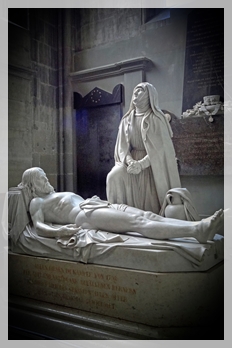 As Mary stood in the shadow of the cross, did she recall Simeon’s words when he held the infant Jesus in his arms? His prophecy came true that day at Calvary; as she watched her son endure such torture, it truly must have felt as if a sword had pierced her very soul. Jesus was supposed to be the glory of His nation but there He was—dying the death of a criminal. Mary didn’t understand why her beloved boy had to perish and she certainly didn’t know that He’d be back in three days. Imagine her sorrow and the emptiness in her heart as she witnessed her son’s agony.
Mary knew she loved her son but I wonder if that day she questioned God’s love for Him. She didn’t know that from the moment Jesus was planted in her womb her boy was headed to Calvary or that His death on the cross was all part of God’s perfect plan. How could she understand that her Son’s death was a deliberate choice: that He was dying for the very people who had placed Him on that cross? How could she know that His death proved the enormity of God’s love for all of humanity?
Like Mary, we don’t know the reason why our loved ones suffer or what will result from their suffering. Unlike Mary, however, we do know the rest of the story. Without the crucifixion, there would have been no resurrection. But, because of Jesus’s death and resurrection, there is another life waiting for us in God’s heavenly kingdom. Jesus’s resurrection means that hope overpowered desperation, love claimed victory over hate, forgiveness prevailed over condemnation, joy conquered despair, and life triumphed over death.
Jesus, the Son of God, was ignored, denied, betrayed, falsely accused, demeaned, scorned and scourged, and finally crucified on a cross. He suffered and died like a common criminal and was buried in a borrowed tomb like a vagrant. The sinless One paid the sinners’ debts. He didn’t have to, but he did. Thank you, God, for your loving redemption.
…death was not Jesus’ penalty; it was His destiny. It was not His lot in life; it was His mission. It was not His unavoidable fate; it was His purpose statement for coming to earth that first Christmas: “Born to die.” [Bill Crowder, from“The Path of His Passion”]
 We recently saw a stage production of Les Miserables (“Les Miz”), a musical based on Victor Hugo’s novel. Set in France in the early 1800s, it tells the story of Jean Valjean, a man who spent 19 years in prison for stealing a loaf of bread to feed his starving family. When Valjean, known as “Prisoner 24601,” is released, he is issued a “yellow passport” which he’s required to present to the police in any village he passes through. Stating he has been released from prison but listing his crimes, this yellow piece of paper marks him as a criminal forever.
 Philemon was a wealthy member and leader of the church in Colossae and Onesimus was his slave. Apparently after stealing from his master, Onesimus ran away and ended up in Rome. After finding his way to the Apostle Paul, who was under house arrest at the time, Onesimus became a Christian. The one page book of Philemon is simply a personal letter to the runaway slave’s owner pleading the man’s case.
 We all know drama queens (and kings) who don the crown of martyrdom. On occasion, we even may have worn that crown ourselves. Along with the crown, we put on a robe of selfishness and self-righteousness. Dressed for the part, we see outer circumstance only in the light of how they negatively affect our lives (ignoring how they may be affecting those around us). Rather than asking, “What can I learn from this?” we protest, “I don’t deserve this!” as if anyone else does! Forgetting that God only wants our best and there is purpose in our pain, we find our troubles the perfect excuse for resentment, complaints, bitterness, and an all-out pity party.
 Abraham and Sarah waited twenty-five years for their promised son, Isaac, but then God demands that Abraham sacrifice his long-awaited child as a burnt offering. Abraham takes Isaac off to the mountain and to what he believes is his son’s death. Abraham’s knife is drawn and he’s ready to kill Isaac when God intervenes. After an angel tells him not to lay a hand on his son, Abraham looks up to see a ram caught in the brush. With God’s blessing, he sacrifices it in place of Isaac.
 A friend was on her way out the door when the CO (carbon monoxide) detector started beeping. Thinking the batteries needed replacing, she pulled it off the wall, removed the batteries, and departed for the day. Upon her return, she tried new batteries in the monitor but it started to sound again. She was faced with two options: either the detector was bad (they should be replaced every five to seven years) and she could ignore the alarm or her house was filled with an odorless, tasteless, colorless, and potentially fatal gas! Fortunately, my friend called the fire department. They detected a high level of carbon monoxide and discovered the cause: a chipmunk that got stuck and died in the gas water heater’s flue. With its carcass blocking the pipe, the heater couldn’t vent properly and deadly CO was backing up into the house. Had my friend gone to bed that night instead of calling the fire department, she probably would not have seen another day.
 Devotions of the Heart