
God is not a man, so he does not lie. He is not human, so he does not change his mind. Has he ever spoken and failed to act? Has he ever promised and not carried it through? [Numbers 23:19 (NLT)]
 With just 31,164 verses in the entire Bible, a Canadian schoolteacher named Everett R. Storms questioned claims that it held around 30,000 promises. During his 27th reading of the Bible in 1956, the inquisitive Mr. Storms compiled a list of all Scripture’s promises. Given that the books of prophecy are filled with promises (Isaiah, Jeremiah, and Ezekiel have over 1,000 each) and the psalms are steeped in promises, no wonder it took 18 months to complete this massive task! When finished, Storms had recorded 8,810 promises: 7,487 of which were made by God to man and 290 by man to God. Other promises were made by one man to another, by God the Father to God the Son, by angels to people, by man to an angel, by an evil spirit, and by Satan (all nine of which were lies).
While we’d like to lay claim to all 7,487 promises made by God to man, we must be cautious. Many of those promises were made to a specific person or in a specific situation. Although God’s promise to Noah that floodwaters would never again kill all life and destroy the earth is a promise for all of mankind, His promises to Abraham of fame, land, a son, and countless descendants were specific to him. God has not failed us if, unlike Abraham, we are without fame, property or children.
Moreover, many of God’s promises have conditions that test our obedience, require our trust, or act as a warning and those promises can’t be claimed without meeting the conditions. God promises us the desires of our heart in Psalm 37 with the conditions that we delight ourselves in Him and His character, commit everything we do to Him, and trust in Him. [37:4-5] When the Apostle James writes of the blessings and “crown of life” promised by God, the conditions include perseverance through trials by those who love Him. [1:5] In Romans, we find God’s promise of the free gift of eternal life, but it includes a warning that the “wages of sin” are death! [6:23] Unlike a legal document, God’s promises aren’t concealed or hidden in legalese; if there are conditions, they are spelled out clearly and any consequences are well defined.
What of those 290 promises made by man to God? After God promised His blessings to Israel if they obeyed Him and kept His covenant, they responded: “We will do everything the Lord has commanded.” [Exodus 19:8] Sadly, their well-intentioned promise was repeatedly broken. As flawed mortals, we continue to be unable to live up to our promises to God. Fortunately, because He is a God of grace and true to His Word, we can live our lives depending upon His promises to us.
I can’t name the 7,487 promises God made to man. Nevertheless, during Lent, I compiled a far shorter list of verses with God’s promises to serve as an anchor of my faith. I know that He promises to give us wisdom if we ask, to provide a way out of temptation, and to finish the good work He began in us. He promises that our belief in Jesus gives us eternal life, that our salvation is secure, and that nothing can separate us from His love. God promises that He can turn every circumstance around for our long-range good, that He’ll never leave or forsake us, and that He will return! Without a doubt, what God promises will come true!

 When asked about the temptation of Christ, we probably think of Satan’s three temptations in the wilderness. Since the gospels don’t mention other specific temptations, it’s easy to think that Jesus, unlike the rest of us, was only tempted three times. “He left him until the next opportunity came,” wrote Luke and, while reading the four gospel accounts of the crucifixion during Holy Week, I know He had to have been sorely tempted that awful last day. Right up to the end, Satan must have been at His side, whispering into his ear and reminding Him that He didn’t have to take the abuse—after all, He was God!
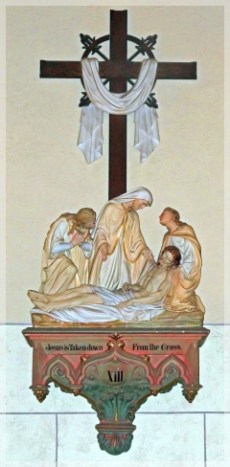 Easter will be a little different this year. Instead of getting up early for the sunrise service, we’ll have all day to go to online church and, rather than new Easter attire, we can attend church in sweats or jammies and our proverbial Easter bonnet can be a baseball cap. The kids won’t have brunch with the Easter Bunny, no family or friends will come for dinner, and, instead of hunting for Easter eggs, we’ll search for hand sanitizer or face masks on the Internet. Fortunately, we don’t need new clothes, eggs, brunch, jelly beans, Peeps, parades, Easter lilies, chocolate bunnies, beautiful hymns, or even a church service for Easter. All we really need is the Resurrection!
 If any of you wants to be great, he must be your servant. If any of you wants to be first, he must be the slave of all. That’s how it is with the son of man: he didn’t come to have servants obey him, but to be a servant – and to give his life as “a ransom for many.” [Matthew 20:26b-28 (NTE)]
 Christians call it the Lord’s Supper, the Lord’s Table, the Sacrament, Holy Communion, or the Eucharist; some denominations consider it a “sacrament” while others call it an “ordinance.” While they may not agree on what to call it, they do agree that, during that last supper with His disciples, Jesus instituted or ordained its practice when He shared bread and wine, said the elements were His body and blood, and instructed the disciples to repeat the ceremony in remembrance of Him.
 Devotions of the Heart