
Don’t excuse yourself by saying, “Look, we didn’t know.” For God understands all hearts, and he sees you. He who guards your soul knows you knew. He will repay all people as their actions deserve. … People who conceal their sins will not prosper, but if they confess and turn from them, they will receive mercy. [Proverbs 24:12, 28:13 (NLT)]
Excuses—we all make them but I don’t think God much likes them.
 In 1 Samuel 15, after Samuel confronts Saul for disobeying God’s clear commands regarding the Amalekites, Saul makes excuses—first by denying his sin, then by justifying his disobedience, and finally by blaming others. It is only after Samuel tells him the consequences of his sin—the loss of his kingship—that Saul reluctantly admits the truth. In contrast, we have Nathan confronting David regarding his sinful behavior with Bathsheba and Uriah. Immediately after the rebuke, David confesses. It would have been easy for David to blame Bathsheba for seducing him, Uriah for hampering his cover-up scheme, or Joab for his part in Uriah’s death, but he didn’t. Acknowledging his guilt, the repentant David confessed.
In Jesus’ Parable of the Three Servants (told in Matthew 15:14-30), the master entrusts each servant with a share of his wealth proportionate to their abilities. When the master returns, he asks them for an accounting. In my NLT Bible, the reports from the two servants who faithfully fulfilled their responsibilities take only sixteen words each. The third servant, the one who buried his master’s money, uses forty words to make excuses for his failings. In fact, by calling his master a harsh man, the servant tries to cast some of the blame back on him. Nothing in the parable, however, leads us to think the master was overly demanding, hard to please, or cruel. The negligent servant was just making excuses. I wonder what would have happened if he’d simply echoed David’s words to Nathan: “I have sinned against the Lord.” [2 Samuel 13:13]
One of the hardest things for us to do is admit our sins without making any excuses. We frequently deny, minimize, refuse responsibility, cast blame, defend our motives, justify our actions, or even rationalize that it couldn’t be wrong since everyone else does the same thing. Whether we call it a momentary lapse or an error of judgment, wrong is wrong and a sin is still a sin. A sincere confession takes only six words but most excuses take forty or more! Remember—when we honestly confess, it’s not as if we’re telling God anything He doesn’t know. We confess so that we know! It’s only when we honestly acknowledge our sins as sins that we can repent of them and get right with God.
In failing to confess, Lord, I would only hide you from myself, not myself from you. [Augustine]


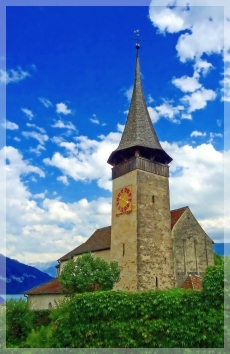 The cornerstone metaphor continues into the New Testament with both Paul and Peter referring to Jesus as the cornerstone of our faith. Nowadays, cornerstones are structurally unneeded and a growing number of commercial buildings no longer have them. Symbolic rather than functional, many serve as time capsules holding material relevant to the building and the year it was built. Because commercial buildings so frequently change hands, even the custom of inscribing the building’s name on a cornerstone is disappearing. The latest practice is a freestanding cornerstone/time capsule resting on a pedestal placed in a prominent part of the building. That way, a new stone can replace the old one every time the building’s owner changes.
 In the Old Testament, “cornerstone” as a metaphor for the Messiah is found in Psalms, Isaiah, and Zechariah. In Zechariah 10, the prophet describes Israel’s need for purification because of their idolatry, fortune-tellers, and false prophets. Holding the nation’s leaders responsible for these transgressions, Zechariah says the people are like lost sheep without a shepherd. Proclaiming the arrival of the ”Lord of Heaven’s Armies” who will look after the flock, the prophet says he’ll come from Judah and describes him as a cornerstone, tent peg, and battle bow.
 After telling the Parable of the Two Sons, Jesus told one about the Evil Farmers. As parables go, it’s pretty easy to follow. The landowner (God) builds a vineyard (Israel), sets up a protective wall (the Law), and leases it to tenant farmers (religious leaders). When he sends his emissaries (faithful priests and prophets) to collect his rent, the farmers ignored, mistreated and even killed them. The landowner, thinking the farmers would respect his son (Jesus), sends him to the vineyard. Wanting the estate for themselves, the farmers murder him. When Jesus asked his listeners (who were the chief priest and elders) what the landowner would do to the famers when he returns to his land, they responded that he’d kill the tenants and lease the vineyard to new farmers who would honor him with his share of the crop.
 Devotions of the Heart