THE SLIP

But Peter said to him, “Lord, I’m ready to go to prison with you and to die with you.” Jesus replied, “Peter, I can guarantee that the rooster won’t crow tonight until you say three times that you don’t know me.” [Luke 22:33-34 (GW)]

Ballenberg SwitzerlandHaving been raised in the Episcopal Church, I’ve always observed Lent and practiced some sort of self-denial during the six weeks from Ash Wednesday to Easter. According to Christianity Today, nearly one in five Americans observed Lent in 2015. In a survey this year, more than 400,000 tweeted about their fasts and food or drink and technology were the most popular categories of denial.

In the weeks leading up to Easter, many of us choose to turn away from small pleasures, indulgences, bad habits or things that may have distracted or derailed us spiritually. Even a temporary absence of something in life can make us appreciate the abundance we have; little denials can change the way we think about things after Lent. These six weeks help me to make positive behavioral changes and to consciously turn to God as I make them. In addition to giving up three things, I’ve added two Lenten devotionals to my daily prayer and Bible study.

“Did you choose to give up something for Lent? Have you kept the commitment? What has it taught you?” were the questions asked in one of yesterday’s Lenten devotions. Sweets were one of the things I gave up for Lent and I thought they were the easy one; the other two have taken more conscious effort and prayer. Have I kept the “no sweets” commitment? I had until the other night when we had dinner guests. As I prepared my nearly world famous cherry kuchen in preparation for their arrival, I had no intention of eating (or even tasting) it. In fact, I didn’t even find it appealing. Then came dessert time and I reached into the cupboard and mindlessly pulled down dessert plates for the five of us. I cut the cake, dolloped on whipped cream and served it. It wasn’t until the guests departed and I was washing the fifth plate that I even realized I’d eaten the cake!

“What has it taught you?” asked that Lenten devotion. Oh, how easy it is to stumble! I’m not wearing sackcloth and ashes just because I ate dessert during Lent. God and I are still on good terms but my slip has reminded me how easy it is to intend one thing and do another simply because we’re over-confident and unthinking. Consider Peter, so sure that he’d never betray Jesus and, yet, he did. It wasn’t until he’d heard the rooster crow that Peter even realized he’d done it! Unfortunately, it’s as easy to reach for a plate and thoughtlessly serve up some betrayal, gossip, temper, sarcasm, arrogance, selfishness, or jealousy as it is to eat a piece of cake.

Keep your mind clear, and be alert. Your opponent the devil is prowling around like a roaring lion as he looks for someone to devour. [1 Peter 5:8 (GW)]

Be alert. Be firm in the Christian faith. Be courageous and strong. Do everything with love. [1 Corinthians 16:13-14 (GW)]

Copyright ©2016 jsjdevotions. All rights reserved.

THE LIZARD TRAP

She looks over a field and buys it, then, with money she’s put aside, plants a garden. First thing in the morning, she dresses for work, rolls up her sleeves, eager to get started. [Proverbs 31:16-17 (MSG)]

brown anole - floridaThe Proverbs 31 woman (or man) has what our Florida pastor calls “opportunity awareness.” Where others may see an unplowed field, he or she sees a vineyard. Their vision is not just of what exists now; it is of what can exist in the future. A perfect example of “opportunity awareness” was demonstrated recently by a child who sold a lizard trap to our pastor after church. This little boy gathered up plastic containers from that Sunday’s treats and cut small holes in their lids. To catch a lizard, one just had to put a little food in the box and a lizard would climb in and be trapped. He even had two lizards in another container to demonstrate his product! This little boy didn’t see a plastic carton destined for the recycling bin—he saw a way to capture lizards (and to earn some money).
God presents us with opportunities all of the time; we just have to open our eyes to the possibilities. Spencer Smith worked for 3M and was trying to create a super-strong adhesive when he discovered a somewhat useless un-sticky glue. A solution without a problem, it was nearly five years before one of his colleagues saw its possibilities. A choir member, he tired of losing the paper bookmarks in his hymn book. He tried coating his paper markers with Smith’s glue and Post-it Notes were the result. George de Mestral took a look at the burrs that got caught in his dog’s coat when hiking. Instead of seeing an annoyance, he saw the possibility of making a fabric fastener that would mimic the burrs’ microscopic hooks. His idea was met with resistance and laughter but, since his vision resulted in Velcro, I imagine he was the one who ended up laughing. Caleb and Joshua saw a land with promise but the other scouts saw only giants. When the Apostle Paul sat in a Roman prison, he didn’t see barred doors; he saw an opportunity to write to the early church and to witness to the jailed and their guards. Surrounded by a crowd after he and John healed a crippled man, Peter saw a congregation to whom he could preach.

So what do these inventors, an eleven-year old budding entrepreneur, Israelite scouts, and early Christian evangelists have to do with us? The French scientist, Louis Pasteur said, “In the field of observation, chance only favours the prepared mind.” These people saw more than what was right in front of them—they saw possibility and potential and, more important, they were prepared to do something about it. God continually presents us with fields that seem barren, boxes that look empty, things that don’t work the way we anticipated, burr-like annoyances, unbeatable foes, locked doors, and people with questions. Yet, in all of these circumstances, God provides us with opportunities to serve and witness for Him with our lives and words. Every situation (both good and bad) comes with an opportunity to be Jesus to someone. But, as Pasteur pointed out, we need to be prepared, both to see and to do.

Remember as you go about your day that you may be the only Jesus some of your friends, neighbors, and family will ever see. [Wanda Brunstetter] 

Opportunity is missed by most people because it is dressed in overalls and looks like work. [Thomas Edison]

Pray diligently. Stay alert, with your eyes wide open in gratitude. … Don’t miss a trick. Make the most of every opportunity. [Colossians 4:2,5 (MSG)]

Right now, therefore, every time we get the chance, let us work for the benefit of all, starting with the people closest to us in the community of faith. [Galatians 6:10 (MSG)]

Copyright ©2017 jsjdevotions. All rights reserved.

CHRISTMAS LIGHTS

In the same country there were shepherds in the fields. They were watching their flocks of sheep at night. The angel of the Lord came to them. The shining-greatness of the Lord shone around them. They were very much afraid. The angel said to them, “Do not be afraid. See! I bring you good news of great joy which is for all people. Today, One Who saves from the punishment of sin has been born in the city of David. He is Christ the Lord. There will be something special for you to see. This is the way you will know Him. You will find the Baby with cloth around Him, lying in a place where cattle are fed.” At once many angels from heaven were seen, along with the angel, giving thanks to God. They were saying, “Greatness and honor to our God in the highest heaven and peace on earth among men who please Him.” [Luke 2:8-15 (NLT)]

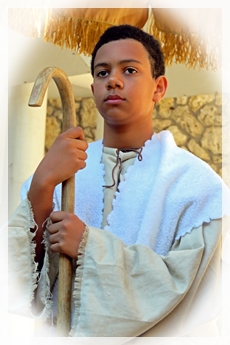
shepherdEvery December, the Botanic Gardens sponsor “Night Lights in the Garden.” For two weeks, once the sun goes down, their landscape transforms into a Florida version of a winter wonderland. Thousands of twinkling lights adorn the trees, gardens, ponds and paths. Holiday music is performed, shimmering icicles hang from tree branches, palms are wrapped in colored lights, and glowing orbs light the lawns. New last year was a laser light show. As we stepped into a garden surrounded by trees, our breath was taken away when we saw shimmering light illuminating the trees all around us. Sparkling light in various configurations kept flashing across the trees; it was absolutely beautiful.

I’m sure the angels put on a better show that blessed night so long ago but, standing in the midst of such an amazing display, I got an idea of what the shepherds might have seen the night of Jesus’ birth. I could imagine hearing angels singing, “Gloria, in excelsis Deo!” in the midst of such radiance. I knew I was just viewing a combination of electricity and holographic laser light technology and what the shepherds saw and heard was of divine origin. Nevertheless, I was awe struck. I’ve seen cards, candy, wooden storks, enormous bows, and large signs used to publicize a baby’s arrival, but angels from on high in an exhibition of God’s splendor certainly wins the prize when it comes to impressive birth announcements!

Oddly, it wasn’t government leaders, priests or kings but lowly shepherds who were the first to get the announcement of our Savior’s birth. Shepherding wasn’t socially acceptable—the shepherds’ social status was similar to that of dung sweepers or tax collectors. Yet, God chose these lowly men, who couldn’t even serve as witnesses in a court of law, to witness the Messiah’s arrival. Perhaps it was because shepherds not only watched over the sheep but also had the task of separating the perfect firstborn lambs that would be used in temple sacrifices as atonement for people’s sins. How fitting that these shepherds should witness of the arrival of Jesus—the one who would become known not only as the good shepherd but also as the lamb of God. Perhaps they readily recognized the infant child both as one of their own who would faithfully watch over his flock and as the perfect one-time sacrifice that would atone for the sins of all time.

I am the Good Shepherd. The Good Shepherd gives His life for the sheep. [John 10:11 (NLV)]

The next day John the Baptist saw Jesus coming to him. He said, “See! The Lamb of God Who takes away the sin of the world! John 1:29 (NLV)]

Copyright ©2015 jsjdevotions. All rights reserved.

A CHANGE IN PLANS

The Lord had said to Abram, “Leave your native country, your relatives, and your father’s family, and go to the land that I will show you.” … Abraham never wavered in believing God’s promise. In fact, his faith grew stronger, and in this he brought glory to God. He was fully convinced that God is able to do whatever he promises. [Genesis 12:1, Romans 4:20-21 (NLT)]

laughing gull - VB780webThis morning’ s news reported a federal grand jury’s indictment of a Utah man for making a bomb threat against a hospital last September. The false threat led to the hospital being evacuated and locked down for several hours. The man had nothing to do with ISIS or any terrorist group; he just made the threat to disrupt the hospital’s operations enough to cause the postponement of his wife’s scheduled C-section that day. He was in Idaho at the time and wanted the procedure delayed so that he could be present for the baby’s birth. Now, facing up to ten years in prison, it may be quite a while before he gets to enjoy that child.

While life rarely goes according to our plans, most of us don’t resort to bomb threats. Consider Mary—she was a carefree young girl busy with wedding plans when an angel interrupted her life with the message that, in spite of her virginity, she would have a baby. That certainly put a damper on the wedding plans and her relationship with Joseph. What about Noah—the farmer turned shipbuilder? Constructing an arc on the back forty and gathering a boatload of animals certainly interrupted his family’s comfortable life. Things were going well in Ur when Abraham and Sarah were told by God to pull up stakes and move miles away to an unknown place. Certainly Hosea wouldn’t have deliberately chosen a wife knowing she would be unfaithful to him, but that’s what God told him to do. Elizabeth and Zechariah had resigned themselves to being childless when she became pregnant. While a blessing, it had to be a challenge for the elderly couple—diapers and midnight feedings instead of quiet afternoons in the sun. Elisha was a farmer with a team of oxen, Isaiah a scribe, and Amos a shepherd; they hadn’t attended prophet school, but that’s what God called them to be. Andrew, Peter, James and John were fisherman and Matthew collected taxes; they all had careers when Jesus interrupted their lives and turned them into disciples. Paul, the Pharisee tent-maker, was on a mission when blinded on the road to Damascus and the persecutor of Christians became a preacher for Christ. None of these people asked God for a life change; it was God who called to them and God never asked any of them if it was a convenient time.

The Utah man who made the bomb threat apparently missed the important life lesson that the world does not revolve around us. But then again, while our behavior isn’t as extreme as his, we all have difficulty accepting that fact at times. God, however, has an uncanny way of reminding us who’s really in charge. One look at the lives of family and friends tells me that God continues his holy interruptions. Blessings, difficulties, challenges and assignments do not arrive according to our time schedules. God’s plan is not written for our convenience and we can’t call in a bomb threat whenever we don’t like His timing. Instead of God accommodating us, we are to accommodate Him and follow His plan, not ours. It may not be convenient or even what we wanted and we may feel ill-prepared or overwhelmed but, like those faithful people before us, we have to trust God and say, “Here I am, Lord!”

Then I heard the Lord asking, “Whom should I send as a messenger to this people? Who will go for us?” I said, “Here I am. Send me.” [Isaiah 6:8 (NLT)]

Mary responded, “I am the Lord’s servant. May everything you have said about me come true.” Luke 1:38 (NLT)]

So Noah did everything exactly as God had commanded him. [Genesis 6:22 (NLT)]


CHARM BRACELETS

Joshua erected a monument at The Gilgal, using the twelve stones that they had taken from the Jordan. And then he told the People of Israel, “In the days to come, when your children ask their fathers, ‘What are these stones doing here?’ tell your children this: ‘Israel crossed over this Jordan on dry ground.’” [Joshua 4:20-22 (MSG)]

Zion 041webIn a television ad for a popular brand of charm bracelet, two couples meet and then go their separate ways. One wife proceeds to tell her spouse all about the other couple: the number and sexes of their children, where they’ve vacationed, and their interests. When her husband asks how she got that much info from a brief greeting, she smugly replies that the bracelet told it all. My granddaughter has one of those bracelets and, when gift-giving occasions occur, I enjoy looking at the charms and trying to decide if there are any that commemorate a special event or accomplishment of that year. I wonder if, many years in the future, she will look at the bracelet and fondly recall her riding lessons, theater classes, trip to China or the grandparents who gave her the charms.

Jacob placed a stone pillar to mark the place where God spoke to him, Joshua erected a monument of stones so the Israelites would remember that the river stopped flowing so the Ark could pass through it, and Samuel used a boulder to mark the spot where God gave victory over the Philistines. I’m not sure placing stones and monuments is that easy or practical today; perhaps all we need are some charms. They wouldn’t be made of silver and semi-precious stones nor would they be worn on our wrists or around our necks. They would be made of memories and kept in our hearts. The charms would remind us of those special moments when God revealed His divine presence in our lives. Yes, I know he’s always been there and always will be, but we’ve all had extraordinary times when we truly felt God’s special touch. The charms would commemorate the times we experienced miracles, the moments we had tangible evidence of God’s help or provision, and the supposedly chance conversations that put us on the right path. The charms would bring to mind the times we received His guidance, wisdom, or strength and those instances we knew without a doubt that God was there with us, holding us in His loving arms. Every time we doubted, every time we felt lost or alone, every time we were afraid or felt unworthy, incapable, abandoned, or lost, we could take out a few charms to remind us of God’s loving provision. Looking at them and remembering those times, we would again have confidence and our faith would be renewed.

What occasions would be commemorated on your bracelet?

Samuel took a single rock and set it upright between Mizpah and Shen. He named it “Ebenezer” (Rock of Help), saying, “This marks the place where God helped us.” [1 Samuel 7:12 (MSG)]

CHAMELEONS

For you are still controlled by your sinful nature. You are jealous of one another and quarrel with each other. Doesn’t that prove you are controlled by your sinful nature? Aren’t you living like people of the world? … Stop deceiving yourselves. If you think you are wise by this world’s standards you need to become a fool to be truly wise. For the wisdom of this world is foolishness to God. [1 Corinthians 3: 3,18-19 (NLT)]

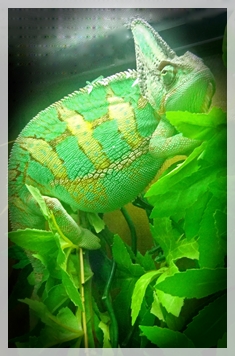
CHAMELEON-Two cute chameleons have recently been featured in a national paint brand’s television commercials. While picking paint for their living room, the lizards change color to match the hue of the paint chip they’re examining. Famed for their quick camouflage ability, chameleons’ change of color also depends on their level of aggression, their mood, the temperature, and their desire to mate.

Sometimes we Christians are a bit like chameleons in that we change our behavior so that we, too, can blend into the world around us. That’s what the early Christians of Corinth did. They lived in a moral cesspool, sort of a first century combination of Rio, Las Vegas, Bangkok, Amsterdam, Tijuana, and New Orleans. Immorality and sexual sin ran rampant in this Grecian city that had a temple dedicated to Aphrodite complete with 1000 prostitute “priestesses.” Surrounded by sin, those early Christians became chameleon-like by trying to blend their new faith with their old lives. More worldly than spiritual, they argued with one another, church members took one another to court, sexual perversion was accepted, the church divided into cliques, they questioned the resurrection and people even got drunk at the Lord’s Supper. Unfortunately, the early Christian church in Corinth looked way too much like the rest of the corrupt city. Paul made it abundantly clear to the new believers that they could be Christians or Corinthians but not both! He wasn’t telling them to move, but he was telling them to separate themselves completely from the Corinthian way of life.

Sometimes, like the Corinthians and chameleons, we want to blend into the world around us; mistakenly, we think we can keep our old life even as we take on a new one. Christians, however, aren’t meant to blend into the sinful world in which we live. Unlike the commercial’s chameleons, we’re meant to clash with the world. Our love, joy, peace, patience, kindness, goodness, faithfulness, gentleness, and self-control should make us readily recognizable. Moreover, unlike the chameleon, we should remain the same even when we feel threatened, are in a bad mood, find ourselves in hot water or want to attract a mate.

If you try to hang on to your life, you will lose it. But if you give up your life for my sake and for the sake of the Good News, you will save it. And what do you benefit if you gain the whole world but lose your own soul? Is anything worth more than your soul? If anyone is ashamed of me and my message in these adulterous and sinful days, the Son of Man will be ashamed of that person when he returns in the glory of his Father with the holy angels. [Mark 8:35-38 (NLT)]