WHAT WOULD YOU DO? (Daniel – part 2)

Do not be afraid, for I have ransomed you. I have called you by name; you are mine. When you go through deep waters, I will be with you. When you go through rivers of difficulty, you will not drown. When you walk through the fire of oppression, you will not be burned up; the flames will not consume you. For I am the Lord, your God, the Holy One of Israel, your Savior. [Isaiah 43:1b-3 (NLT)]

climbing asterOne night King Nebuchadnezzar had a disturbing dream and asked the court’s wise men to interpret it. Whether he couldn’t remember it (as happens with dreams) or, being obstinate, wanted to test the soothsayers and astrologers, we don’t know, but the king expected them to tell him the dream’s meaning without his revealing its content. Indignant at their failure to do so, he ordered the execution of all of Babylon’s counselors (which included Daniel, Shadrach, Meshach, and Abednego). Daniel approached the king and asked for time so that he could discover the dream’s meaning.

That evening the four men pled with God for His mercy and, during the night, the dream’s meaning was revealed to Daniel. After praising God for His revelation, Daniel correctly interpreted the king’s dream. In appreciation, the king praised Daniel’s God, chose Daniel for his court, and appointed Shadrach, Meshach, and Abednego as administrators over Babylon. While Nebuchadnezzar acknowledged that Daniel’s God was the greatest of gods, he never understood that Daniel’s God was the one and only God!

A large statue, only the head of which was gold, had been part of Nebuchadnezzar’s troubling dream. Perhaps, thinking he could change prophecy’s prediction that his kingdom would come to an end, he erected an enormous statue on a pedestal that was entirely overlaid with gold. When all of the officials were gathered around this ninety foot colossus, it was commanded that everyone, both foreign and Babylonian, was to bow to the image and worship it; those who disobeyed would be thrown into a blazing furnace. When Shadrach, Meshach, and Abednego refused to bow down, the king flew into a rage. Even when they were given a second chance, the men refused to worship the idol.

This was the kind of furnace used to bake bricks or smelt metal. We’re not talking third degree burns here; with a temperature of 1,800 degrees, they’d be cremated! The three, however, had faith in the God they served. This knew the God who kept them healthy and gave them wisdom was both good and powerful. Although confident that He could save them, they also knew that He might not choose to do so. Placing their lives in the hands of God, the three friends stood strong! Although thrown into the furnace, the Angel of the Lord saved them, and the men exited the furnace unharmed.

We only have to look at the fates of most of the disciples to know that angels won’t always save the faithful from incineration or open the doors to their prison cells. The disciples were imprisoned, beheaded, crucified, stoned, and beaten. Sadly, in some places, martyrdom of Christ’s followers continues today. The three men’s statement of faith is one of the strongest we’ll find throughout Scripture. Knowing there was no chance of survival, would we trust God as did they? Could we remain as faithful and strong as Shadrach, Meshach, and Abednego?

If we are thrown into the blazing furnace, the God whom we serve is able to save us. He will rescue us from your power, Your Majesty. But even if he doesn’t, we want to make it clear to you, Your Majesty, that we will never serve your gods or worship the gold statue you have set up. [Daniel 3:17-18 (NLT)]

Copyright ©2019 jsjdevotions. All rights reserved.

WHAT’S IN A NAME? (Daniel – part 1)

“But you are my witnesses, O Israel!” says the Lord. “You are my servant. You have been chosen to know me, believe in me, and understand that I alone am God. There is no other God—there never has been, and there never will be. [Isaiah 43:10 (NLT)]

black skimmerAfter Nebuchadnezzar’s first invasion of Judah, he returned to Babylon with the temple’s treasures and some of Judah’s nobility as captives. The best and brightest of the young men were to learn the literature and language of Babylon so they could serve the king. In spite of being captives, they were housed in the palace and given the king’s choice of food. While this would appear to be a pretty good gig for prisoners of war, the boys were probably castrated and made eunuchs as was typically done for palace officials (and prophesied by Isaiah in 2 Kings 20:18).
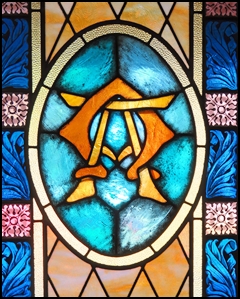
Among these captives were Daniel, Hananiah, Mishael, and Azariah, all of whom were given new Babylonian names. Daniel, whose name meant “God is my judge,” became Belteshazzar, meaning “Bel protects his life” (Bel was another name for the chief Babylonian god Marduke). Hananiah, whose name meant “The Lord shows grace,” became Shadrach, meaning “Under the command of Aku” (the Sumerian moon god). Mishael, whose name meant “Who is like God?” became Meshach, meaning “Who is what Aku is?” and Azariah, whose name meant “The Lord helps,” became Abednego, “Servant of Nebo” (the god of learning and writing).

“What’s in a name?” asked Juliet in Shakespeare’s Romeo and Juliet. “That which we call a rose by any other name would smell as sweet,” added the star-crossed lover. Romeo’s name made him an enemy to her family but his name was meaningless to Juliet. She knew a man’s name did not determine his value or character. Nebuchadnezzar, king of Babylon, thought otherwise. By changing the captive boys’ names, he wanted more than just their assimilation to Babylon; he wanted their allegiance. When he took their names from them, he also thought he took their God.

These young men lost their homes and families, their masculinity and their names. To further distance them from the God of Israel, as eunuchs, they wouldn’t be allowed to worship in the temple if they ever returned home. Nevertheless, they never lost their identity as children of the God of Israel and refused to defile themselves by partaking of the king’s food and wine.

Some think their decision was based solely on health and nutrition and now offer a wide variety of eating plans based on Daniel’s diet. Their refusal, however, probably had more to do with the youths’ attempt to regain some control over their lives and faith. The king’s meat would not have been butchered or prepared according to Jewish law and would have included prohibited foods like horseflesh and pork that had first been offered to the pagan god Marduk. The four friends refused it and, working out a compromise with the palace guard, agreed to eat nothing but vegetables and water for a trial period of ten days. Since they looked better nourished after that time, they were allowed to continue observing their food rules. Their fitness, however, had more to do with God’s promise of provision than their diet. God granted them not just health but special wisdom. In spite of their new names, they now knew that, by remaining faithful to God, He would be remain faithful to them. Found superior to all of the others in their group, they entered the king’s service in his court.

These four young men knew there was nothing in a name. What mattered was their character and their faith in God—a God who was judge, showed grace, and helped them in their troubles. They knew the Lord would honor those who honored Him and it was this knowledge that would carry them through their later trials in Babylon.

Praise the name of God forever and ever, for he has all wisdom and power. He controls the course of world events; he removes kings and sets up other kings. He gives wisdom to the wise and knowledge to the scholars. [Daniel 2:20-21 (NLT)]

Copyright ©2019 jsjdevotions. All rights reserved.

THE OMEGA

I am the Alpha and the Omega—the beginning and the end,” says the Lord God. “I am the one who is, who always was, and who is still to come—the Almighty One.” [Revelation 1:8 (NLT)]

alpha and omegaIn the book of Revelation, when Jesus says He is the Alpha (the beginning), He also says He is the Omega (the end). He’s not talking of alphabets but rather the absolute beginning, revealed in Genesis, and the absolute end, revealed in Revelation. God had the first word when He spoke the universe into existence and He will have the last word when the world as we know it ends.
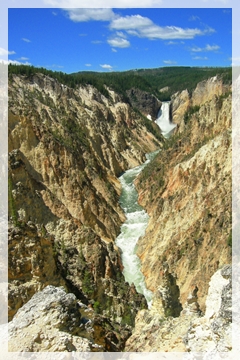
Much of the prophecy in the Bible is frightening and it was meant to be. Jeremiah’s warnings to Judah were as urgent as the weather alerts on our phones that tell us to take cover because of an approaching tornado. That kind of warning, while frightening, is meant to save lives. On the other hand, there are other prophecies in the Bible that give us hope. Consider Isaiah’s prophecies of a Messiah, the many prophecies that the people of Judah would return from their captivity in Babylon, and Revelation’s hopeful words that describe a time when death is gone, evil disappears, there are no more tears and sorrow, and all things are made new.

Hidden in Revelation’s joyful news, however, is the prophecy that there will be a final judgment which, depending on the person, can be good or bad news. For those who put their faith in Christ—who thirst of His water—there is nothing to fear; Jesus is forever. For those who ignored previous warnings and failed to put their faith in Christ, however, the eternality of hell awaits.

That Jesus is both the Alpha and Omega is a reminder to all of us: be ready! There will be a time when everyone will give an account to God of his or her life. Jesus is not the omega the way Z ends the alphabet. He’s not like the last page of a book with a finite number of pages. Jesus is the end of an eternal and everlasting book. Whether that never-ending book is set in the New Jerusalem, where God lives among his people, is entirely up to us.

And he also said, “It is finished! I am the Alpha and the Omega—the Beginning and the End. To all who are thirsty I will give freely from the springs of the water of life. All who are victorious will inherit all these blessings, and I will be their God, and they will be my children. But cowards, unbelievers, the corrupt, murderers, the immoral, those who practice witchcraft, idol worshipers, and all liars—their fate is in the fiery lake of burning sulfur. This is the second death. [Revelation 21:6-8 (NLT)]

Copyright ©2019 jsjdevotions. All rights reserved.

THE ALPHA

I am the Alpha and the Omega, the First and the Last, the Beginning and the End. [Revelation 22:13 (NLT)]

Grand Canyon of YellowstoneHaving forgotten the Greek alphabet he learned as a fraternity pledge, my husband asked the meaning of the symbols on the lecterns in the church sanctuary. On the left was A for alpha and, on the right, was Ω for omega: the first and last letters of the Greek alphabet. In Hebrew, those letters would have been aleph and tau. Among Jewish rabbis, using the first and last letters of the alphabet was a common way to express the whole of something, from its beginning to its end. Today’s equivalent expression would be “from A to Z” or “from soup to nuts.” Those Greek letters refer to three verses in Revelation in which Jesus claims to be the Alpha and Omega. They tell us that that, as part of our Triune God, Jesus was there at the beginning and He will be there at the end.
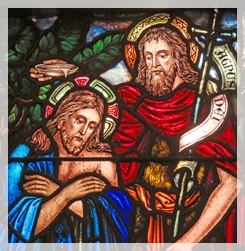
As for alpha: only God could exist before time even existed! Although Genesis starts with, “In the beginning,” God was already there! Since time, space, and matter are co-relative and God created space and matter, we know it was God who also created time. God never had a beginning because He is the beginning! He didn’t emerge from something; everything emerged from Him!

One of the basic laws of science is that neither mass nor energy can be created. Simply put, it can only be converted or broken apart and put together in a new way. Strictly speaking, mankind can’t create; we can only synthesize or transform by taking existing materials to make something new. We can’t create ice or steam but we can convert water into those things by freezing or boiling it. We can take that water (H2O) and combine it with carbon dioxide (CO2) and end up with carbonic acid (H2CO3) but we couldn’t create carbonic acid without the building blocks of hydrogen, carbon and oxygen. God, however, started from scratch; with no time, space or matter before Him, he created mass and energy. Making something from nothing boggles the mind but it’s the only answer that makes any sense—even to scientists!

Astronomy leads us to a unique event, a universe which was created out of nothing, and delicately balanced to provide exactly the conditions required to support life. In the absence of an absurdly improbable accident, the observations of modern science seem to suggest an underlying, one might say, supernatural plan. … The best data we have are exactly what I would have predicted, had I had nothing to go on but the five books of Moses, the Psalms, the Bible as a whole. [Arno Penzias]

Arno Penzias was the winner of the 1978 Nobel Prize in Physics. He and Robert Wilson discovered cosmic microwave background radiation. Their discovery supported the Big Bang theory of the creation of the Universe and showed that the Big Bang was not a chaotic random explosion. A highly fine-tuned explosion, it appears that some being guided it along.

The Apostle Paul said, “By faith we understand that the entire universe was formed at God’s command.” [Hebrews 11:3] I don’t think we need faith to know that anymore; it appears that science tells us the same thing. The writers of the Bible, however, didn’t know the theory of relativity, didn’t have telescopes telling them the universe is expanding, and had never heard of the Big Bang, thermodynamics, radiation afterglow, or variations in the temperature of the “great galaxy seeds” – they just knew the truth. Our great God is the Alpha!

I alone am God, the First and the Last. It was my hand that laid the foundations of the earth, my right hand that spread out the heavens above. When I call out the stars, they all appear in order. [Isaiah 48:12-13 (NLT)]

All glory to him who alone is God, our Savior through Jesus Christ our Lord. All glory, majesty, power, and authority are his before all time, and in the present, and beyond all time! Amen. [Jude 25 (NLT)]

Copyright ©2019 jsjdevotions. All rights reserved.

MARKED AND SEALED

One day when the crowds were being baptized, Jesus himself was baptized. As he was praying, the heavens opened, and the Holy Spirit, in bodily form, descended on him like a dove. And a voice from heaven said, “You are my dearly loved Son, and you bring me great joy.” [Luke 3:21-22 (NLT)]

Baptism of JesusAlthough I don’t remember my Baptism as an infant, I do have a picture that tells me I wore a long white dress and a bonnet. Another picture tells me that I wore a shorter white dress, a hat instead of a bonnet and my first pair of nylon stockings and heels at my Confirmation thirteen years later. That, however, is about all I remember of making a public reaffirmation of my faith and recommitting to the baptismal promises made for me when I was a baby. Although I knew a lot about Jesus at the time, I’m not sure that I truly knew Him. I know Him now and, in a much simpler ceremony, I recently reaffirmed my Baptism in a way I will never forget.

The first Sunday after Epiphany is when many churches celebrate the Baptism of our Lord which is the case at one of the churches we attend. The hymns (When Jesus Came to Jordan, O Come and Dwell in Me, and On the Wings of a Snow White Dove) set the stage. The readings from Isaiah, Acts, and Luke kept our focus on Baptism and the pastor’s sermon continued the theme as she told of her visit to the Holy Land, standing where John may have baptized Jesus, and collecting water from the Jordan River. After the sermon, she offered us the opportunity to reaffirm our Baptisms when we came to the altar to receive Communion.

The Pastor held a chalice filled with water and, when we approached her, she dipped her finger in it, made the sign of the cross on our foreheads and said, “In Baptism you were marked with the cross of Christ and sealed with the Holy Spirit forever.” That she’d collected the water from the Jordan River made it even more meaningful. If there could be frosting on this cake, it is that we then received the bread and wine of the Lord’s Supper. With just two steps, I passed from the beginning of Jesus’s ministry—His Baptism when the Holy Spirit descended upon Him—to the night He was betrayed and instituted Communion. I accepted the wafer from a second person, dipped it in a chalice of wine held by a third and ate it while remembering the body that was given and the blood that was shed, not just for me, but for all of us.

It’s rare that we celebrate the two New Testament ordinances (what many call sacraments) together and I found it a moving experience. Baptism and the Lord’s Supper are the two rituals or practices that Jesus commanded (or ordained) the assembly of believers to observe. Baptism is not what a person does to be saved; our salvation is by grace through faith in Jesus Christ. Nevertheless, Baptism is something a saved person does. It symbolizes the death of the old life and our resurrection as a new person in Christ. While it’s only done once, it can be reaffirmed, as I did last weekend. Participating in Communion is another thing the saved person does. Unlike Baptism, however, taking Communion is something the saved person does throughout his life. When we partake of the Lord’s Supper, we walk as that new person in Him and connect not just with our Lord but with all with all believers, both past and present.

No matter how long ago we became Christians or the age at which we were baptized, let us always remember that we have been marked with the cross of Christ and sealed with His Holy Spirit forever.

Those who believed what Peter said were baptized and added to the church that day—about 3,000 in all. All the believers devoted themselves to the apostles’ teaching, and to fellowship, and to sharing in meals (including the Lord’s Supper), and to prayer. [Acts 2:41-42 (NLT)]

Copyright ©2019 jsjdevotions. All rights reserved.

MISTAKES HAPPEN

But if we confess our sins to him, he is faithful and just to forgive us our sins and to cleanse us from all wickedness. [1 John 1:9 (NLT)]

golden mantled ground squirrel - YellowstoneIt was late Saturday night when one of our pastors glanced at the next day’s church program and saw that Sunday’s sermon was titled “Epithet.” Since he wasn’t speaking about insults on social media but about the way we’ll be remembered when we’re gone, it should have read “Epitaph.” After spending the next hour trying to figure out a way to tie epithets into epitaphs, he realized it made more sense to own up to his spelling error, which he did at all three services.

Life gives us an abundance of opportunities to make mistakes and, sometimes, it seems as if we never miss one! We mishear, misinterpret, misjudge, misread, misspeak, misspell, misunderstand and, yes, we sin. We take wrong turns, say the wrong things, and believe the wrong person. Sometimes, that wrong person is an over-confident self. Overly confident, the pastor didn’t proofread, the builders of the Titanic didn’t provide enough life boats, and Napoleon thought he could successfully invade Russia in the winter.

Like the pastor, as much as we hate to do it, we need to own our mistakes and admit our responsibility for them. Sometimes, we can make the best of them, in which case they cease being mistakes. For example, while 3M’s Patty Sherman was trying to develop a rubber that wouldn’t deteriorate when exposed to jet fuel fumes, she made a mistake and spilled a few drops of one failed test batch on her shoe. Later, seeing that those spots were clean while the rest of her shoe had gotten stained and dirty, she made the most of that mistake with a product we call Scotchguard!

Sometimes, we can fix our mistakes. When KFC discovered their motto “Finger-lickin’ good!” became “Eat your fingers off!” in Chinese, they quickly corrected their clumsy translation. Sometimes, though, we just plow on ahead in the face of our errors. The Leaning Tower of Pisa started to lean five years after construction began but, rather than admit and correct the problem, building continued for another for 192 years. They kept compensating by making the uphill side shorter but, because mistakes don’t correct themselves, the tower kept leaning.

Like that learning tower, many of our mistakes are ones with which we must live. Hopefully, we learn from our errors as I imagine NASA did when they accidentally taped over their video of the moon landing. Rather than dwelling on our mistakes, we have to move out of the land of “what if” into the land of “what is.” This, however, is where we encounter the hardest part of making a mistake: forgiving ourselves.

Consider the mistakes of Judas and Peter: Judas sold Jesus for thirty pieces of silver and Peter denied Him three times. Realizing Jesus would die for his betrayal, could Judas have been trying to undo his mistake by giving back the blood money? Filled with remorse and unable to change what had been done, he killed himself. I can’t help but wonder what would have happened if only Judas had waited three days. I know Jesus would have forgiven Him. Think of the testimony Judas could have given if he’d forgiven himself and waited as did Peter. Like Judas, Peter betrayed Jesus but, unlike him, he forgave himself, lived with his mistake, and was in the room when Jesus appeared! Think of the powerful testimony Peter did give!

We have a choice about even our most grievous mistakes. Like Peter, we can live with them, forgive ourselves, accept God’s forgiveness, and move on with our lives in service to Him. Or, like Judas, we can hold on to them and refuse to forgive ourselves. Our guilt may not take our lives but it will take our peace, joy, self-confidence, hope, and even our faith in a forgiving God. We’re told we must forgive to be forgiven; it would seem that command means forgiving ourselves as much as it means forgiving others. Let our guilt be washed away!

Finally, I confessed all my sins to you and stopped trying to hide my guilt. I said to myself, “I will confess my rebellion to the Lord.” And you forgave me! All my guilt is gone. [Psalm 32:5 (NLT)]

And since we have a great High Priest who rules over God’s house, let us go right into the presence of God with sincere hearts fully trusting him. For our guilty consciences have been sprinkled with Christ’s blood to make us clean, and our bodies have been washed with pure water. [Hebrews 10:21-22 (NLT)]

Copyright ©2019 jsjdevotions. All rights reserved.