THE PRODIGAL FATHER (Part 2 – Luke 15:11-32)

Suppose a man has a stubborn and rebellious son who will not obey his father or mother, even though they discipline him. In such a case, the father and mother must take the son to the elders as they hold court at the town gate. The parents must say to the elders, “This son of ours is stubborn and rebellious and refuses to obey. He is a glutton and a drunkard.” Then all the men of his town must stone him to death. In this way, you will purge this evil from among you, and all Israel will hear about it and be afraid. [Deuteronomy 21:18-21 (NLT)]

When the boy we know as “the prodigal son” comes to his senses and returns home, Jesus never says he was repentant; He says the boy was hungry! Moreover, while he knows he’s not worthy to be treated as a son, the boy doesn’t ask to be taken on as a slave; he boldly plans on asking to be hired as a paid servant. Those hearing the story probably were sure the boy was about to be properly punished but Jesus defied convention again. When the father sees his returning son, he runs to him with abandon. Again, cultural norms were flouted. Because running required a man to lift his garment and expose his bare legs, it was considered improper and undignified for a grown man to run. Perhaps Jesus’s listeners excused the man’s unseemly behavior because they thought he was in a rush to rebuke his boy. Expecting him to perform a kezazah ceremony (a shunning ritual in which he’d break a pot and yell that his son was cut off from his people forever), the father breaks all of society’s rules and embraces his boy.

The father doesn’t even allow his son to offer himself as a servant; instead, he restores him into his family and calls for the best robe, a ring, and shoes for the boy. We might overlook the significance of these gifts but Jesus’s audience wouldn’t. By calling for shoes, it’s clear the boy is reinstated into the family; masters and their sons wore shoes but servants and slaves didn’t! By covering his son’s swine filth with his best robe, he’s honoring the boy and, since the ring probably had the family crest on it, he’s returning his son to a position of authority. To further establish the boy’s restoration into the family, his father calls for the butchering of the fatted calf. This wasn’t to be a quiet family dinner; a “fatted calf” was saved for a major celebration like a wedding. Treating his son like a dignitary, there was to be a feast for the entire village. Today, this would be like welcoming back a renegade son with open arms, and giving him your Rolex, your power of attorney, a seat on the company’s board of directors, hosting a huge bash at the Country Club, and posting the pictures on social media. The father’s behavior was inexplicable and Jesus’s audience had to have been astonished. Where was the expected condemnation and punishment?

Then we get to the older brother. Again, because we’ve become accustomed to poor manners and insolence in our society, we don’t realize how unacceptable his behavior is. By defiantly refusing to attend the festivities, he snubs his father and family in much the same way his younger brother had. He further disrespects his father by telling a servant to fetch him and making his father come to him. A host leaving a feast was an insult to his guests and a father going to his son rather than requiring his son to come to him was another shocking break with propriety. Then, rather than address his father respectfully, the boy insolently launches into his tirade and further distances himself from the family by referring to his sibling not as “my brother” but as “this son of yours.” Rather than harshly castigate the boy as would be expected, his father lovingly addresses him as teknon (meaning “dearly beloved son”) rather than the more commonly used huios which is used for “son” throughout the rest of the story. Reassuring his belligerent child that he’s not lost his place and that everything he has belongs to the boy, the father lovingly tells him the more important thing is to celebrate his brother’s return.

From the beginning to the end of this parable, Jesus’s listeners would have gasped in unbelief and dismay at the appalling behavior displayed by both father and sons. Like the older brother, they couldn’t understand reconciliation without punishment!

When we put this parable in the context of the times, a far better title than “The Prodigal Son” is the “The Prodigal Father.” While “prodigal” can mean wasteful and reckless, it also means generous, giving on a lavish scale, kindhearted and magnanimous—making it the perfect adjective for the father. By seeing the father’s deep wide love for his children through the eyes of a first century Jew, we truly appreciate the depth of God’s love for us. Indeed, He is our prodigal Father—generous beyond belief in mercy, love and forgiveness. Are we as prodigal with our love and forgiveness as God is with His?

And may you have the power to understand, as all God’s people should, how wide, how long, how high, and how deep his love is. [Ephesians 3:18 (NLT)]

But God showed his great love for us by sending Christ to die for us while we were still sinners. And since we have been made right in God’s sight by the blood of Christ, he will certainly save us from God’s condemnation. [Romans 5:8-9 (NLT)]

Copyright ©2019 jsjdevotions. All rights reserved.

THE PRODIGAL SON (Part 1 – Luke 15:11-32)

To son or wife, to brother or friend, do not give power over yourself, as long as you live; and do not give your property to another, lest you change your mind and must ask for it. While you are still alive and have breath in you, do not let any one take your place. … At the time when you end the days of your life, in the hour of death, distribute your inheritance. [Sirach 33:19-20,23 (RSVCE)]

If one assign in writing his estate to his son to become his after his death, the father cannot sell it since it is conveyed to his son, and the son cannot sell it because it is under the father’s control. [Babylonian Talmud (Baba Bathra viii.7)]

great blue heronThrough His parables, Jesus related profound spiritual truths in stories that were easily understood and relevant to his listeners. Although Jesus’s original audience often didn’t like His message, they clearly knew what He was saying. Because of the vast cultural differences between our world and 1st century Palestine, I’m not sure we fully appreciate the impact His parables had on the people who first heard them.

Nowadays, it’s not unusual to come across indulgent fathers and pleasure-seeking, selfish, and rude children but, when Jesus told the parable known as “The Prodigal Son,” honor and respect for one’s parents were of paramount importance as were the dignity and absolute authority of the patriarch of the family. Jesus’s listeners must have gasped in horror and unbelief when they heard Him describe behavior by both father and sons that defied acceptable conduct and cultural norms.

Although some fathers at that time might distribute their estates prior to death, they would continue to receive the income while their sons managed it. What is extraordinary in Jesus’s parable is that, by brashly demanding his inheritance, the younger son really is telling his father, “I wish you were dead so I could get on with my life!” Although the expected response would be to slap the boy and immediately disinherit him, the father does as his boy asks. When we read that the son “gathered together” his things, we think of it as packing up his belongings. The Greek word used, however, was sunago which, in this context means the son turned his inheritance into cash. Although preserving family property was of utmost importance to the Jews, the boy blatantly defies the Talmud by selling his share of the estate (thus depriving his father of its income). Since he leaves home within a few days, the implication is that he didn’t even try to get top dollar for the land.

By then squandering his entire inheritance, the son shows contempt for all that his father accomplished over the years. As if the story weren’t shocking enough, he compounds his sin and further dishonors his father by moving to a distant country (meaning Gentile land) and eating with pigs. Picture a son demanding part of his father’s business, selling it at a loss to a competitor, quickly squandering his money in wild living, and then going off to join the Taliban and you get a vague idea of how astonished Jesus’s audience might have been by this story. While the behavior of the father was baffling, the behavior of his son was absolutely unforgivable!

Both the Torah and Talmud were quite clear about one’s behavior toward parents and you can be sure Jesus’s listeners knew how this story was supposed to end. Jesus, however, had a way of turning people’s expectations upside down. This was the rabbi who spoke of the first being the last, praying for one’s enemies, walking by faith rather than sight, turning the other cheek, being weak to become strong, leading by serving, giving to receive, and losing your life to save it. If His audience was shocked at how the parable began, they were probably scandalized at how it finished.

“Cursed is anyone who dishonors father or mother.” And all the people will reply, “Amen.” [Deuteronomy 27:16 (NLT)]

Copyright ©2019 jsjdevotions. All rights reserved.

IN ALL THINGS

Always be joyful. Never stop praying. Be thankful in all circumstances, for this is God’s will for you who belong to Christ Jesus. [1 Thessalonians 5:16-18 (NLT)]

Swamp lily - Corkscrew swampAfter the Apostle Paul established the church in Thessalonica, he encountered persecution from both the Jews and city officials so he abruptly fled with Silas. In his first letter to the Thessalonians, Paul sends words of comfort, edification, and encouragement to the new church. Along with some practical advice on Christian living, he reassures the new converts in their persecution and 1 Thessalonians 5:16-18 are some of my favorite verses.
A common theme in Paul’s letters is that our joy, prayers and thanks shouldn’t depend upon our circumstances. In this letter to the Thessalonians, Paul’s short sentences have a forceful tone and, rather than merely suggesting, the Apostle is almost ordering them to rejoice, pray and give thanks! While we should rejoice in what Matthew Henry calls our “creature comforts,” rather than an emotion, this joy is an attitude of delight in the Lord rather than in our condition. Instead of “always,” the King James translation says “evermore” and, for the believer, rejoicing forevermore is possible. We can rejoice in anticipation of our future when our joy truly will be never-ending.

One of the ways to always rejoice is to pray without ceasing! Prayer is conversing with God and, if we’re talking with Him, we can’t help but be joyful. Yet, looking at Paul’s example of working as a tentmaker during his ministry, I don’t think Paul means we should be on our knees and praying incessantly 24/7. Nevertheless, we should be continually aware of God’s presence in our daily lives. Rather than do nothing but pray, we should allow nothing to hinder our perseverance and faithfulness in prayer. With attentiveness to God’s will for us, our lives should be a continual prayer and all of our actions should honor, worship and praise the Almighty!

Then we get to Paul’s third command: “Be thankful in all circumstances, for this is God’s will for you…” Because most modern translations tend to group these three verses together in one paragraph, I took the last part of this sentence to mean that it is God’s will that we rejoice, pray and give thanks in all circumstances. Indeed, I’m sure it is but, reading his words in the light of the trials facing the Thessalonians gives them deeper meaning.

Considering that they were being persecuted and “all circumstances” for them included suffering, prosecution and intimidation, Paul’s words tell them to look beyond their hardship because all that was happening was within God’s will for them! Paul knew that God is at work on behalf of His people in any and all circumstances. It is because of that, we can be thankful in scarcity, hardship, loss, peril, and sickness and as well as in plenty, opportunity, gain, security, and health.

We can rejoice forever, make our lives a continual prayer, and give thanks in all circumstances because we know that our situation, no matter how dire, is within God’s plan for us and is for our good. Knowing that “this is the will of God for you who belong to Christ Jesus,” we can, indeed, joyfully give thanks!

And we know that God causes everything to work together for the good of those who love God and are called according to his purpose for them. [Romans 8:28 (NLT)]

Copyright ©2019 jsjdevotions. All rights reserved.


FROM BAD TO WORSE

O Lord, how long will you forget me? Forever? How long will you look the other way? How long must I struggle with anguish in my soul, with sorrow in my heart every day? How long will my enemy have the upper hand? [Psalm 13:1-2 (NLT)]

Once a pampered prince, forty years later, Moses was living as a Midianite shepherd. When speaking to him from the burning bush, God laid out His plan for freeing the Israelites from Egyptian slavery and the pivotal role Moses would play in it. Protesting, Moses made excuse after excuse but God countered every excuse with a solution. Provided with a shepherd’s staff and Aaron as his mouthpiece, Moses reluctantly accepted God’s charge. Before approaching Pharaoh, however, he first met with Israel’s elders to convince them that he was on a mission from God.

Although the elders were convinced, Pharaoh wasn’t. When Moses asked that the Israelites be given just three days to journey into the wilderness and worship their God, Pharaoh didn’t just refuse. Accusing Moses of interfering with his people’s work, he cruelly increased their work load. Instead of having the straw needed for brick making provided, they had to find their own straw while still meeting their daily brick quota. When they failed to do so, the Israelite foremen were beaten. Faced with an impossible task, they approached Pharaoh. Pitilessly refusing to lighten their load, he accused the Israelites of laziness. Protesting to Moses, the foremen blamed him for the harshness of their Egyptian masters. Disheartened at his lack of success and Egypt’s increasing brutality, the Israelites lost all confidence in Moses and God’s promise of relief. Instead of going from bad to better, things had gone from bad to worse.

Sadly, even Moses lost faith. Forgetting that God told him Pharaoh would not let them go easily, the despondent Moses cried out to God. He questioned God’s purpose and even accused Him of doing nothing to help!

Things looked bad for David more than 420 years later. After Samuel anointed him king, David spent the next fifteen years on the run from King Saul who was trying to kill him. Like Moses, he was following God’s plan and yet things had gone from bad to worse for him, too. Like Moses, he cried out and asked God why he’d been forsaken.

Things looked dire for Elijah, as well. Like Moses and David, he wasn’t winning any popularity contests by obeying God. In his case, the prophet was giving unpleasant prophecies to some evil people. The enraged Jezebel was out to kill him and he’d just received her message that he’d be dead within 24-hours. The exhausted man sat under a broom bush and, sure that he was as good as dead, told God to kill him then.

Scripture teaches that, when we’re following God’s plan, we will face opposition in the world. It’s been suggested that if we don’t face the enemy’s opposition, we’re probably not doing God’s work. There will be times when our circumstances look bleak, God seems to be looking the other way, and the enemy seems to be winning.

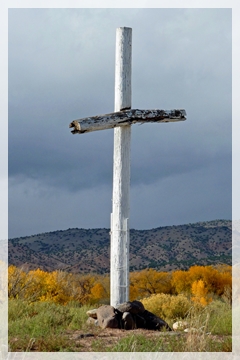
When Jesus’s followers stood at the foot of the cross, watched Him suffer, and heard Him speak the words of Psalm 22 asking God why He’d been abandoned, it probably seemed that all hope was gone and the enemy had won. Three days later, however, it was clear that all hope had arrived! We can’t give up on the power, wisdom and goodness of God because his plan sometimes seems to have gone awry. Let us always remember that God’s promise to the Israelites is as true today as it was over 3,400 years ago: “Do not be afraid or discouraged, for the Lord will personally go ahead of you. He will be with you; he will neither fail you nor abandon you.” [Deuteronomy 31:8 (NLT)]

The Lord hears his people when they call to him for help. He rescues them from all their troubles. The Lord is close to the brokenhearted; he rescues those whose spirits are crushed. The righteous person faces many troubles, but the Lord comes to the rescue each time. [Psalm 34:17-19 (NLT)]

I have told you all this so that you may have peace in me. Here on earth you will have many trials and sorrows. But take heart, because I have overcome the world.” [John 16:33 (NLT)]

Copyright ©2019 jsjdevotions. All rights reserved.

HE WON’T BE STOPPED

At that time Moses was born—a beautiful child in God’s eyes. His parents cared for him at home for three months. When they had to abandon him, Pharaoh’s daughter adopted him and raised him as her own son. Moses was taught all the wisdom of the Egyptians, and he was powerful in both speech and action. [Acts 7:20-22 (NLT)]

pipevine swallowtailFor the Israelites, 1526 B.C. was a terrible year to have a baby boy. Fearing the growing strength of the Jewish nation in Egypt, Thutmose I ordered that all Hebrew male babies be killed. Fifteen hundred years later, the Jewish historian Josephus would explain that Pharaoh’s counselors gave him this warning: “There would be a child born to the Israelites, who, if he were reared, would bring the Egyptian dominion low, and would raise the Israelites; that he would excel all men in virtue, and obtain a glory that would be remembered through all ages.”

When Jochebed and Amram had a baby boy, Jochebed was unwilling to see her child thrown into the Nile. After waterproofing a papyrus basket, she placed her infant in it and hid him among the reeds. In one of God’s beautifully orchestrated events, Pharaoh’s daughter (feasibly the only person in the nation who could save the one who would lead Israel out of bondage) just happened to be bathing at the river, hear the baby’s cries, and take him as her child.

She was one of the most important women in the history of God’s people and Scripture doesn’t even tell us her name! While much is speculation, historical documents lead most scholars to believe that she was Hatshepsut, the only surviving child of Thutmose I and his primary wife Ahmose. With no living brothers, the heir to the throne became the son of the pharaoh’s secondary wife, Hatshepsut’s half-brother Thutmose II. To legitimize his claim to the throne, the half-siblings were married. Hatshepsut wasn’t able to bear sons so, like their father, her husband had a son by a secondary wife. When Thutmose II died, Hatshepsut became co-regent with her infant step-son, Thutmose III, and ruled for 22 years until her death. At some point in this story, Hatshepsut took Moses and raised him as her child. As step-brothers, Moses and Thutmose III probably knew one another. Once Hatshepsut died, Moses may have been perceived a threat by the young Egyptian king. When Moses fled Egypt just a few years after his adoptive mother’s death, political intrigue along with murder may have contributed to his hasty departure.

We know some of Hatshepsut’s history but, other than reading that she felt sorry for the crying baby, we know little of her. How did she have the audacity to defy Pharaoh’s command, challenge tradition, and come before her father and his advisors with a Hebrew baby? Did she think her father weak for being afraid of an industrious people or cruel for killing innocent defenseless children? Perhaps she thought that, by adopting this orphaned boy, he could become Pharaoh’s legitimate heir and she would have power rather than her half-brother. Or was it simply God’s whisper in her ear that gave her both the courage and compassion to save this child?

Inadvertently, Pharaoh’s daughter prepared her adopted son to speak before another Pharaoh, free the Israelites, and record the first five books of the Old Testament. Educated in the royal harem along with others of royal blood, he would have studied hieroglyphic and other scripts, copied and memorized lengthy lists of words and names, and learned the languages of the world. Both public speaking and the ability to write well were highly valued in the royal classroom. When reading the exodus story, it’s easy to wonder how Moses and Aaron could gain an audience with the Pharaoh. When Moses returned to Egypt, Amenhotep II, the son of Thutmose III, was on the throne. As the adopted son of Hatshepsut, however, Moses was the step-uncle of the king! Moreover, having been raised in the royal harem, even forty years later, others in the court remembered and respected the son of Hatshepsut.

Because of Hatshepsut, the Pharaoh’s daughter, Moses was perfectly prepared for his God-given destiny. Little did she know when she adopted him that he would be the one about whom her father’s counselors had warned! Just as happened 1500 years later when another boy child was born to the Israelites and another cruel ruler tried to stop the one who would deliver His people, God’s plan could not be thwarted. He cannot be stopped!

And we know that God causes everything to work together for the good of those who love God and are called according to his purpose for them. [Romans 8:28 (NLT)]

I am God, and there is none like me. Only I can tell you the future before it even happens. Everything I plan will come to pass, for I do whatever I wish. [Isaiah 46:9b-10 (NLT)]

Copyright ©2019 jsjdevotions. All rights reserved.

DON’T ADD OR SUBTRACT

Do not add to or subtract from these commands I am giving you. Just obey the commands of the Lord your God that I am giving you. [Deuteronomy 4:2 (NLT)]

tri-colored heron - snowy egretIt’s easy to have misconceptions about Scripture. If you were to ask someone the identity of the forbidden fruit, chances are the answer would be an apple. Scripture, however, never names the fruit. The Hebrew word used was peri which is a generic term for “produce,” “results,” or “reward.” We probably got the idea that it was an apple from later translations of Scripture into Latin since the Latin word “evil” is mălum, a word quite similar to the Latin word for “apple,” which is mālum. Renaissance painters continued to perpetuate the myth with their depiction of an apple at the temptation. Scripture, however, never identifies the fruit because its identity is not important; the evil wasn’t in the fruit but rather in Adam and Eve’s disobedience.

The three kings were neither three nor kings. Rather than kings, they were magi or wise men, perhaps philosophers, astronomers, or counselors of kings. Familiar with Hebrew Scripture, they knew and understood the various Messianic prophecies. It is merely tradition that their names were Gaspar, Balthazar, and Melchior. While we know there were at least three gifts, we don’t know how many magi there were.

If asked about Mary Magdalene, most people would say she was a repentant prostitute and probably the sinful woman who anointed Jesus’s feet but there is no evidence to support this. All four gospels do mention this Jewish woman from Magdala who helped support Jesus and the disciples, witnessed the crucifixion and Jesus’s burial, and saw the risen Christ at the empty tomb. Although Luke tells us tells us that Jesus healed her of seven demons, we have absolutely no reason to think of this once mentally ill woman as immoral or wanton; she was no more a sinner than were any of the disciples.

If you were to ask most Protestants about the “Immaculate Conception,” they would probably say it refers the conception of Jesus in a virgin’s womb, but it doesn’t. While Jesus was, indeed, born without sin, this Roman Catholic doctrine refers to the conception of Mary, the mother of Jesus, and states that, unlike the rest of mankind, Mary had no original sin and remained sinless throughout her life. Scripture, however, never describes Mary as anything but an ordinary, although godly, woman: a woman who needed a savior as much as the rest of us.

We often quote scripture that isn’t Scripture. Money isn’t the root of all evil; in fact, it can do all sorts of wonderful things. The Apostle Paul, however, warns us that it’s the love of money that is the root of all kinds of evil, which is not quite the same. While “it came to pass” occurs about 400 times in the King James Version of the Bible, “This too shall pass,” never does. God does work in mysterious ways but that sentiment comes from a 1774 hymn by William Cowper. “God helps those who help themselves,” is nowhere in the Bible and probably came from one of Aesop’s fables and, while the Old Testament has lots of rules about cleanliness, “Cleanliness is next to godliness,” is not one of them. In fact, Jesus tells us to worry more about the sin in our hearts than the dirt on our hands!

The Bible is the written testimony of God’s word. When we quote the Bible, we want to be sure that what we’re quoting actually is in the Bible and, when we’re telling Bible stories, we want to tell the story correctly. God told the Israelites to neither add nor subtract from His commands; neither should we. We are to seek what Scripture actually means, not what we’d like it to mean. “I have hidden your word in my heart, that I might not sin against you,” said the Psalmist. [119:11] Let’s make sure the words we’ve put in our hearts actually are God’s!

Oh, how I love your instructions! I think about them all day long. Your commands make me wiser than my enemies, for they are my constant guide. … Your word is a lamp to guide my feet and a light for my path. … The very essence of your words is truth; all your just regulations will stand forever. [Psalm 119:97-98,105, 160 (NLT)]

Copyright ©2019 jsjdevotions. All rights reserved.