
Jesus replied, “I am the bread of life. Whoever comes to me will never be hungry again. Whoever believes in me will never be thirsty.” [John 6:35 (NLT)]
 Although they were twins, Esau and Jacob were as different from one another as oil and water. Esau, the first born, was impulsive. An outdoorsman and hunter, he was his father’s favorite. Jacob was the quiet (and cunning) stay-at-home mama’s boy. Esau would have watched the Outdoor and Sportsman Channels while Jacob would have watched Food Network and HGTV.
Returning exhausted from one of his adventures and claiming he was starved, Esau asked for some of Jacob’s stew. Exploiting his brother’s hunger, Jacob offered to trade the stew for Esau’s birthright. The stew must have smelled delicious because Esau, who should have been outraged at the idea, accepted his brother’s offer. Foolishly, he relinquished his double share of their inheritance along with all the privileges and responsibilities due the eldest son simply to gratify his hunger.
Esau’s story reminds me of the acronym HALT which stands for hungry-angry-lonely-tired. Halt is what we should do before making a decision if we’re feeling any of those things! Esau was both tired and hungry when he made that life-altering decision. Granted, Jacob’s insistence on making a bargain before feeding his own brother was both sly and selfish of him. Still, the fault for that decision falls solely on the shoulders of Esau.
Esau wasn’t starving; his empty stomach may have been growling but he wasn’t malnourished or wasting away. Nevertheless, he was far more interested in immediately gratifying his hunger with a bowl of lentil stew than the ramifications of his choice. Like Esau, when we’re hungry, angry, lonely, or tired, we look to quickly meeting our needs without thinking about the consequences. In short, we’re blind to the enemy’s tactics and vulnerable to sin.
Our hunger may simply be for food, as it was for Esau, but it also can be for things like money, fame, attention, understanding, or acceptance. Simon the Sorcerer, for example, was so hungry for the power and authority of the Holy Spirit that he tried to buy it from Peter and John.
The time to make decisions is not when our emotions are on high alert. Acting in anger is dangerous and can lead to name calling, broken relationships, criticism, belittling, destruction, and even violence. Anger is what caused Moses to rashly smash stone tablets that had been written on by the hand of God! When insulted by Nabal, an enraged David immediately set out to kill every man in Nabal’s household. Fortunately, Abigail stepped in, pled for mercy, and cooler heads prevailed.
Making decisions when we’re lonely isn’t a good idea either. Feeling abandoned and alone, Elijah wanted to lie down and die. Being lonely, however, doesn’t necessarily mean being alone. We can feel isolated and disconnected even when surrounded by plenty of people. Perhaps, in spite of his wives and concubines, it was that sort of loneliness that caused David to desire Bathsheba. Halting helps us remember that God always is with us.
Being tired can be physical exhaustion, as it was with Esau, but it also can be a sense of being overwhelmed and drained. For forty years, Moses faithfully led the Israelites but it was his weariness and exasperation at their constant rebellion that caused him to disobey God and strike the rock at Kadesh. Sadly, his impulsive act meant the weary man never entered the Promised Land.
It’s been said that the difference between school and life is that, in school, you’re taught a lesson and then take a test but, in life, you’re given a test that teaches you a lesson! Let us learn the lesson about halting without having to make a mistake like Esau’s. As the old saying goes, “act in haste, repent in leisure.” Poor decisions come when we’re hungry, angry, lonely or tired. When you’re in one of those situations, halt and pray instead!
 But to you who are willing to listen, I say, love your enemies! Do good to those who hate you. Bless those who curse you. Pray for those who hurt you. If someone slaps you on one cheek, offer the other cheek also. … Do to others as you would like them to do to you. [Luke 6:27-29,31 (NLT)]
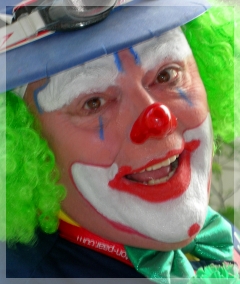 In the Pearls Before Swine comic drawn by Stephen Pastis, Pig may be a little naïve but, sometimes, the sweet fellow has the right idea. In a recent strip, when asked why he was wearing an enormous hat decorated with a smiley face, he explained it was “the hat o’ great happiness” and he wore it as a way of sending happiness to others. I thought of Pig’s silly hat of happiness while viewing an ad made by Coca-Cola as part of their 2015 Belgian “Choose happiness” campaign.
 The Apostle John used the word menó 53 times in his gospel and epistles. Frequently translated as abide, menó originally referred to the staying power of an army that is not driven from the battlefield. Meaning “to stay, remain, reside or stand fast,” menó came to imply an unbroken friendship or a continuous fellowship.
 Thinking of Jesus’ first miracle caused me to consider His other miracles. Along with general accounts of Him healing people in Capernaum, Gennesaret, and Jerusalem, the gospels mention 35 specific miracles He performed. When we consider the way Jesus healed the blind, His miracles seem almost tailor-made for the people blessed by them. John tells us that Jesus healed one blind man by mixing His spittle with dirt, rubbing the resulting mud over the man’s eyes, and telling the man to wash in the pool of Siloam. Mark tells of another occasion when Jesus took a blind man by the hand and led him out of the village. Surely, they talked but we don’t know about what. Jesus then spit on the man’s eyes and laid His hands on him. Although the man regained his sight, he didn’t understand what he saw so Jesus did it again. Was that one miracle done in two parts or could it have been two miracles: one to restore the man’s sight and the second so he could comprehend what he saw? Another time, Jesus skipped the spit and merely touched two blind men to restore their sight. Then we have the healing of Bartimaeus: Jesus immediately restored His sight without spit, mud, washing, or touch.
 Devotions of the Heart