
My heart is confident in you, O God; my heart is confident. No wonder I can sing your praises! Wake up, my heart! Wake up, O lyre and harp! I will wake the dawn with my song. I will thank you, Lord, among all the people. I will sing your praises among the nations. For your unfailing love is as high as the heavens. Your faithfulness reaches to the clouds. Be exalted, O God, above the highest heavens. May your glory shine over all the earth. [Psalm 57:7-11 (NLT)]
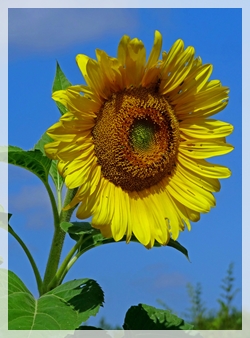 Do you sing in the shower? My father did and when we heard him joyfully singing at the top of his lungs, we knew it would be a good day for us all. I don’t sing in the shower (or elsewhere) since my singing would be a perfect way to turn a good day into a bad one for anyone within earshot. I do, however, have days, those bright sunshiny days, when I wake up with a song in my heart and I sing His praises in full voice with symphonic accompaniment. Fortunately, no one can hear me because I’m singing only with my heart. The words of Psalm 57 sound like they were written on one of those absolutely perfect mornings, when all seems right with the world and one wants to sing God’s praises from the depth of one’s soul.
When David penned Psalm 57, did he wake up feeling joyful? Was everything right in his world? Actually no; this psalm is about a time when David was fleeing for his life. He wasn’t looking out at a bright sunshiny day; he and his soldiers were hiding from King Saul in a dark dingy cave! Yet, David’s psalm is one of joyful thanks and praise. It’s not that David didn’t know how dire his situation was. Earlier in the psalm, he likens it to being surrounded by fierce hungry lions with tongues as sharp as swords and teeth like spears and arrows. In spite of his circumstances, David speaks of his confidence; confidence not in himself, in his troops or cause, or even the safety of the cave. He joyfully speaks of his confidence in God’s unfailing love.
If we have faith in God, regardless of how dark our circumstances, every day can be a bright sunshiny one. Sing to Him with joy, confident in His love. Even if no one else can hear your song, God will hear the song in your prayers. Even if we’re tone deaf and way off key, our heartfelt songs of thanks and praise will be music to God’s ears.
 The elderly Abraham and Sarah laughed at the thought of the two of them making a child and the old Jewish priest Zechariah doubted his barren wife could conceive. Yet, a thirteen-year old virgin believed that she would miraculously bear a son and a pagan Roman officer believed Jesus could heal his servant with just a word.
 “I Can’t Get No Satisfaction” sang the Rolling Stones in 1965. Back in 520 BC, the Jews of Jerusalem were probably singing their own version of that song. Sixteen years earlier, upon their return to Jerusalem from exile in Babylon, they had started to rebuild the temple just as God had instructed them to do. Within two years, however, construction had stopped. Granted, they had hostile neighbors who, fearing a prosperous Jewish state, harassed them. In actuality, though, they were more to blame for their delay than were their political opponents. Questioning God’s timing, they’d grown discouraged, lost focus and become more concerned about building their own homes than finishing God’s house. God sent a message to the people through the prophet Haggai pointing out that the harder the people worked for themselves, the less they had to show for it. By ignoring God and fulfilling their needs first, the Jews were destined to remain unsatisfied. Moreover, God was angry that He had been ignored. So angry, in fact, that He sent a drought to destroy their crops and livestock.
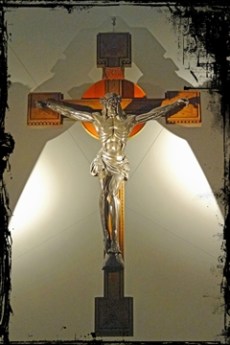 When my children were younger, there were several occasions that I wanted to pretend I had no idea to whom they belonged! There was that time one noticed (and used) the red emergency stop button on an escalator, or another discovered the meaning of the “domino effect” after pulling over one stanchion at the airport and seeing another ten follow suit, or one managed to be so nasty to the babysitter that she went home in tears, or when hotel security came knocking because of spitballs dropping from the window of our children’s adjoining hotel room. I really didn’t want to admit I knew them, let alone had given birth to them. We expected better from our children and their conduct certainly didn’t bring honor to our name. Unfortunately, their behavior, while unacceptable, was a somewhat unavoidable and unpleasant part of their growing up. Fortunately, those times of boundary testing are long over and I am now proud that they bear my name.
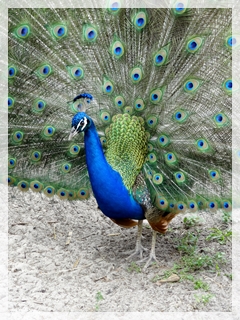 “Be mindful to be a blessing…” After reading Paul’s words as translated in the Classic Amplified Bible, I thought of a comic I recently saw in the newspaper. (Oddly, I get lots of inspiration from the comics and I’m not sure what that says about my intellect.) Nevertheless, in “Nancy,” written by Guy Gilchrist, it’s Nancy who is reading the comics page. The speech balloon says, “Today’s Motivation: Let your presence be a gift to all you meet!” The next panel shows her walking down the street. Instead of her typical hair ribbon, she is wearing an enormous bow and a gift tag that says, “To you!”
 Writing about my granddaughter yesterday made me think about birth defects. In actuality, all of us have what could be called birth defects—it’s just that some are more obvious than others. While all of God’s children have defects, none are defective. I consider a young man at our Florida church. Cerebral palsy keeps him strapped into a wheel chair and his physical limitations are immense. There is, however, nothing defective about this bright young man. I ponder the enthusiastic grocery worker with Down’s syndrome. She may have an extra chromosome, but there is nothing defective about her. I think of a fellow at church who has no ears. He may be deaf but there is nothing defective about him, nor is there anything defective about a friend’s grand born with only a partial arm and hand or my grand, with her heart defects and learning issues. They are all marvelously made—different from others, but no less wonderful.
 Devotions of the Heart