BE HOLY

Have the people of Israel build me a holy sanctuary so I can live among them. [Exodus 25:8 (NLT)]

And this is the basic law of the Temple: absolute holiness! The entire top of the mountain where the Temple is built is holy. Yes, this is the basic law of the Temple. [Ezekiel 43:12 (NLT)]
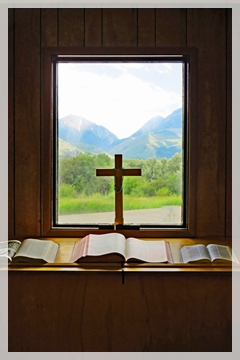
roadside chapelBefore the incarnation of Christ, God dwelt first in the tabernacle and then in the temple. The innermost room of the temple was called the “Most Holy Place” and it was in this inner room that God’s glory was said to dwell. This was where the Ark of the Covenant was kept and where the high priest came with a sacrifice to atone for his and the nation’s sins every year. With the incarnation of Jesus, God no longer dwelt in the temple but in the flesh of His son and, for a brief time, God actually walked among His people. Yet, when Jesus lived as a man, only a few people at a time could be in His presence. With His death, there is no yearly atonement ritual because Jesus atoned for our sins once and for all. Moreover, because of His resurrection, ascension, and the presence of the Holy Spirit, it is possible for countless people, everywhere, to be in His presence at the same time. Once we become believers, the Holy Spirit moves into our hearts and each one of us, as members of Christ’s church, become part of His body and the temple of God.

When Ezekiel spoke that the absolute rule of the temple was holiness, he was speaking of the temple building in Jerusalem, a place that had been defiled by idolatry and sin. While we no longer worship at a temple on a mount, the prophet’s words still hold true. The innermost room, the Most Holy Place, the dwelling of the Lord, still exists. That innermost room is now in our hearts and they must be kept holy. While we tend to think of holiness as moral purity, it is much more. It means to be dedicated or consecrated to God, to be set apart for Him, and not with just a small part of us. Holiness means that our entire being is His, our first love and loyalty are to Him, and that we are committed to God’s will and work.

In a sermon given in 1872, Victorian preacher Charles Spurgeon told of an unbeliever who ridiculed a Christian’s faith. The skeptic asked the believer whether his God was a great God or a little God. The devout man replied that his God was, “so great that the heaven of heavens cannot contain Him, and yet He condescends to be so little, that He dwells in broken and contrite hearts.” Indeed, our great God has chosen to dwell in our hearts. Although there was idolatry and sin in Jerusalem’s temple, let there be none in our hearts, the temple of the Lord.

For we are the temple of the living God. As God said: “I will live in them and walk among them. I will be their God, and they will be my people. Therefore, come out from among unbelievers, and separate yourselves from them, says the Lord. [2 Corinthians 6:16b-17 (NLT)]

But now you must be holy in everything you do, just as God who chose you is holy. For the Scriptures say, “You must be holy because I am holy.” [1 Peter 1:15-16 (NLT)]

Copyright ©2019 jsjdevotions. All rights reserved.

TRUTH BE TOLD

Many of his disciples said, “This is very hard to understand. How can anyone accept it?” Jesus was aware that his disciples were complaining, so he said to them, “Does this offend you? … And the very words I have spoken to you are spirit and life. … At this point many of his disciples turned away and deserted him. [John 6:60-61,63b,66 (NLT]

plumbgoSome prophets weren’t bothered by the truth and were available for hire. Ahab, for example, had 400 prophets on his payroll acting as his “yes men.” When he asked Jehoshaphat to join him in a campaign against Aram, Jehoshaphat requested the advice of prophets so Ahab summoned his seers. Jehoshaphat, however, recognized them as pagans; when he asked for a true “prophet of the Lord,” Micaiah was summoned.

Honest prophets, like Micaiah had a difficult life; if they prophesized an unpleasant truth, they often were punished or killed. Although warned to promise victory, Micaiah was unafraid of offending the king and responded with God’s truth about Israel’s defeat and Ahab’s death. His reward for telling the truth was a slap on the face, prison and a diet of bread and water; Ahab’s reward for ignoring the truth was death by a randomly shot arrow.

Daniel served as prophet to four kings; facing a series of egocentric and powerful rulers and surrounded by idolatry, his was not an easy job. When Nebuchadnezzar had a dream about a tree, the troubled Daniel hesitated to tell the king that it predicted a period of insanity for him. Nevertheless, he truthfully interpreted the dream and, at the risk of offending the king, bravely advised him to stop sinning. When the proud king didn’t, he ended up spending time living in the fields like an animal.

When Belshazzar called Daniel to interpret the mysterious writing on the wall, the king offered him beautiful gifts and great power for explaining the message but Daniel declined. His prophetic gift was never about gaining reward or power and, knowing the words’ meaning, he knew the reward was worthless. Unafraid of offending the king, Daniel boldly began by taking him to task for the way he’d dishonored God with his sinful disobedience, pride, desecration of sacred objects, and idolatry. The prophet finished by telling Belshazzar that his days were numbered, his reign had been found deficient, and that Babylon would fall and be divided among the Medes and Persians. Confident that he had an impregnable fortress and enough provisions to survive a twenty-year siege, Belshazzar didn’t take the words of warning seriously. Daniel’s prophecies proved correct. The ancient historian Xenophon writes that while the Babylonians were in the midst of that drunken feast, Darius the Mede diverted the Euphrates. Walking on the dry river bed, his army easily entered the city through the water gates. Belshazzar died that very night and the kingdom of Babylon was divided into 120 provinces.

Even when they knew their messages were unpleasant and that the consequences for speaking the truth and offending a king could be severe, neither Micaiah nor Daniel ever sugar-coated God’s truth. Finding their prophecies distasteful, Ahab, Nebuchadnezzar, and Belshazzar chose to ignore them. Like those kings, many of the people who heard Jesus found His truth offensive and inconvenient; choosing to ignore it, they walked away from Him. The fact that the truth is often unpleasant and can be ignored, however, doesn’t change its veracity.

Sometimes, as Christians, we are afraid to offend people with the truth and so we say nothing when God calls us to speak. While we never want to come off as domineering, disparaging or arrogant, we must not let fear keep us from speaking the truth. That God’s truth, even when lovingly and considerately spoken, may offend some people doesn’t mean the truth must not be told.

And the judgment is based on this fact: God’s light came into the world, but people loved the darkness more than the light, for their actions were evil.  All who do evil hate the light and refuse to go near it for fear their sins will be exposed. But those who do what is right come to the light so others can see that they are doing what God wants. [John 3:19-21 (NLT)]

Copyright ©2019 jsjdevotions. All rights reserved.

NUMBERED, WEIGHED AND DIVIDED

Yes, each of us will give a personal account to God. [Romans 14:12 (NLT)]

yellow-crowned night heronIn 539 BC, thousands of Medes and Persians were digging outside Babylon’s walls. Thinking they were futilely trying to undermine the city’s impregnable walls, Babylon’s King Belshazzar was unconcerned. While carousing with 1,000 of his nobles, he gave orders to bring out the gold and silver cups that Nebuchadnezzar had looted from Jerusalem’s temple 47 years earlier. The revelers were drinking to their false Babylonian gods with vessels dedicated to the one true God when a human hand appeared and started writing on the plaster wall. No longer so arrogant, the frightened Belshazzar called for his astrologers and diviners but, when the pagans were incapable of deciphering God’s message, Daniel was called to interpret the words.
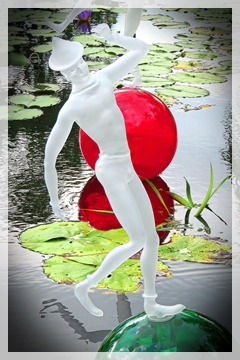
The three words on the wall were MENE, meaning numbered, TEKEL, meaning weighed, and PARSIN, meaning divided. The words meant Belshazzar’s days as king were coming to an end, his reign had been weighed and found deficient, and that Babylon would fall and be divided. Even though I don’t rule an empire, I wondered if those three words might apply to me, as well.

Numbered—yes, our days are numbered. That we don’t know how many days are allocated to us doesn’t mean they are limitless. While Belshazzar’s number was up (he died that very night), he wasted his last day in blasphemy, idolatry, and drunken revelry. How will we choose to spend our remaining days?

Weighed—like Belshazzar, our lives will be weighed (on God’s scales, not ours). Of course, no mortal can ever balance on His perfect scales. Nevertheless, God will hold us accountable at the Judgment Seat of Christ. Have we been good stewards of His gifts? Have we served selflessly or selfishly? Belshazzar dishonored God with gold and silver goblets; have we dishonored Him with our own form of idolatry? Do we love fame, wealth, home, career, possessions or beauty more than Him? Would God find us wanting because we’ve been short on grace, forgiveness and love?

Divided—like Belshazzar’s, our personal kingdom will be divided when we’re gone. After the government and bill collectors get their share, our heirs will divide the rest. All of those possessions we worked so hard to obtain and thought so important in this life will be divided among those we leave behind. Much of what we thought so valuable will end up at flea markets, resale shops, on eBay or in a landfill.

I’m not a pagan king, hosting a drunken orgy and committing sacrilege while his nation is under attack but those three words—numbered, weighed, and divided—hit home when I read them this morning. They are a vivid reminder to look carefully at my priorities. Much of my life can be described as stuff and nonsense. How about yours? Are our days spent wisely? Do we appreciate every day with which we are blessed? Will we be found lacking? Do we honor God with our words and actions? What will remain of us when we’re gone? While things are meaningless and will disappear, memories of us and the influence we’ve had on others will continue. Will the kingdom we leave to others consist of stuff that’s divided or love that multiplies?

Numbered, weighed, and divided: what do they mean to you?

So be careful how you live. Don’t live like fools, but like those who are wise. Make the most of every opportunity in these evil days. Don’t act thoughtlessly, but understand what the Lord wants you to do. [Ephesians 5:15-17 (NLT)]

Copyright ©2019 jsjdevotions. All rights reserved.

WHERE WAS HE? (Daniel – part 3)

Don’t be afraid, for I am with you. Don’t be discouraged, for I am your God. I will strengthen you and help you. I will hold you up with my victorious right hand. [Isaiah 41:10 (NLT)]

Frabel - Naples Botanic GardenSomeone was missing from yesterday’s story of Shadrach, Meshach, and Abednego and the fiery furnace: their good friend Daniel. When Nebuchadnezzar’s giant statue was erected on the plain of Dura, word was sent to all of his officials to assemble there for the statue’s dedication. We know Shadrach, Meshach, and Abednego were there because Daniel reported that they got tossed in a fiery furnace for refusing to bow to an idol. But what of Daniel? He’s the one who chronicled the event: the one who wrote that all of the high officers, officials, governors, advisers, treasurers, judges, magistrates, and provincial officials were present. Daniel gives no explanation for his absence at the dedication of the king’s golden statue.

We’d like to think that Daniel remained back in Babylon for some important task at the palace, was elsewhere on a vital mission, or even sick in bed. We want to think Daniel wasn’t there because, if he’d been in Dura that day, he should have joined his friends in the furnace. Four men would have been sent to certain death unless, unlike his friends, Daniel had bowed to the idol! Daniel, however, is our hero: the wise prophet who later braved a king’s wrath to pray and survived being thrown into a den of lions. We never want to think that our heroes are real people, with feet of clay, just like us. When we look at the Bible’s heroes, however, they really are every bit as flawed as are we! Among others, we have drunken Noah, lying Abraham, impatient Sarah, deceitful Jacob, thieving Rachel, temperamental Moses, jealous Miriam, weak Aaron, immoral Rahab, psychotic Saul, adulterous David, sex-addicted Solomon, bad dads Eli and Samuel, the thieving publican Matthew, and Peter, the disciple who denied Jesus. They all disappointed God and sinned at one time or another.

We’ll never know if Daniel was in that fiery furnace with his friends, far from Dura that day, or if he bowed to the idol. Oddly, the remote possibility that he might have bowed his head to an idol doesn’t bother me. It doesn’t disturb me because we have a great God of second (third, fourth, and more) chances. If Daniel sinned that day, along with prophecy and history, his story is one of forgiveness and redemption.

What we do know is that that God continued to give Daniel wisdom and revelations during the more than seventy years he served the four rulers of Babylon. We know that, when another opportunity arose to honor his God by rejecting idolatry, Daniel did the right thing. Perhaps he was inspired by his friends’ faith. In spite of knowing that he’d face certain death in a lions’ den, Daniel remained faithful and continued to openly pray to God rather than to the king. “May your God, whom you serve so faithfully rescue you,” said the king, and God did. Daniel, at the end of his story, was as faithful to God as were his three friends that day on the plain of Dura.

For he is the living God, and he will endure forever. His kingdom will never be destroyed, and his rule will never end. He rescues and saves his people; he performs miraculous signs and wonders in the heavens and on earth. He has rescued Daniel from the power of the lions. [Daniel 6: 26-27 (NLT)]

Copyright ©2019 jsjdevotions. All rights reserved.

WHAT WOULD YOU DO? (Daniel – part 2)

Do not be afraid, for I have ransomed you. I have called you by name; you are mine. When you go through deep waters, I will be with you. When you go through rivers of difficulty, you will not drown. When you walk through the fire of oppression, you will not be burned up; the flames will not consume you. For I am the Lord, your God, the Holy One of Israel, your Savior. [Isaiah 43:1b-3 (NLT)]

climbing asterOne night King Nebuchadnezzar had a disturbing dream and asked the court’s wise men to interpret it. Whether he couldn’t remember it (as happens with dreams) or, being obstinate, wanted to test the soothsayers and astrologers, we don’t know, but the king expected them to tell him the dream’s meaning without his revealing its content. Indignant at their failure to do so, he ordered the execution of all of Babylon’s counselors (which included Daniel, Shadrach, Meshach, and Abednego). Daniel approached the king and asked for time so that he could discover the dream’s meaning.

That evening the four men pled with God for His mercy and, during the night, the dream’s meaning was revealed to Daniel. After praising God for His revelation, Daniel correctly interpreted the king’s dream. In appreciation, the king praised Daniel’s God, chose Daniel for his court, and appointed Shadrach, Meshach, and Abednego as administrators over Babylon. While Nebuchadnezzar acknowledged that Daniel’s God was the greatest of gods, he never understood that Daniel’s God was the one and only God!

A large statue, only the head of which was gold, had been part of Nebuchadnezzar’s troubling dream. Perhaps, thinking he could change prophecy’s prediction that his kingdom would come to an end, he erected an enormous statue on a pedestal that was entirely overlaid with gold. When all of the officials were gathered around this ninety foot colossus, it was commanded that everyone, both foreign and Babylonian, was to bow to the image and worship it; those who disobeyed would be thrown into a blazing furnace. When Shadrach, Meshach, and Abednego refused to bow down, the king flew into a rage. Even when they were given a second chance, the men refused to worship the idol.

This was the kind of furnace used to bake bricks or smelt metal. We’re not talking third degree burns here; with a temperature of 1,800 degrees, they’d be cremated! The three, however, had faith in the God they served. This knew the God who kept them healthy and gave them wisdom was both good and powerful. Although confident that He could save them, they also knew that He might not choose to do so. Placing their lives in the hands of God, the three friends stood strong! Although thrown into the furnace, the Angel of the Lord saved them, and the men exited the furnace unharmed.

We only have to look at the fates of most of the disciples to know that angels won’t always save the faithful from incineration or open the doors to their prison cells. The disciples were imprisoned, beheaded, crucified, stoned, and beaten. Sadly, in some places, martyrdom of Christ’s followers continues today. The three men’s statement of faith is one of the strongest we’ll find throughout Scripture. Knowing there was no chance of survival, would we trust God as did they? Could we remain as faithful and strong as Shadrach, Meshach, and Abednego?

If we are thrown into the blazing furnace, the God whom we serve is able to save us. He will rescue us from your power, Your Majesty. But even if he doesn’t, we want to make it clear to you, Your Majesty, that we will never serve your gods or worship the gold statue you have set up. [Daniel 3:17-18 (NLT)]

Copyright ©2019 jsjdevotions. All rights reserved.

WHAT’S IN A NAME? (Daniel – part 1)

“But you are my witnesses, O Israel!” says the Lord. “You are my servant. You have been chosen to know me, believe in me, and understand that I alone am God. There is no other God—there never has been, and there never will be. [Isaiah 43:10 (NLT)]

black skimmerAfter Nebuchadnezzar’s first invasion of Judah, he returned to Babylon with the temple’s treasures and some of Judah’s nobility as captives. The best and brightest of the young men were to learn the literature and language of Babylon so they could serve the king. In spite of being captives, they were housed in the palace and given the king’s choice of food. While this would appear to be a pretty good gig for prisoners of war, the boys were probably castrated and made eunuchs as was typically done for palace officials (and prophesied by Isaiah in 2 Kings 20:18).

Among these captives were Daniel, Hananiah, Mishael, and Azariah, all of whom were given new Babylonian names. Daniel, whose name meant “God is my judge,” became Belteshazzar, meaning “Bel protects his life” (Bel was another name for the chief Babylonian god Marduke). Hananiah, whose name meant “The Lord shows grace,” became Shadrach, meaning “Under the command of Aku” (the Sumerian moon god). Mishael, whose name meant “Who is like God?” became Meshach, meaning “Who is what Aku is?” and Azariah, whose name meant “The Lord helps,” became Abednego, “Servant of Nebo” (the god of learning and writing).

“What’s in a name?” asked Juliet in Shakespeare’s Romeo and Juliet. “That which we call a rose by any other name would smell as sweet,” added the star-crossed lover. Romeo’s name made him an enemy to her family but his name was meaningless to Juliet. She knew a man’s name did not determine his value or character. Nebuchadnezzar, king of Babylon, thought otherwise. By changing the captive boys’ names, he wanted more than just their assimilation to Babylon; he wanted their allegiance. When he took their names from them, he also thought he took their God.

These young men lost their homes and families, their masculinity and their names. To further distance them from the God of Israel, as eunuchs, they wouldn’t be allowed to worship in the temple if they ever returned home. Nevertheless, they never lost their identity as children of the God of Israel and refused to defile themselves by partaking of the king’s food and wine.

Some think their decision was based solely on health and nutrition and now offer a wide variety of eating plans based on Daniel’s diet. Their refusal, however, probably had more to do with the youths’ attempt to regain some control over their lives and faith. The king’s meat would not have been butchered or prepared according to Jewish law and would have included prohibited foods like horseflesh and pork that had first been offered to the pagan god Marduk. The four friends refused it and, working out a compromise with the palace guard, agreed to eat nothing but vegetables and water for a trial period of ten days. Since they looked better nourished after that time, they were allowed to continue observing their food rules. Their fitness, however, had more to do with God’s promise of provision than their diet. God granted them not just health but special wisdom. In spite of their new names, they now knew that, by remaining faithful to God, He would be remain faithful to them. Found superior to all of the others in their group, they entered the king’s service in his court.

These four young men knew there was nothing in a name. What mattered was their character and their faith in God—a God who was judge, showed grace, and helped them in their troubles. They knew the Lord would honor those who honored Him and it was this knowledge that would carry them through their later trials in Babylon.

Praise the name of God forever and ever, for he has all wisdom and power. He controls the course of world events; he removes kings and sets up other kings. He gives wisdom to the wise and knowledge to the scholars. [Daniel 2:20-21 (NLT)]

Copyright ©2019 jsjdevotions. All rights reserved.