
You go before me and follow me, You place your hand of blessings on my head. Such knowledge is too wonderful for me, too great for me to understand. [Psalm 139:5-6 (NLT)]
 I started Sunday morning with Psalm 139—a beautiful reminder that God was with us at our conception, is with us now, and will be with us at our end. “Thank you for making me so wonderfully complex! Your workmanship is marvelous,” read the psalm. Those words reminded me of Joey. Chinese by birth, born without hands, and abandoned by his mother, he was adopted by an American family. In spite of his many visible and hidden challenges, Joey was a cheerful little guy until entering junior high school, encountering bullies, and asking the inevitable questions that come with adolescence. In spite of being part of a loving family, he feels he failed the birth family who discarded him like a piece of trash and, rather than feeling wonderfully made, Joey asks why God made him the way He did.
Scripture reading was followed by the newspaper where I found an interesting advice column. The writer has both birth and adopted daughters but her birth daughter refuses to allow her children to call her sister “aunt” because she’s not really “family.” In response, the psychologist noted that there are some deep seated jealousy issues in the girls’ relationship and pointed out that legally both girls have the same standing. He then added an interesting argument to show the absurdity of the birth daughter’s position. The adopted daughter could actually say she was more of a daughter than her sister because their parents deliberately chose her and had to go through a long involved process to get her. The other sister’s conception took but a few minutes and even may have been an accident! While I don’t think that argument will improve the girls’ relationship, he had an interesting point about adoption; it is a deliberate act of love!
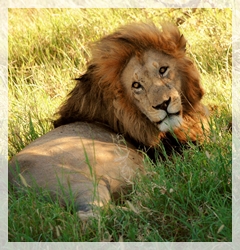
In a strange juxtaposition, Sunday’s sermon was part of a series, “Faith at the Movies,” and The Lion King was the subject. Until Rafiki confronted him, the lion Simba forgot who he was—the son of the king—and that his father lived in him. Like Simba, we are the King’s children; He adopted us when we accepted Jesus. Just as Simba’s father was in him, our Father lives in us.
Our Heavenly Father was there when we were but a gleam in our birth fathers’ eyes. As the psalmist wrote, He made “all the delicate, inner parts” of our bodies as He knit us together in our mothers’ wombs. Joey may appear flawed by human standards but he is perfectly made by God’s standards. When Simba saw his reflection in the water, he saw his father and Rafiki assured him, “He lives in you.” Joey and his family are working with counselors but, to truly heal, Joey will have to see the face of his Father, the King, when he sees his reflection. He will have to see his worth in being the adopted child of God and believe that God’s spirit lives in him.
Rafiki asks Simba, ”Who are you?” and Sunday’s sermon asked us the same question. Like Simba, we often forget that it’s not our circumstances that characterize us. Our sex, appearance, family, heritage, profession, assets, shortcomings, accomplishments, failures, and even our sins do not define us. It’s not what we are but whose we are that gives us value and worth. Because God adopted us into His family, first and foremost, we are children of the King.
Child of God, you cost Christ too much for him to forget you. [Charles Spurgeon]
 Jesus clearly promises forgiveness of our sins but some people treat this gift as little more than a Monopoly game’s “Get Out of Jail Free” card. The pilgrims Honest and Great Heart meet such a person in John Bunyan’s The Pilgrim’s Progress. Motivated by God’s promise of “eternal security,” Mr. Selfwill feels free to live any way he wants. Since David committed adultery, Rahab lied, and Jacob deceived, he believes he can do those things, as well. He thinks anyone who believes that Jesus has forgiven his sins has the freedom to sin willfully as long as he has some virtues to go along with his sins. Assuming his good deeds cancel out his bad ones, Selfwill deliberately sins.
 Because of my foot surgery, I was stuck in an air boot (and “air” definitely does not mean “light as air”) for five weeks. Weighing just a little over three pounds, it felt more like thirty by the end of each day. Wearing a cumbersome boot that never quite matched the height of any of my shoes took its toll on me. Eventually, my foot didn’t hurt as much as did my knee, hip, and back from hobbling along in my heavy unmatched footwear. Carrying extra loads of anger, resentment, worry, heartache, guilt, or regret can weigh us down in much the same way that boot affected my body and gait. Instead of walking with confidence and strength, we limp along in fear, discomfort and doubt. The difference, of course, is that there was purpose to my burdensome boot but there is no purpose in being saddled with emotional baggage. Jesus asks us to give Him our burdens; with Him in our lives, we don’t have to carry any extra weight in our hearts.
 While recovering from foot surgery, I had home visits from Mike, a physical therapist. He told me of a day, more than eighteen years ago, when he visited a new elderly patient. The obviously wealthy man lived alone in a beautifully appointed 6,000 square foot penthouse overlooking the Gulf of Mexico. Mike remembers him as the most unpleasant, uncooperative, bitter and miserable person he’s ever met. After that visit, the therapist drove to a nearby town for another new patient visit. Although less than an hour’s drive northeast of the affluent man’s luxurious home, it was a world apart. Today, the population in the first town has a median age of 65.6, a median household income of over $90,000, and a poverty rate of less than 10%. Just thirty miles away, the second town has a median age of 26, with a median household income of less than $29,000, and 41.6% of its population live below the poverty level. Although the numbers were different eighteen years ago, the disparity would have been the same (or even worse).
 The king of Aram was at war with Israel, Samaria was under siege, and there was a great famine in the city. Even food that wouldn’t normally be eaten was prized. For example, the head of a donkey, considered an unclean animal, sold for about two pounds of silver. The situation was so dire that some people had even resorted to cannibalism. Without the intervention of God, there was no hope in sight.
 Devotions of the Heart