
Let’s not get tired of doing what is good, for at the right time we will reap a harvest—if we do not give up. [Galatians 6:9 (ISV)]
Consider it pure joy, my brothers, when you are involved in various trials, because you know that the testing of your faith produces endurance. But you must let endurance have its full effect, so that you may be mature and complete, lacking nothing. [James 1:2-4 (ISV)]
 Yesterday, I wrote about the sin of sloth, a sort of spiritual weariness; fortitude is considered its contrasting virtue. Taken captive in 605 BC and forced to trudge the 500 miles from Jerusalem to Babylon, Daniel is an example of fortitude. He lost his home, family, name, language, culture, nation, and possibly his manhood but the one thing he never lost was his faith in God. From the moment he arrived in Babylon, Daniel refused to compromise his principles by refusing to defile himself with prohibited food. Sixty-six years later, he was still determined to stay true to God. In spite of knowing he would be thrown to the lions for his actions, he ignored the law prohibiting praying to anyone but King Darius. Instead, Daniel opened his windows and, as he’d “always done,” prayed to the one true God while offering thanks and asking for God’s help. [Daniel 6:10-11]
A pastor friend was in her fifties when God called her to the ministry. After completing her Lutheran seminary studies and internship, she met all the additional ordination requirements except one: she needed “a call” or placement in a Lutheran church. Although she’d received a call and felt confident it was God’s plan, a problem remained. Caught in a sort of “catch-22,” the call was from a Methodist church for an ordained minister but she couldn’t be ordained without accepting a call from a Lutheran church! Urging her to be patient, the bishop assured her that the Methodists and Lutherans soon would come to a “full communion” agreement so her position with the Methodists would qualify as the required call. The wheels of bureaucracy moved slowly and the Bishop’s promise of “soon” dragged into years. While she worked in Christian education for the Methodist church, my friend was not yet ordained and her dream of becoming a pastor had been put on indefinite hold. In God’s time, however, the Lutherans and Methodists became full communion partners which, among other things, meant they could exchange clergy. Four years after her seminary graduation, my pastor friend was ordained by a Lutheran bishop in the Methodist church. It would have been faster to leave the right church (but “wrong” denomination) in search of the “right” denomination (but wrong church), but she didn’t. Instead, she exhibited fortitude by trusting God and staying where He put her.
Fortitude is not a word we use much today. The Roman Catholic Catechism calls it “the moral virtue that ensures firmness in difficulties and constancy in the pursuit of the good. It strengthens the resolve to resist temptations and to overcome obstacles in the moral life.” Our spiritual backbone, fortitude is a combination of endurance, courage, perseverance, strength, and faith. Simply put, fortitude is the grace God gives us when we so desperately need it.
As did my pastor friend several years ago, we’re probably asking, “How long?” We’re not the first ones to ask that question. It had to have been asked multiple times when a few years of refuge in Egypt turned into 400 years and slavery, an 11 day trek across the desert stretched into 40 years, 15 difficult years passed between David’s anointing and his kingship, Job’s suffering seemed to have no end, and Judah’s Babylonian captivity lasted 70 years. Rather than wondering, “How long?” let us pray as did Daniel: by offering thanksgiving and asking for God’s help. May God clothe us with fortitude and fortify us with His strength.
 While some of us may have become couch-potatoes during his time of sheltering in place, that’s not truly the sin of sloth. Thought of as one of the seven “deadly sins,” sloth originally was two sins: acedia (meaning absence of care) and trisitia (meaning sorrow). A 4th century monk, Evagrius of Ponticus, listed them (along with gluttony, lust, greed, anger, vainglory, and pride) as the “terrible temptations” of life. Acedia and sadness were seen as particularly dangerous threats to the ascetic life of a monk living in the Egyptian desert, as was Evagrius. The monks easily could grow despondent, lonely, weary or discontented as they prayed, fasted, and labored in their harsh and isolated setting.
 It’s been five years since I’ve skied but I still remember that the three scariest words I ever heard when on the slopes were, “Follow me, Nonnie!” My grands loved to venture off the groomed runs into the bumps and through the woods. On my own, I never would have chosen to leave the main trail but, because I loved those little guys, I faithfully followed behind as they maneuvered between the trees and over the moguls.
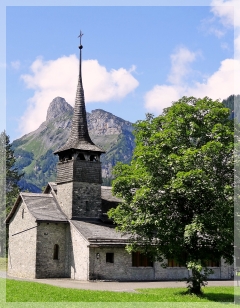 After Simon Peter professed his belief in Jesus as the Messiah, the Lord declared that he would be known from then on as Peter (Petros) meaning rock (petra). Yet, a short time later, the Rock became a stumbling block when he resisted all that being the Messiah required: Jesus’ suffering and death. When studying the man our Lord chose to lead His church, we find Peter had enough faith to climb out of the boat but not enough faith to trust Jesus when the wind started to blow. Impetuous, Peter immediately wanted to memorialize the Transfiguration rather than learn from it. Presumptuous, he hastily spoke for Jesus regarding paying tax to Caesar. Rash, he used his sword to wound the high priest’s slave. He resisted Jesus when the Lord knelt with a wash pan at his feet and, after boldly declaring his commitment to Jesus, denied him three times within a few hours! Yet, it was to this man that Jesus entrusted the job of shepherd and the task of feeding His sheep!
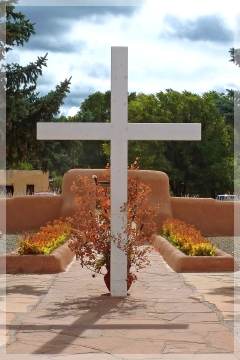 This pandemic may have may have postponed the Olympics but it hasn’t delayed the National Day of Prayer. Today’s observances, however, will look quite different from previous ones. There won’t be any prayer breakfasts or luncheons and large groups won’t assemble in parks, churches or on courthouse steps. Instead, churches will stream their services and religious leaders from across the county will participate in a national broadcast to be aired tonight from 8 to 10 PM ET (see their website or Facebook page for details). Because of the many “virtual” events planned, today’s observance actually could be this day’s largest prayer gathering.
 Devotions of the Heart