
Wives, submit yourselves to your own husbands as you do to the Lord. [Ephesians 5:22 (NIV)]
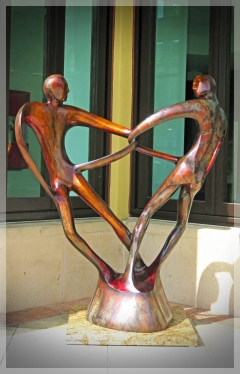 I’m not quite ready to put to rest Paul’s use of the word “submit.” With one in three women having experienced some form of domestic violence, the word “submit” makes us bristle as we think of passivity in the face of abuse. Throughout the ages, women have been mistreated, exploited, demeaned, and discounted. We’ve had the vote for just a century and it wasn’t that long ago when our career choices were pretty much limited to teaching or nursing. Today, women continue to earn only about 80% of what men make and professional women still bump their heads on the glass ceiling. Wanting independence and empowerment, submitting sounds too much like surrendering whatever power we have, buckling under to unfairness, and servitude.
Paul’s words regarding submission, however, deserve more than a quick dismissal as being outdated or politically incorrect. In actuality, we voluntarily submit to people all the time simply because submission is a vital part of living in a community. We yield at intersections, move to the side so someone can pass, hold a door, wait our turn in line, yield the floor so someone else can speak, remain silent during a concert, or let the kids pick the night’s movie. We submit to one another because we’re in this crazy world together and surviving it takes a cooperative effort.
Submission isn’t the same as obedience. Obedience responds to rules and is imposed but submission responds to reason and is freely given. Obedience doesn’t require a relationship; submission does. When we, as Christians, bear one another’s burdens, we are submitting. When we don’t dominate, we are submitting. When we are humble, we submit. When we respond to one another’s needs, we submit. Submission is a sign of strength, not weakness. It doesn’t elevate one person above the other or cancel their equality. Moreover, it has nothing to do with allowing abuse of any kind.
Submission is what happens when there is a collaborative effort and any relationship worth having is worth making that kind of effort. I regularly submit to my husband out of respect, affection, or persuasion (but I usually don’t call it submitting). In the same way, he often defers (or submits) to me. That’s how we’ve lasted 53 years! While we recognize one another’s rights, we also recognize our obligation to put aside our own personal agenda to serve one another.
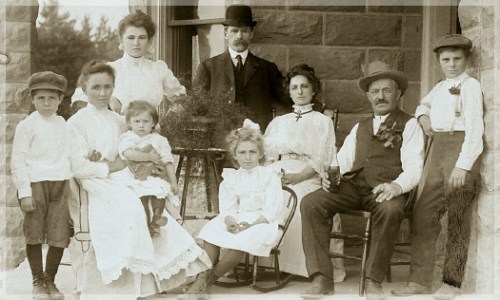 Wives, submit yourselves to your husbands…. Husbands, love your wives and do not be harsh with them. Children, obey your parents in everything…. Fathers, do not embitter your children…. Slaves, obey your earthly masters in everything…. Work at it with all your heart…. Masters, provide your slaves with what is right and fair…. [Colossians 3:18-23,4:1 (NIV)]
 “What’s your orange?” the teacher asked her remote learning class. Before having them answer, she explained the “monkey trap.” In Southeast Asia, hunters capture monkeys by drilling a hole in a pumpkin. The hole is just large enough for a monkey’s hand but too small for his fist. They secure the pumpkin to a tree, put a piece of sweet juicy orange inside the gourd, then retreat and wait. Eventually, an unsuspecting monkey comes along, smells the orange, and reaches through that small hole into the pumpkin. Once he’s grabbed hold of the orange, however, his fist can’t get back through the same hole. The monkey pulls and pulls but can’t free his hand. While he’s struggling to pull out his orange-filled fist, hunters easily throw a net over him. Not understanding that he can’t have both his freedom and the orange, he loses them both. After telling this story, the teacher again asked her students, “What is your orange? What is it you can’t release?”
 My daughter-in-law sent photos of the family’s day at the apple orchard. The grands picked apples, pet the farm animals, climbed the tractors, raced the pedal karts, did the zip-line, raced through the corn maze, traversed the goat bridge, and enjoyed their fill of donuts and apple cider. It was a fun-filled but exhausting day. The last picture was of my son carrying the youngest grand (who’d fallen asleep on the ride home) into the house.
 Back in 1963, Bob Luman sang “You can take the boy from the country, But you can’t take the country from the boy.” Along the same line, Brookes & Dunn sang that while you could take the girl out of the honkey-tonk, you couldn’t take the honkey-tonk out of the girl. I wonder if Moses thought about singing, “You can take the people out of Egypt, but you can’t take Egypt out of the people!”
 Devotions of the Heart