THE KINGDOM

One day the Pharisees asked Jesus, “When will the Kingdom of God come?” Jesus replied, “The Kingdom of God can’t be detected by visible signs. You won’t be able to say, ‘Here it is!’ or ‘It’s over there!’ For the Kingdom of God is already among you.” Luke 17:20-21
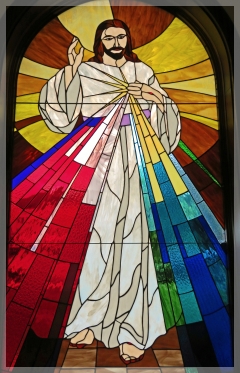
holy name cathedralDepending on your Bible translation, the Kingdom of God is mentioned at least 68 times in the New Testament. Rather than “Kingdom of God,” Matthew usually used “Kingdom of Heaven.” All four gospels, however, are speaking of the same place. Matthew was a Jew and primarily writing for a Jewish audience. While we tend to interpret the third commandment about not misusing the Lord’s name to mean not using it irreverently, Jews have a much stricter interpretation. Believing God’s name too sacred to say aloud, by the 1st century, His name wasn’t even written or spoken in anything but prayer. Even today, many observant Jews substitute “G-d” rather than write the full name.

Because Jesus continually preached the Kingdom of God (or Heaven), the Pharisees asked Him when it would come. Like the rest of Judah, they were thinking of a materialistic kingdom—one with boundaries and a Jewish ruler—so they missed what was happening in front of them. Looking for a political rather than a spiritual fix, they couldn’t understand that the Kingdom had arrived and God was busy restoring it.

Jesus’ answer to the Pharisees sounds like He’s saying the Kingdom is present and yet He also told His disciples to pray for its coming. Rather than an involved theological explanation to explain a kingdom that was both here and pending, Jesus compared the Kingdom of God to a mustard seed that was planted in a field but hadn’t matured into its future glory. The Kingdom was “already” because believers were taking part in building it but it also was “not yet” because it wouldn’t reach its full expression until the future. To further explain the Kingdom, Jesus used a number of metaphors: a farmer scattering seed, yeast in dough, a fishing net, a merchant in search of fine pearls, treasure in a field, a king settling his accounts, a landowner hiring workers for his vineyard, a king’s wedding feast for his son, ten bridesmaids meeting the bridegroom, and a landowner with tenant farmers. Even then, His own disciples were still thinking of an earthly kingdom when they asked the resurrected Jesus, “has the time come for you to free Israel and restore our kingdom?” [Acts 1:6]

The Kingdom of God is not about going to heaven when we die; it’s about bringing God’s kingdom to earth. We pray, “May your Kingdom come soon. May your will be done on earth, as it is in heaven.” [Matthew 6:10] God is king of everything and everyone and, when He reigns in our hearts and minds, His Kingdom is already here. At the same time, His Kingdom is not yet here until its full realization when paradise is re-created in the New Jerusalem.

The Messiah has accomplished the work of redemption, the Spirit has been poured out, yet evil has not been eradicated, the general resurrection is still future, and the final state of God’s kingdom has not been established. In other words, the new era has begun–has been inaugurated–but it has not yet replaced the old era. [Dr. Peter Cockrell]

Jesus answered, “My Kingdom is not an earthly kingdom. If it were, my followers would fight to keep me from being handed over to the Jewish leaders. But my Kingdom is not of this world.” [John 18:36 (NLT)]

Copyright ©2021 jsjdevotions. All rights reserved.

HE WEPT – PALM SUNDAY

The next day, the news that Jesus was on the way to Jerusalem swept through the city. A large crowd of Passover visitors took palm branches and went down the road to meet him. They shouted, “Praise God!  Blessings on the one who comes in the name of the Lord! Hail to the King of Israel!” [John 12:12-13 (NLT)]

All glory, laud, and honor to you, Redeemer, King,
to whom the lips of children made sweet hosannas ring.
You are the King of Israel and David’s royal Son,
now in the Lord’s name coming, the King and Blessed One.
[Theodulph of Orleans (820)]

palm - ncp7943awWe are people of physical signs and symbols and rituals help us connect with events. As a little girl, I loved Palm Sunday and not just because it meant my Lenten fasting would soon end and jelly beans would be in my Easter basket the following week. I loved the way our liturgical church observed it. The hymns of the day were filled with hosannas (a welcome relief from the more somber hymns of the Lenten season). Typically, the opening hymn was “All Glory, Laud, and Honor” and we children would follow the choir into the church while waving our palm branches. Even as a small child, I knew this day commemorated Jesus’ triumphal entry into Jerusalem.

Like the people of Jerusalem, I was filled with joy on this day. Having sung that “the wee little” Zacchaeus had to climb a tree to see the Lord, I pictured people lining the streets and jostling one another for the best view as they might for a parade. I wondered if little children sat on their parents’ shoulders so they could see Jesus. Between the palms I waved and the day’s joyful music, I felt like I was there in Jerusalem and watching the promised Messiah approach on his donkey.

Today, in preparation for Palm Sunday, rather that thinking about those joyful cries of “Hosanna!” and the royal welcome given to our Lord, I thought about Jesus and what He must have been thinking. As Jesus neared the city, Luke tells us that He wept. Jesus, however, wasn’t just a little teary-eyed. Luke used the word eklausen which meant to sob or wail loudly, as one who mourns the dead! As He rode triumphantly into Jerusalem, Jesus was in tears!

Having already told his disciples He would suffer and die, we know Jesus saw what lay at the end of the parade and it’s easy to think His tears were because of the horror awaiting Him. Those sobs, however, weren’t for Him—they were for His people and the city of Jerusalem.

Jesus knew that, in spite of their hosannas, He would be rejected. The people didn’t want their Messiah to be a Prince of Peace—they wanted him to be a conquering king. As He rode into town, Jesus pronounced judgment on the city that was blind to the true nature of God’s kingdom and prophesized its siege and destruction. Thirty-seven years later, the Romans laid siege to Jerusalem, the city was burned, the Temple destroyed, and over one million Jews were slaughtered. While palms waved and people cheered, the grief-stricken Jesus saw Jerusalem’s future and sobbed. It would be nearly 19 centuries before the Jews again had a homeland.

On that Sunday so long ago, the Prince of Peace arrived in the city whose name meant peace. The first part of Jerusalem’s name is yiroo, meaning “they will see” or “they will feel awe,” and core of the word is shalem, meaning completeness and wholeness. Shalem is the root of the Hebrew word for peace—shalom. Jerusalem’s name literally meant, “They will see wholeness” or “They will feel the awe of completeness.” That day they saw the wholeness of God but, sadly, they didn’t understand!

But as he came closer to Jerusalem and saw the city ahead, he began to weep. “How I wish today that you of all people would understand the way to peace. But now it is too late, and peace is hidden from your eyes. Before long your enemies will build ramparts against your walls and encircle you and close in on you from every side. They will crush you into the ground, and your children with you. Your enemies will not leave a single stone in place, because you did not recognize it when God visited you.” [Luke 19:41-44 (NLT)]

Copyright ©2021 jsjdevotions. All rights reserved.

SAINT OR SINNER?

Human pride will be brought down, and human arrogance will be humbled. Only the Lord will be exalted on that day of judgment. For the Lord of Heaven’s Armies has a day of reckoning. He will punish the proud and mighty and bring down everything that is exalted. [Isaiah 2:11-12 (NLT)]

black-crowned night heronJesus’ Parable of Two Men Who Prayed contrasts pride with humility, self-righteousness with repentance, and how not to pray with how to pray. In it, both Pharisee and publican (tax collector) go to pray in the Temple. The Pharisee boldly thanks God that he’s not a sinner like everyone else and then self-righteously singles out the sinful publican. Then, just to make sure God understands how good he really is, the man brags of his tithing; rather than giving a tenth of what he earns, he tithes a tenth of all that he acquires. Even though fasting was only required on the Day of Atonement, Pharisees fasted on Mondays and Thursdays as well, so the self-satisfied man finishes his prayer by boasting of his twice weekly fasts.

In stark contrast to the proud Pharisee is the second man: a detested tax collector. Considered traitors and thieves by their fellow Jews, tax collectors paid the Romans for the privilege of collecting taxes and then overcharged their countrymen while lining their pockets with the excess. The despised man stands meekly before God with his head bowed and eyes down. Beating his breast in sorrow, he humbly confesses his sinfulness and begs for God’s mercy.

Although Jesus’ listeners would have anticipated the Pharisee’s commendation and the thieving publican’s condemnation, Jesus turns their expectations upside down when He says it was the publican who was considered righteous by God. He explains: “For those who exalt themselves will be humbled, and those who humble themselves will be exalted.” [Luke 18:14] These were the same words Jesus used when, at a dinner party, He took the guests to task for their lack of humility as they jockeyed for the best seats around the table. [Luke 14:7-11]

We’re familiar enough with this parable not to identify with the Pharisee’s ostentatious display of piety but I suspect we’re more like the Pharisee than we care to admit. Although the Pharisee addressed God at the beginning of his prayer, the rest of it was all about him and seems more like a business contract than a prayer. Listing his good works, he seems to expect God’s commendation and favor in return for them. In theory, we know we’re justified by faith not works, that none of us are saved by our own merits, and that no human righteousness is enough for a God who demands perfection. In reality, however, we’re often more self-absorbed than self-examining, more likely to extol our virtues than admit our sins, and more interested in justifying our actions than being justified by God. Like the Pharisee, do we ever commend ourselves or justify our failings by pointing out the sins of others? How often do we actually take an inventory of our failings and honestly and humbly admit them to the Lord?

Sinners all, let us never forget how completely undeserving and unworthy we are of God’s grace.

The man who is seriously convinced that he deserves to go to hell is not likely to go there, while the man who believes he is worthy of heaven will certainly never enter that blessed place. [A.W. Tozer]

So humble yourselves before God. Resist the devil, and he will flee from you. Come close to God, and God will come close to you. Wash your hands, you sinners; purify your hearts, for your loyalty is divided between God and the world. Let there be tears for what you have done. Let there be sorrow and deep grief. Let there be sadness instead of laughter, and gloom instead of joy. Humble yourselves before the Lord, and he will lift you up in honor. [James 4:7-10 (NLT)]

Copyright ©2021 jsjdevotions. All rights reserved.

WHAT ARE THE ODDS? (Part 3)

He [Jesus] rolled up the scroll, gave it to the attendant, and sat down. All eyes in the synagogue were fixed on him. “Today,” he began, “this scripture is fulfilled in your own hearing.” [Luke 4:20-21 (NTE)]

evening primroseIn writing about Blaise Pascal yesterday, I mentioned that he, along with Pierre de Fermat, laid the groundwork for probability theory back in 1654. I remember a school friend writing her term paper on probabilities who began by testing what’s called the “birthday paradox:” in a room of 23 people, there is a 50% chance that two people will have the same birthday and, out of 75 people, there is a 99.9% chance of two people’s birth dates matching. Imagine her surprise when the first two people she asked had the same birth date! That, of course was sheer coincidence but, if the next 30 people she asked also had the same birth date, another explanation would have been necessary.

I know nothing of permutations, exponents, or probability theory, but even I know when coincidence can’t explain the improbable. Consider the improbability of anyone fulfilling the many Messianic prophecies found in the Hebrew Scriptures. The Messiah would come from the seed of a woman (not a man) and be born of a virgin in Bethlehem. He would be from the line of Abraham, a descendant of Isaac and Jacob, of the tribe of Judah, and from the house of David. The Messiah would spend time in Egypt, would be a Nazarene, and a messenger would prepare His way. He would be a light to the Gentiles, give sight to the blind and hearing to the deaf, visit the Temple, and enter Jerusalem as a king on a donkey. The Messiah would be betrayed for 30 pieces of silver, falsely accused, and stand silent before His accusers. He’d be mocked and ridiculed, his hands and feet pierced, dice would be thrown for his clothing, and would die with the wicked but be buried with the rich.

Taking just eight of the some 300 fulfilled Messianic prophecies in Hebrew Scripture, mathematics professor Peter Stoner calculated the odds of one man fulfilling them by coincidence at 1 in 1017 (100,000,000,000,000,000). Putting those many zeros into perspective, Stoner likened it to covering the entire state of Texas with silver dollars piled 2-feet deep, placing one marked silver dollar among them, and expecting a blindfolded person to wander through the state and pick up the marked coin in his first try. Stoner then figured the odds of one man fulfilling 16 of those Messianic prophecies at 1 in 1045 and of fulfilling 48 of those prophecies at 1 in 10157, a truly mind-boggling number. Although the odds against one man fulfilling all those prophecies are astronomical, that’s exactly what Jesus did! Looking at it purely from a mathematical viewpoint, Professor Stoner concluded, “Any man who rejects Christ as the Son of God is rejecting a fact proved perhaps more absolutely than any other fact in the world.”

While probability theory proves that Jesus is the promised Messiah, intellectual assent is not quite enough when it comes to our salvation because it’s not the same as believing in Jesus. Faith is more than an acceptance of facts; it is a commitment to those facts. A profession of intellectual belief is meaningless until it makes a discernible change in us! Nevertheless, Stoner’s use of probability theory to prove Jesus is the promised Messiah helps bolster our own faith. Moreover, it enables us to defend the validity of Scripture and the truth of Jesus’ identity to those who don’t believe.

And we have the prophetic word made more certain. You will do well to hold on to this, as to a lamp shining in a dark place, until the day dawns and the morning star shines in your hearts. You must know this first of all, that no scriptural prophecy is a matter of one’s own interpretation. No prophecy, you see, ever came by human will. Rather, people were moved by the holy spirit, and spoke from God. [2 Peter 1:19-21 (NTE)]

Copyright ©2021 jsjdevotions. All rights reserved.

THE WAGER (Part 2)

They know the truth about God because he has made it obvious to them. For ever since the world was created, people have seen the earth and sky. Through everything God made, they can clearly see his invisible qualities—his eternal power and divine nature. So they have no excuse for not knowing God. [Romans 1:20 (NLT)]

sandhill craneIn researching yesterday’s devotion, I learned some interesting things about Blaise Pascal. Along with building the first digital calculator (c. 1642), he invented the syringe, created the hydraulic press, and, along with Pierre de Fermat, formulated the fundamental principles of probability theory.

It was when reading about Pascal’s Pensées, a compilation of notes and essays about Christian apologetics, that I saw mention of “Pascal’s Wager.” Curious as to what gambling and Christianity had in common, I read on. Perhaps it was Pascal’s interest in probabilities that led him to present the choice between belief and disbelief in God as a coin toss but, instead of betting on heads or tails, the bet is about God’s existence. After pointing out that making a wager is not optional, he asked how we’d bet. In mathematical terms, Pascal explains that, if God exists, and you bet that He does, you have infinite gain (eternal life) but, if you bet He doesn’t, you have infinite loss (loss of paradise and an eternity in hell). If, however, God doesn’t exist and you bet that He does, you lose nothing and, if you win, you gain nothing. Simply put, a winning bet on God pays off far better than a winning bet against Him and, if the bettor happens to be wrong, the one who’s bet against God has far more to lose than the one who’s bet on God.

If it should turn out that God doesn’t exist, Pascal says to the one who made a losing bet on Him: “Now, what harm will befall you in taking this side? You will be faithful, humble, grateful, generous, a sincere friend, truthful. Certainly you will not have those poisonous pleasures, glory and luxury; but will you not have others? I will tell you that you will thereby gain in this life, and that, at each step you take on this road, you will see so great certainty of gain, so much nothingness in what you risk, that you will at last recognise that you have wagered for something certain and infinite, for which you have given nothing.”

Summarizing, Pascal says: “According to the doctrine of chance, you ought to put yourself to the trouble of searching for the truth; for if you die without worshipping the True Cause, you are lost. ‘But,’ say you, ‘if He had wished me to worship Him, He would have left me signs of His will.’ He has done so; but you neglect them. Seek them, therefore; it is well worth it.”

Pascal’s wager does not prove the existence of God and wasn’t intended to do so; it simply tells us that belief in God is the best choice! There are, however, valid Christian criticisms of Pascal’s Wager. True faith doesn’t come from probability theory or a cost/benefit analysis; it comes from being born again. Pascal’s Wager seems to base belief in God on a risk and reward system that speaks of a heavenly reward without mentioning loving Jesus, obedience, or bearing fruit. His wager also fails to mention that there actually is a cost to following Jesus—one that is not always easy to pay. Whether we’re betting or choosing, the one thing about which we can’t argue is Pascal’s very first premise—the choice is not optional. We cannot sit this one out, the consequences are eternal, and the stakes are high.

Belief is a wise wager. Granted that faith cannot be proved, what harm will come to you if you gamble on its truth and it proves false? If you gain, you gain all; if you lose, you lose nothing. Wager, then, without hesitation, that He exists. [Blaise Pascal]

Then, calling the crowd to join his disciples, he said, “If any of you wants to be my follower, you must give up your own way, take up your cross, and follow me. If you try to hang on to your life, you will lose it. But if you give up your life for my sake and for the sake of the Good News, you will save it. And what do you benefit if you gain the whole world but lose your own soul? Is anything worth more than your soul? [Mark 8:34-37 (NLT)]

Copyright ©2021 jsjdevotions. All rights reserved.

THE GOD-SHAPED HOLE (Part 1)

Wilson Arch - Moab UtahYet God has made everything beautiful for its own time. He has planted eternity in the human heart, but even so, people cannot see the whole scope of God’s work from beginning to end. [Ecclesiastes 3:11 (NLT)]

Our children gave us a jigsaw puzzle for Christmas and, as I struggled to complete it, I wondered if I should thank or curse them for their gift! After staring at an opening, I’d try to find the one piece out of 1,000 that would fit. Since the puzzle’s edges were one color, I confess to a bit of pride when I completed the puzzle’s border. After assembling several sections of the interior, I ran into difficulty finding the right spots for them. Eventually, I realized why—the left side was shorter than the right! With a puzzle that large, while each piece is unique, some are nearly identical; a close fit, however, isn’t good enough and the border had to be redone. As I struggled to find the perfect fit for each opening, I thought of the phrase about everyone having a God-shaped hole that only can be filled by Him. While it doesn’t come from Scripture, the concept is Biblical and I wondered about its source.

The saying may have been inspired by Augustine of Hippo’s word from his Confessions: “You have made us for yourself, O Lord, and our hearts are restless until they rest in you.” As a young man, Augustine attempted to fill his restless heart with things like paganism, revelry, drunkenness, empty philosophies, idleness, and decadence. Having tried to fill that void with everything but God, Augustine still felt empty until he heard a voice say, “Take up and read.” Reaching down, he picked up the book beside him and read the first thing he saw—the words from Paul’s epistle to the Romans urging them to stop participating in “the darkness of wild parties and drunkenness…sexual promiscuity and immoral living…quarreling and jealousy,” and  to “clothe yourself with the presence of the Lord Jesus Christ.” [13:13-14] Augustine had been living the life of debauchery about which Paul warned the Romans but, in the Apostle’s words to clothe himself in Jesus, he finally knew how to fill the emptiness in his life and immediately transformed. Augustine ended up being one of the most influential voices in both Roman Catholic and Protestant theology.

Some sources wrongly attribute a quote about having a “God-shaped vacuum” in our hearts to the 17th century French mathematician, physicist, and religious philosopher Blaise Pascal. While close, that’s not what Pascal said. In Pensées, a book written in defense of Christianity, Pascal wrote of an “infinite abyss” that man vainly seeks to fill with things that aren’t there. Since Pascal came along more than 1,200 years after Augustine, perhaps the ancient theologian’s words influenced him.

Like Augustine, Pascal had a conversion experience but, unlike him, Pascal never led the life of a libertine. Nevertheless, shortly before having a mystical vision in what he called a “night of fire,” Pascal complained of the dissatisfaction, guilt, lack of purpose, and boredom in his life. After his vision, Pascal committed his life to Christ, left the world of science and mathematics, put his remarkable mind to work for God and, like Augustine, left his mark on Christianity.

That “God-shaped hole” is man’s innate longing for something far greater than anything found in this world. Perhaps it’s the “eternity” God plants in our hearts that keeps us from finding complete fulfillment in earthly pursuits and passions. As happened with my puzzle, we often try to fill the emptiness in our lives with pieces that don’t fit and, while some may come close, only the perfect piece works. Nothing—not fame, wealth, education, possessions, shopping, popularity, ritual, false gods, self-indulgence, or even family, can fill that God-shaped hole. As for the puzzle, I eventually gave up and returned it to the box—perhaps, someday I’ll try again. Fortunately, seeking God and fitting Him into the emptiness in our hearts is far easier!

What else does this craving, and this helplessness, proclaim but that there was once in man a true happiness, of which all that now remains is the empty print and trace? This he tries in vain to fill with everything around him, seeking in things that are not there the help he cannot find in those that are, though none can help, since this infinite abyss can be filled only with an infinite and immutable object; in other words by God himself. [Blaise Pascal, Pensées VII (425)]

 If you look for me wholeheartedly, you will find me. I will be found by you,” says the Lord. [Jeremiah 29:13-14 (NLT)]

His purpose was for the nations to seek after God and perhaps feel their way toward him and find him—though he is not far from any one of us. For in him we live and move and exist. Acts 17 27-28 (NLT)]

Copyright ©2021 jsjdevotions. All rights reserved.