
The teachers of religious law and the Pharisees are the official interpreters of the law of Moses. So practice and obey whatever they tell you, but don’t follow their example. For they don’t practice what they teach. They crush people with unbearable religious demands and never lift a finger to ease the burden. Everything they do is for show. On their arms they wear extra wide prayer boxes with Scripture verses inside, and they wear robes with extra-long tassels. [Matthew 23:2-5 (NLT)]
 There is a funny scene in the movie When Harry Met Sally when, in the middle of a delicatessen, Sally proves to Harry that women can successfully fake being in the throes of passion. After a rather loud and vivid demonstration, Sally calmly returns to her meal. After watching Sally’s display of ecstasy, an older woman tells her waiter, “I’ll have what she’s having!” While it may be possible to fool people about a number of things, we can’t fool God. He looks beyond appearances right into our hearts.
Around the 4th century BC, the Jewish rabbis starting taking the commands in Deuteronomy 6:8, 11:18, and Exodus 13:9 literally. They wrote God’s command to love Him and keep His commandments, placed the words in small leather containers called tefillin or phylacteries, and strapped them to their left hand and forehead during prayers. There were various rules regarding the length and width of the straps, the color of the boxes, the knots used, the parchment and ink, and even the number of lines for each verse. These were the “extra wide prayer boxes” to which Jesus referred.
The “extra-long” tassels Jesus mentioned were called tzitzit and were worn on the four corners of an outer garment’s hem. In response to the command in Numbers 15:38-40, the original intent was to remind the people to keep the Lord’s commandments and be holy before Him. As happened with the prayer boxes, by Jesus’ time, additional rules had been added regarding the quantity of threads used in each tassel, the amount of white and blue tassels, and the knots used.
Jesus wasn’t criticizing the wearing of tefillin or tzitzit. After all, as Jews, He and the disciples may have worn them. Jesus was criticizing the religious leaders for the burden they placed on the people with so many demanding man-made regulations. Moreover, He was taking to task those men who sought to draw attention to themselves rather than God by enlarging their tefillin and lengthening their tzitzit in a conspicuous show of their piety and religious zeal when they didn’t truly obey God’s commands. Their garish example of faith was as false as Sally’s intense example of ecstasy. While their display may have fooled and impressed the people, it didn’t fool Jesus.
Some Christians wear crosses or t-shirts announcing their faith while others might display bumper stickers or hang crosses in their homes. More important than how we decorate ourselves or our possessions is the way in which we conduct our lives. Without the love of Jesus and the fruit produced by the Holy Spirit, we’re no different than the self-righteous Pharisees; we’re just faking it.
I remember a song from my Sunday school days in which I proclaimed having the “joy, joy, joy,” the “love of Jesus,” and the “peace that passes understanding down in my heart…down in my heart to stay!” It’s that joy, that love of Jesus, and that peace that passes understanding that truly identify us as Christians. When we know, love and worship God, His love instills a joy into our hearts and lives that only He can produce and, unlike passion and piousness, they can’t be faked. It is, however, only through the power of the Holy Spirit that we can live the kind of lives and exhibit the sort of behavior that truly will make people say, “I’ll have what they’re having!”
 The skink is a reptile that looks as if it can’t decide whether it’s a lizard or a snake. As one scampered away down the boardwalk, it looked more lizard-like than usual because it was missing the pointed end of his long tail. Like many lizards, if a predator manages to catch a skink by the tail, the tail will break off. Since the detached tail continues to wiggle, the predator gets distracted which allows the lizard to escape. Even though a raccoon, snake, or hawk had appropriated its tail, that skink escaped to see another day. Although skinks don’t have much with which to defend themselves, with their detachable tails (caudal autonomy), God provided them with an effective mode of escaping trouble!
 With its declaration of one all-powerful infinite God, Jewish tradition holds that the Shema’s first verse “Hear, O Israel: The Lord our God, the Lord is one,” is the most important and, as such, demands greater concentration so the eyes are closed or covered by the right hand during its recitation. The Talmud traces this practice back to Rabbi Judah the Prince (135 – 219 AD) who often interrupted his lectures to recite the Shema. Whenever he did so, the rabbi placed his hands over his eyes as a way of disconnecting from his surroundings.
 In its entirety, the Shema consists of three sections: Deuteronomy 6:4–9, Deuteronomy 11:13–2, and Numbers 15:37–41. The second paragraph of the Shema repeats the first one’s commands regarding the binding of God’s words to hands and forehead, writing them on the doorways and gates, teaching them to the children, and talking about them throughout the day. The primary theme of this paragraph, however, is that the promised land and the people’s enjoyment of it depended on their faithfulness to God. As long as they loved God and served Him with heart and soul, the people and land would be blessed but, if they turned aside to serve other gods, God’s wrath would result and things would not go well for the people or their land. In this warning, that is repeated again and again throughout the Old Testament, we see the fundamental Jewish belief that reward and punishment are based on the fulfillment of God’s commandments.
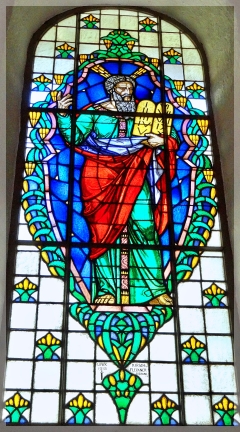 My morning’s reading took me to Deuteronomy 6 and the words that Jesus cited as the first, and most important commandment. Known as the Shema and found in verses 4 through 9, it is the essential declaration of the Jewish faith. Its name comes from the first Hebrew word of the verse, shema, which means “hear.” Observant Jews recite its words twice a day (morning and evening), on the Sabbath and religious holidays, and as the last words before death. The Shema is so entrenched in Judaism that a story is told about Rabbi Yitzhak Herzog who, in 1946, went searching for Jewish children who’d been hidden by Christians during the Holocaust. As he walked through European convents, monasteries, and orphanages, the rabbi would start to recite the Shema. He easily found the Jewish children because they immediately joined in saying the sacred words.
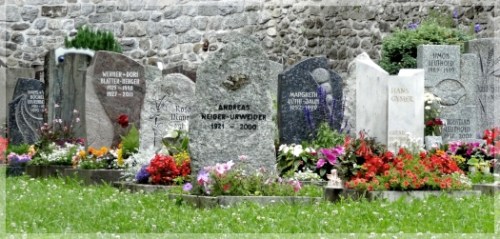 Many of the younger generation don’t know that yesterday’s Memorial Day originally was called Decoration Day and originated in the years following the Civil War. With some 620,000 dead from that conflict, communities began holding tributes to the fallen soldiers by reciting prayers and decorating their graves with flowers, flags and wreaths. The practice of leaving flowers at gravesites may have begun with the ancient Greeks who believed that, if the flowers took root and grew, the fallen had found peace or happiness in the afterlife.
 Devotions of the Heart