
If you obey my decrees and my regulations, you will find life through them. I am the Lord. [Leviticus 18:5 (NLT)]
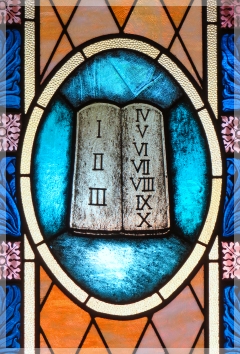 The Ten Commandments are the foundation of both Jewish and Christian principles, conduct, and accountability, but they are just ten of the 613 mitzvot or commandments given to the Jewish people. In light of the big ten, many of those commands, such as using accurate scales and weights and fulfilling our promises make perfect sense as do prohibitions about speaking derogatorily of others or standing idly by if another person’s life is in danger. Moreover, laws regarding boundary markers, evidence, assessing property damages, and not perverting justice or accepting bribes certainly were necessary in a new nation. Some laws, like the ones regarding latrine placement, covering excrement, and making a guard rail around a flat roof seem reasonable from a health and safety viewpoint. Other laws may have served as a way to separate the Jews from their pagan neighbors. Perhaps it was because the Hittites, Elamites, and Sumerians were clean-shaven and the Egyptians often were clean shaven or had shaped goatees that Jewish men were not to trim the hair on their temples or shape their beards. Many laws, such as the intricate laws of sacrifice, the blue tassels on hems, reciting the Shema twice a day, and saying a blessing after meals, were related to worship and God.
Many of those laws, however, seem inexplicable. What, for example, makes land animals that don’t chew the cud and have completely split hooves (like the pig) unacceptable food? Why eat only fish with fins and scales but no shellfish or mollusks? If locusts can be eaten, why not ants? Why can’t linen be woven with wool? Why can’t a Nazarite eat grapes or raisins or cut his hair and why did every sacrifice require salt?
As I looked through these ancient laws and tried to understand God’s reasoning behind them, I missed the point. The first rule God made was the simple one he gave to Adam and Eve: don’t eat from that tree. Although He warned that death would be the result of disobedience, God didn’t explain His reasons for the prohibition because obedience to God isn’t supposed depend upon human reasoning. If we have to understand before we obey, rather than obedience, it becomes agreement and dependent on us! God, however, doesn’t require our understanding or agreement; He requires our obedience.
Abraham didn’t know where he was going when he packed up his family nor did he question God’s reasoning when he placed his son on a sacrificial altar. Building an enormous ark on dry land probably made no sense to Noah, wearing out his troops by marching around Jericho for a week seemed a questionable battle plan to Joshua, and Mary didn’t understand God’s reasoning behind her pregnancy; nevertheless, they all obeyed without understanding.
Obedience shows reliance and trust—an acceptance that God knows more than we can ever know or understand—that God is God and we are not! I don’t know God’s reasoning behind those mitzvot nor do I need to. It’s enough that God made them and expected the Israelites to abide by them. The only thing we must understand about God’s commands is that they are divinely decreed and, as such, are to be unquestionably obeyed. Rather than leading us away from God’s blessings, obedience will lead us to them.
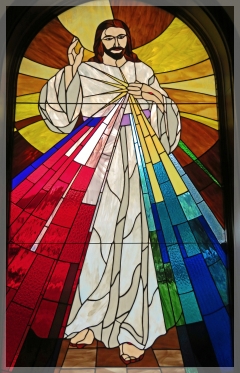 Depending on your Bible translation, the Kingdom of God is mentioned at least 68 times in the New Testament. Rather than “Kingdom of God,” Matthew usually used “Kingdom of Heaven.” All four gospels, however, are speaking of the same place. Matthew was a Jew and primarily writing for a Jewish audience. While we tend to interpret the third commandment about not misusing the Lord’s name to mean not using it irreverently, Jews have a much stricter interpretation. Believing God’s name too sacred to say aloud, by the 1st century, His name wasn’t even written or spoken in anything but prayer. Even today, many observant Jews substitute “G-d” rather than write the full name.
 In writing about Blaise Pascal yesterday, I mentioned that he, along with Pierre de Fermat, laid the groundwork for probability theory back in 1654. I remember a school friend writing her term paper on probabilities who began by testing what’s called the “birthday paradox:” in a room of 23 people, there is a 50% chance that two people will have the same birthday and, out of 75 people, there is a 99.9% chance of two people’s birth dates matching. Imagine her surprise when the first two people she asked had the same birth date! That, of course was sheer coincidence but, if the next 30 people she asked also had the same birth date, another explanation would have been necessary.
 In researching yesterday’s devotion, I learned some interesting things about Blaise Pascal. Along with building the first digital calculator (c. 1642), he invented the syringe, created the hydraulic press, and, along with Pierre de Fermat, formulated the fundamental principles of probability theory.
 Yet God has made everything beautiful for its own time. He has planted eternity in the human heart, but even so, people cannot see the whole scope of God’s work from beginning to end. [Ecclesiastes 3:11 (NLT)]
 Devotions of the Heart