
An open rebuke is better than hidden love! Wounds from a sincere friend are better than many kisses from an enemy. … As iron sharpens iron, so a friend sharpens a friend. [Proverbs 27:5-6,17 (NLT)]
 When I was asked if I’d ever been hurt by a fellow believer, I had to reply that in my seventy plus years, I’ve been hurt (both intentionally and unintentionally) by all sorts of people, including the most devout of Christians. When asked if any Bible verse helped guide my response to the hurt, Ephesians 4:32 came to mind: “Be kind to each other, tenderhearted, forgiving one another, just as God through Christ has forgiven you.” I was then asked what I’d learned from my experiences. The first take-away, learned the hard way, was to immediately ask God to put His arm around my shoulder and His hand over my mouth before I said something stupid or nasty. The second was that, as tactless, unkind, petty, and rude that both Christians and non-Christians can be, they also can be right!
It’s been said that the truth hurts and, indeed, it often does. Every now and then, we’re on the receiving end of judgment, criticism, rejection, condemnation, or disdain. While words of correction should always come out of love, sometimes they’re delivered out of anger, jealousy, or spite. Nevertheless, we need to distance ourselves from the circumstances, personalities, and hurt feelings to ask ourselves a simple question. Is there any truth to what was said? No wiser or smarter than the next guy, we’re not always the ones who should be giving critiques, suggestions, or instruction. Sometimes (perhaps more often than not), we’re the ones who should be on the receiving end.
Occasionally, we get so committed to a plan that we fail to see there may be a better way or are so vested in being right that we ignore the possibility of being wrong. As a result, we become so tenacious in our defense that we fail to see the validity of any criticism or so determined to claim victory that we fail to see resolution or compromise. As unpleasant as it may be, we need to stop and prayerfully examine the message. The delivery doesn’t have to be pleasant or welcome for the criticism or comment to be valid.
God doesn’t want us living in error; He wants to turn our weakness into strength, our faults into attributes, our falseness into truth, our confusion into clarity, and our messes into messages. God’s correction is always good but it rarely appears printed on a sweet candy heart. Just because it doesn’t come wrapped in a polite loving package, however, doesn’t necessarily mean it shouldn’t be heeded. Although I would prefer correction from the comforting voice of someone who truly cares for me, some of the best advice I ever received came seasoned with a little spite and rancor. God used a talking donkey to give His message to Balaam and He will use both sensitive and thoughtless believers and unbelievers to send His correction to us. Just because the truth sometimes hurts doesn’t mean it isn’t true.
 For the most part, being a “stiff-necked people” is a pejorative label, but could there be occasions when that’s exactly what we should be? Are there times we should be intractable, stubborn, and uncompromising—even instances we should disregard the law?
 “The luckiest traitor ever,” are the words historian Mary Beard used to describe Flavius Josephus, a first-century Jewish general who ended up allying himself with the Romans—the very people who destroyed his homeland and demolished the Temple during the Great Revolt (66-70 AD). Born in 37 AD, Josephus grew up in Jerusalem and studied with the Pharisees, Sadducees, and Essenes before serving as a general during the Jewish rebellion against Rome. According to Josephus, when fleeing the Roman army, he led his troop of 40 men into a cave. Rather than surrender, they agreed to commit suicide and drew lots to determine the order in which they would die. Either Josephus was incredibly lucky or he’d fixed the lottery but, when only he and another man remained, he convinced him to join in surrender to the Romans. In support of his story, excavations at Jotapata in the 1990s revealed the remains of 30 to 40 men assumed to have been Josephus’ men.
 Since 1890, a common teaching method in a surgical residency is to “see one, do one, teach one.” The med student learns the basics by watching an experienced physician do a procedure and then puts his knowledge into practice by doing the procedure himself. He hasn’t mastered the procedure, however, until he’s taught someone else to do it; it is only when we can teach something that we truly understand it.
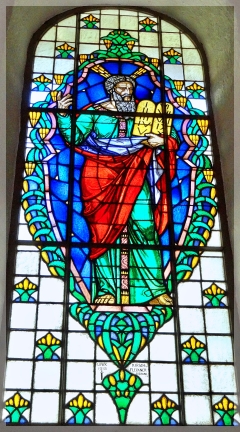 My morning’s reading took me to Deuteronomy 6 and the words that Jesus cited as the first, and most important commandment. Known as the Shema and found in verses 4 through 9, it is the essential declaration of the Jewish faith. Its name comes from the first Hebrew word of the verse, shema, which means “hear.” Observant Jews recite its words twice a day (morning and evening), on the Sabbath and religious holidays, and as the last words before death. The Shema is so entrenched in Judaism that a story is told about Rabbi Yitzhak Herzog who, in 1946, went searching for Jewish children who’d been hidden by Christians during the Holocaust. As he walked through European convents, monasteries, and orphanages, the rabbi would start to recite the Shema. He easily found the Jewish children because they immediately joined in saying the sacred words.
 Pontius Pilate was the Roman prefect (or governor) of Judea from 26 to 36 AD. He was responsible for the collection of taxes, managed construction projects, and had the sole authority to order a criminal’s execution. His most important duty, however, was to maintain law and order and, if he couldn’t do it through negotiation, he did it by any means necessary.
