CARKING CARE

Give your burdens to the Lord, and he will take care of you. He will not permit the godly to slip and fall. [Psalm 55:22 (NLT)]
The Valley of Vision is a collection of Puritan prayers spanning from the sixteenth through the late nineteenth centuries. Having grown up with the King James Bible, its antiquated thees and thous along with verbs forms like wilt, didst, and makest don’t bother me. Their formality actually adds to the beauty and charm of the prayers. Although context usually explained outdated words like nethermost, subserve, and extenuations, I had to look up a few new words like peradventure.

Although I’d never seen the word carking, I immediately knew what the author meant when writing, “Deliver me from carking care…” Sounding like a crow’s unpleasant cry, the phrase “carking care” sounds as disagreeable as what it describes: oppressive worry!

The word cark comes from the Old North French carkier (to load, burden) from the Late Latin carcare (to load a wagon or cart). Carcare is also the source of the word cargo. In English, carking literally means putting on a load or burden and carking cares are concerns that have become burdensome. It’s as if we’ve loaded all of our worries into a wagon and are carting around that troubling cargo. Although we grow weary of the heavy burden, we continue carrying it in our hearts and souls.

Right now, I imagine we all have some major concerns. We fret about children who have missed out on school and family members who must fly, care for the sick, or meet the public in their jobs. We’re in another unpleasant season of politics and the media is filled with incidents of mask rage, protests, civil unrest, and financial woes. If we’re not out of work, we have friends or family who are. Loved ones remain isolated in retirement and nursing homes, bills are piling up, supply chains are broken, businesses are closing, and some people still haven’t gotten their unemployment checks. Vacations, weddings, reunions and even memorial services have been put on indefinite hold, no one knows how schools will function safely, and the COVID dashboards seem to have nothing but bad news. Here in Florida, with hurricane season upon us, we also have the dubious honor of being called the “epicenter” of the latest coronavirus surge. We find ourselves weighing the risks before having a repair man in the house, getting carry-out, or venturing out to the beach or grocery. We’re moving into our fifth month of this pandemic and, with no end in sight, people everywhere are feeling assaulted on all sides. Regardless of their faith, I doubt that anyone feels completely free of cares.

Living in a fallen world, we always will have troubles and concerns. The good news is that they don’t have to be carking ones—we don’t have to carry that cart of cares because God will carry them for us. For that to happen, however, we have to unload our wagon of cares and give them to God through prayer. John Calvin wrote of believers relieving “themselves of their anxieties by pouring them into his bosom…that they may declare that from him alone they hope and expect, both for themselves and for others, all good things.” As we pour our concerns into God’s bosom, let us join with the anonymous writer in his prayer: “Deliver me from carking care, and make me a happy holy person….Teach me to laud, adore, and magnify thee, with the music of heaven, And make me a perfume of praiseful gratitude to thee.”

Perhaps what our Father would have us learn is that worry is not for Him to take away, but for us to give up. [Kathy Herman]

Give all your worries and cares to God, for he cares about you. [1 Peter 5:7 (NLT)]

And I am convinced that nothing can ever separate us from God’s love. Neither death nor life, neither angels nor demons, neither our fears for today nor our worries about tomorrow—not even the powers of hell can separate us from God’s love. [Romans 8:38 (NLT)]

Copyright ©2020 jsjdevotions. All rights reserved.

BAKING A PRAYER

Once Jesus was praying in a particular place. When he had finished, one of his disciples approached. “Teach us to pray, Master,” he said, “just like John taught his disciples.” [Luke 11:1 (NTE)]

ibisI used to look forward to our occasional stops in the bank where a tray of homemade cookies always was laid out for their customers. I admit to having no will-power when it came to their white chocolate chip/macadamia nut cookies. With a hint of lemon, they were so delicious that I searched the internet to find the recipe so I could skip the bank visit. Several recipes came close but none were quite right so, using those as a guide, I developed a recipe that met the taste test!

When the disciples asked Jesus to teach them how to pray, He recited what we call “The Lord’s Prayer.” It’s important to remember that the disciples asked how to pray but not what exact words to use. Being a good teacher, instead of a lecture on praying, Jesus gave them a model prayer, but certainly not the only prayer to be said.

My recipe search told me the basic ingredients I needed for the cookies: flour, baking powder, brown and granulated sugars, butter, eggs, and lemon extract. Jesus’ model prayer included basics like praise, an acknowledgement of God’s holiness, acceptance of His will, confession, forgiveness, and petitions for daily provision and protection from evil. I found other recipes that included ingredients like cornstarch, lemon zest, nuts, and vanilla extract. If we look at other prayers said by Jesus, we find things like thanksgiving, a desire to bring God glory, and pleas for others and for the church.

When Jesus showed the disciples how to pray, He gave them an outline (or a basic recipe) rather than a comprehensive list of components. Like a recipe, it’s up to us to put them all together. Some days, I give God an extra cupful of thanks and praise because, unlike salt, we can never overdo those ingredients. It’s often easy to skip the confession and forgiving but, like forgetting the baking powder in cookies, prayers don’t seem to come out right without them. While it’s possible to add too much flour to a cookie recipe, our prayers seem to improve the more we pray for the needs of others. God, however, probably won’t find our prayers very appetizing if we spend more time mixing in petitions for ourselves than for others! Unlike a cookie recipe, there is no set amount of time for baking the perfect prayer; that’s a judgment call. As for me, I often find it necessary to bake my prayers a long time before acceptance of God’s plan forms in my heart.

When we grow bored with the food we’ve been preparing, we create new recipes or tweak the old ones by adding something extra like dried cherries or cinnamon chips to oatmeal cookies. The same goes for our prayers. If prayer seems boring, we need to change it up by gathering the ingredients and presenting them to God in a different way. Just as there are countless ingredients with which to bake delicious cookies, there are countless components that can go into our prayers. Regardless of the recipe, my grands are pleased whenever I bake; I think God feels the same way about our prayers!

Believers do not pray, with the view of informing God about things unknown to him, or of exciting him to do his duty, or of urging him as though he were reluctant. On the contrary, they pray, in order that they may arouse themselves to seek him, that they may exercise their faith in meditating on his promises, that they may relieve themselves from their anxieties by pouring them into his bosom; in a word, that they may declare that from him alone they hope and expect, both for themselves and for others, all good things. [John Calvin]

“So this is how you should pray: Our father in heaven, may your name be honoured may your kingdom come may your will be done as in heaven, so on earth. Give us today the bread we need now; and forgive us the things we owe, as we too have forgiven what was owed to us. Don’t bring us into the great trial, but rescue us from evil.” [Matthew 6:9-13 (NTE)]

Copyright ©2020 jsjdevotions. All rights reserved.

THE RAINBOW

chicago rainbowI will never again curse the ground because of the human race, even though everything they think or imagine is bent toward evil from childhood. I will never again destroy all living things. As long as the earth remains, there will be planting and harvest, cold and heat, summer and winter, day and night. [Genesis 8:21-22 (NLT)]

Tears are the material out of which heaven weaves its brightest rainbow. [F.B. Meyer]

With everyone stuck inside because of the rain, the day had been challenging as my son and his wife tried to get in eight hours of Zoom meetings, conference calls, report writing and computer programming while keeping their two youngsters busy (and relatively quiet). The rain finally stopped shortly before dusk and, when my grand ran out onto the rooftop deck to celebrate her freedom, she stopped in amazement. There, above the city, a city plagued not just by COVID-19 but also by gang violence, shootings, racism, rioting, and poverty, was a beautiful ray of hope: a double rainbow.

Rainbows are among my favorite things. The glory of the Lord “looked like a rainbow shining in the clouds on a rainy day,” to Ezekiel and John described the Lord’s glory circling Him like a rainbow and glowing like an emerald in Revelation. The rainbow shows us God’s light in the darkness of our troubled world and is probably the closest thing we have to seeing His radiance while we’re on this side of the grass.

Scripture’s first mention of a rainbow is in Genesis 9. Once the floodwaters had receded and the earth was dry enough, God told Noah to leave the ark and release all of the animals. Even though God knew mankind’s heart was still inclined toward evil, He gave us another chance with His promises to never again destroy every living thing by flood and that the normal cycles of nature would continue as long as the earth existed. The rainbow provided Noah and future generations with a sign of God’s covenant.

After a rain storm, with its clouds, thunder, and lightning, we frequently are blessed with a rainbow: a beautiful reminder of God’s love, mercy and faithfulness. It reminds us of both God’s grace and our sinfulness; after all, it was mankind’s sin that caused the flood in the first place! Rather than saving us by putting us on an ark of cypress wood, God saved us by putting Jesus on a cross. The rainbow reminds us of our redemption and salvation; because of Jesus, we have an opportunity for a new beginning. God packed a whole lot of supernatural meaning into a natural phenomenon when He hung the rainbow in the sky!

Before Noah and his family left that ark, they’d been in close quarters with one another and all of those animals for a year. If we think sheltering in place is challenging, imagine doing it with four families and an enormous menagerie but without the internet, Amazon, Netflix or Door Dash. Today’s bad news, like rain, keeps showering down and we’re in a season that seems to have no end. The storm clouds of life can obscure God’s presence but, when we remember that He is in the storm with us, we might just see a rainbow! Like my grand, I love seeing rainbows; they remind me that God is faithful to His promises for “all generations to come.”

And when it rains on your parade, look up rather than down. Without the rain, there would be no rainbow. [G.K. Chesterton]

I am giving you a sign of my covenant with you and with all living creatures, for all generations to come. I have placed my rainbow in the clouds. It is the sign of my covenant with you and with all the earth. When I send clouds over the earth, the rainbow will appear in the clouds, and I will remember my covenant with you and with all living creatures. Never again will the floodwaters destroy all life. [Genesis 9:12-15 (NLT)]

Copyright ©2020 jsjdevotions. All rights reserved.

HE EXISTS

Then God looked over all he had made, and he saw that it was very good! And evening passed and morning came, marking the sixth day. [Genesis 1:31 (NLT)]

The Lord is good to everyone. He showers compassion on all his creation. [Psalm 145:9 (NLT)]

tri-colored heronPeople often argue against God’s existence because of evil and suffering. With so much that is wrong in the world, they question how there could there be a god. Christian apologist C.S. Lewis was once an atheist who reasoned that such a cruel and unjust world proved the absence of God until he questioned where he got the idea of what was good or evil, just or unjust. He realized that something cannot be wrong or evil unless there is standard for what is right or good. In a universe with no God, there would be no standard for justice or injustice, good or evil, right or wrong: simply personal preferences. That standard, Lewis realized, is rooted in God. As a result, the very argument he used against God’s existence provided Lewis with proof of His presence!

Nevertheless, acceptance of God’s existence in a world with evil leads people to question how this loving God of ours could allow so much of it in the world. Unable to see how a loving, good and powerful God can coexist in world so filled with pain and suffering, people often ascribe any evil that befalls to God but none of the good. Granted, bad things happen but, if they’re used as evidence against a good God, then all of the good things that occur must be considered as evidence for Him!

The preponderance of the evidence tells us that there are more years of rain than drought, more harvests than famine, more fair weather days than hurricanes, more love than hate, and pandemics are not a regular occurrence. On a more personal level, I’ve encountered evil, injury and pain and, if I were asked to make a list of the suffering in my life, I could. But, if asked to record the good things I’ve experienced, I couldn’t—simply because there would be far too many to list! I’ve avoided more accidents than I’ve been in, favorable circumstances have aligned more often than not, more good people than bad have touched my life, my joys outweigh my sorrows, and God has accompanied me through every dark valley I’ve traversed. Moreover, I’d probably have to cross off most (or all) of the items on the list of bad things because God redeemed them by bringing good out of the pain and suffering.

When life feels anything but good, it’s easier to focus on evil and suffering than to remember that God is good. Yes, we live in a fallen world but it’s not the world God intended; our good God did not create evil and suffering. When man chose to disobey in Eden, both moral and natural evil entered into what was a perfect world. God may allow evil but it is our free will that has made it possible. We can’t hold God responsible for our mistakes.

Non-believers and believers alike wrestle with how a good loving God can allow the presence of evil and suffering. Nevertheless, the existence of suffering doesn’t negate God. In fact, it is God’s existence that gives meaning to our pain and suffering! We’ll never fully understand it. Nevertheless, when I think about those two lists and all that God has done for me, I know that God exists and that He is good!

God judged it better to bring good out of evil than to suffer no evil to exist. [Saint Augustine]

For this is how God loved the world: He gave his one and only Son, so that everyone who believes in him will not perish but have eternal life. [John 3:16 (NLT)]

Whatever is good and perfect is a gift coming down to us from God our Father, who created all the lights in the heavens. He never changes or casts a shifting shadow. [James 1:17 (NLT)]

Copyright ©2020 jsjdevotions. All rights reserved.

THE BOSS’S SON

Who, though in God’s form, did not regard his equality with God as something he [Jesus] ought to exploit. Instead, he emptied himself, and received the form of a slave, being born in the likeness of humans. And then, having human appearance, he humbled himself, and became obedient even to death, yes, even the death of the cross. [Philippians 2:6-8 (NTE)]

station of the cross II

My son is the third generation to run the family business. Although he is now its CEO, he didn’t begin that way. As his father had done before him, he started by sweeping floors and emptying trash.

The business expanded when my husband purchased a company in another town. With manufacturing processes that were unfamiliar, our son needed to learn new fabrication procedures and started working in the new facility. When he began, only his supervisor knew his relationship to the business’s new owner. He may have been the boss’s son but, to everyone else, he was just Jim, the new guy on the line. In his work shirt and steel-toed shoes, he looked like everyone else, kept the same hours, followed the same rules, and made the same money. What he didn’t do was pull rank or take advantage of his identity.

Although our son originally thought he could learn everything he needed by reading about it, a few days operating the machinery and getting his hands dirty told him there was nothing like first-hand experience! Now that he’s the boss, his employees recognize that he understands and appreciates the challenges they face in doing their jobs.

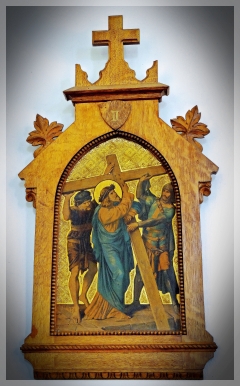
I tell this story to help us understand what it was like when Jesus put on human flesh and lived as a man. Clothed in work clothes, my son looked like every other hourly employee on the line. Although Jesus is often depicted with a halo, when He was clothed in human flesh, there was no halo and He looked like any other man. Instead of giving up coat and tie for overalls, Jesus gave up His immortal perfect form and took on the aches, indignities, and illnesses that come with a mortal body.

Just as my boy remained the boss’s son but gave up any status or privileges that came from that, Jesus remained God’s son but gave up the benefits that came with His divinity. Of course, Jesus gave up far more than did my son! He set aside the glory of heaven for life on earth and relinquished the divine life He had in heaven to be an itinerant rabbi in Galilee. Even though equal with His Father, Jesus chose to submit to Him as an earthly son does to his father.

Just as our boy never stopped being the boss’s son, Jesus remained fully God while fully man. Just as his co-workers didn’t know our boy’s real identity, people had trouble recognizing Jesus as God’s Son. While my son did what he did so he could learn the family business, Jesus did what He did to take away the sins of the world. Our son may have humbled himself by starting at the bottom but Jesus humbled himself by deliberately choosing to die a torturous death as a criminal on the cross!

My son knows what it means to be one of his employees and he’s a better boss because of it. Jesus knows what it’s like to be human and we are better because of that! Jesus knows what it is to hurt, be disappointed, suffer, struggle, get tired, thirst, feel hungry, bleed, hope, love and die. Because He lived as one of us, we can come to Him confidently and without fear; instead of condemnation, we will receive God’s grace and mercy!

Well, then, since we have a great high priest who has gone right through the heavens, Jesus, God’s son, let us hold on firmly to our confession of faith. For we don’t have a high priest who is unable to sympathize with our weaknesses, but one who has been tempted in every way just as we are, yet without sin. Let us then come boldly to the throne of grace, so that we may receive mercy, and may find grace to help us at the moment when we need it. [Hebrews 4:14-16 (NTE)]

Copyright ©2020 jsjdevotions. All rights reserved.

LIKE A CHILD

“I’m telling you the truth,” he said. “Unless you turn inside out and become like children, you will never, ever, get into the kingdom of heaven. So if any of you make yourselves humble like this child, you will be great in the kingdom of heaven.” [Matthew 18:3-4 (NTE)]

kiboni school - arusha - tanzaniaI used the NTE version of today’s verse because it better captures the original meaning with the words “turn inside out.” Usually translated as change, turn, or convert, the original Greek was strephō which meant more than a slight change of direction. It meant being turned (even from one thing into another) which requires submission. Far more than a mental acknowledgment or intellectual assent to certain ideas, it’s a turning of one’s whole life and person toward God. The kind of conversion or turning meant in strephō is like having one’s life turned inside out.

When Jesus said to become like children, He wasn’t telling us to act childish but to come to Him as would a child. When thinking of some of today’s often spoiled and demanding children, it’s easy to question His words. Children in His day, however, were far less presumptuous, self-sufficient, disrespectful or defiant than today’s youngsters. They were more like a little girl I encountered in Tanzania. She walked across the schoolyard, stopped, looked up at me and, with a shy smile, presented me with her foot. Her shoe needed tying and, as I knelt down in the dust to tie it, she was a perfect example of Jesus words. Knowing she wasn’t self-sufficient, she openly and humbly depended upon someone older and wiser. Trusting and unpretentious, this beautiful child came to me with a faith and simplicity that we adults don’t seem to have.

A child knows when he or she needs help and will freely ask and accept it. Adults, on the other hand, rarely admit their needs or weakness for fear of appearing vulnerable. We want to be in control but, if we’re ever going to enter into God’s Kingdom and enjoy His peace, we have to turn ourselves inside out, cede control and admit our powerlessness.

Any 12-step recovery program begins with admitting our helplessness but we don’t need to have an addiction or compulsive behavior to have our lives spin out of control. Without Jesus, we are broken beings separated from God and powerless over sin. We may be incapable of saving ourselves, but Jesus is not. What He won’t do, however, is force Himself upon us or chase after every loosened shoelace to tie it. It’s up to us to admit our need and turn to Him, as that child did to me.

I will always remember that brief encounter with a little girl who showed me what it means to turn and be like a child: with humility, trust, openness and a lack of self-sufficiency. The kingdom of God is not earned by human effort but is received in childlike trust as a gift through the mercy and grace of God.

With time, that little girl will become more self-sufficient and won’t need someone to tie her shoes. I pray, however, that she always will be willing to acknowledge her weakness and needs to God.

And this is what he said to me: “My grace is enough for you; my power comes to perfection in weakness.” So I will be all the more pleased to boast of my weaknesses, so that the Messiah’s power may rest upon me. [2 Corinthians 12:9 (NTE)]

Copyright ©2020 jsjdevotions. All rights reserved.