NO PITY PARTIES (Elijah – Part 3)

But the Lord said to him, “What are you doing here, Elijah?” Elijah replied, “I have zealously served the Lord God Almighty. But the people of Israel have broken their covenant with you, torn down your altars, and killed every one of your prophets. I am the only one left, and now they are trying to kill me, too.” [1 Kings 19:9b-10 (NLT)]

paper kite butterflyWhen God asked Elijah what he was doing, the prophet’s answer should have been, “I’m having a pity party!” Having experienced the high point of life on Mt. Carmel, the prophet now found himself at an all-time low. Feeling abandoned, Elijah was bitter that, after serving God so zealously, he’d been rejected by Ahab and was running for his life.

Elijah was underestimating the power of God and over-estimating the power of his enemy; as long as God had work for him to accomplish, the prophet was invulnerable to Jezebel’s attacks. Moreover, when Elijah complained that he was the only faithful person remaining, he wasn’t. In his self-pity, he’d forgotten about meeting Obadiah, the man who’d hidden and protected 100 of God’s faithful and God told him that 7,000 others in Israel had not bowed to Baal.

Deep valleys of testing often follow our mountaintop experiences as they did with Elijah.  When life throws a curve ball like a pandemic or when it hits us directly with a bean ball like stage-4 cancer or paralysis, our first response often is a pity party like Elijah’s. He seemed to think the world revolved around him and that he was the only one encountering difficulty; we tend to do the same thing. Elijah wasn’t alone and neither are we.

Like Elijah, we don’t think we deserve our troubles, but we’re no more deserving or undeserving than the next guy. Difficulty, disappointment, adversity and disaster are inevitable in our fallen world. Despair, pessimism, gloom, and complaint, however, are not; they are a choice.

Elijah’s faith in and service to God did not protect him from hardship nor will ours. Living for Jesus will have both peaks and valleys. Let us remember: everything that touches us, whether we’re having a mountain top experience or trudging through a dark valley, has passed through God’s hands first and has a purpose. It’s only when we stop wallowing in self-pity, however, that we’ll find His purpose.

God told Elijah to get up and get to work. He was to anoint Hazael to be the next king of Aram, Jehu to be the next king of Israel, and Elisha to be his successor. Elijah had a purpose and so do we. When God asks us what we’re doing, as He did with Elijah, our response should not be one of complaint and self-pity. It should one of acceptance and joy that we are serving God and doing His work!

I must learn that the purpose of my life belongs to God, not me. God is using me from His great personal perspective, and all He asks of me is that I trust Him…. Self-pity is of the devil, and if I wallow in it I cannot be used by God for His purpose in the world. [Oswald Chambers]
And we know that God causes everything to work together for the good of those who love God and are called according to his purpose for them. [Romans 8:28 (NLT)]

Don’t be afraid, for I am with you. Don’t be discouraged, for I am your God. I will strengthen you and help you. I will hold you up with my victorious right hand. [Isaiah 41:10 (NLT)]

Copyright ©2020 jsjdevotions. All rights reserved.

BENEVOLENT DETACHMENT

Live carefree before God; he is most careful with you. Keep a cool head. Stay alert. The Devil is poised to pounce, and would like nothing better than to catch you napping. Keep your guard up. You’re not the only ones plunged into these hard times. It’s the same with Christians all over the world. So keep a firm grip on the faith. The suffering won’t last forever. [1 Peter 5: 7-9 (MSG)]

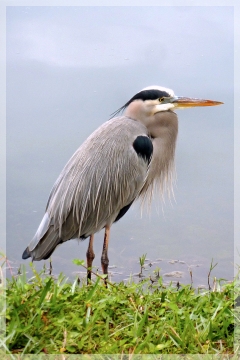
great blue heron“We’re just a big ball of frustration right now!” a public information officer for the San Antonio Police said while describing the rise in road rage and violent driver incidents in that city. Unfortunately that big ball of frustration isn’t limited to the road or San Antonio. Satan must be chortling in glee as he watches people’s virus-fueled anxiety spurring rising levels of aggression and hostility everywhere.
A Texas woman recently had a complete meltdown in the grocery store. After being asked to wear a mask, she went on an expletive-deleted tirade while flinging more than a dozen items out of her cart. Although she’d worn the mask while shopping, she’d removed it in the checkout line. While she chucked her pork chops, chicken, produce, and canned goods into the aisles with one hand, she held her mask in the other. Finally, abandoning the rest of her groceries, she stormed out of the store, screaming profanities and still waving her mask. The outburst gained her nothing but embarrassment as her outburst went viral and she still had to buy groceries (in a city with a mask mandate)!

Whether it’s fear, anger, depression, unease or frustration about health and safety, racial injustice, politics, government, cabin fever, unemployment, financial challenges, on-line schooling, working remotely, or isolation, tension is high and everyone is on edge. But, instead of dealing with our feelings, we seem to be lashing out at one another. While I haven’t thrown a tantrum or screamed at anyone yet, I admit to not liking my mind’s inner dialogue when I see people flaunting the mask order, hogging the sidewalk, wearing masks improperly, with a loaded grocery cart in the express lane, or committing numerous other minor social infractions that wouldn’t have aggravated me a few months ago.

People are wound tight and living that way isn’t good for our bodies or our souls. We need to let go of those petty annoyances along with our major concerns and give them all to God! Christian counselor and author John Eldredge calls this practice “benevolent detachment.” It’s a way to be kind to ourselves as well as to those around us. To practice this detachment, he’s developed an app called “One Minute Pause.” With soothing music in the background, it begins with a few deep breaths followed by God inviting us to give everyone and everything to Him. It continues with our response: “I give everyone and everything to you, God!” followed by a few Bibles verses and a brief prayer. Although I have the app, none of us need an app on our phones to benevolently detach from the world around us. We do, however, have to hit the pause button on our emotions! We need to unclench both physically and spiritually and release whatever is troubling us to God.

The request to put on her mask probably was the least of many things bothering that Texas woman but, as “the last straw,” it was what triggered her frenzy. What if she had made a practice of benevolent detachment—of regularly pausing long enough to hand her frustrations to God? Let us all make a concerted effort to let go of life’s minor vexations before they evolve into a complete meltdown or worse. Let’s regularly step back, take a deep breath, and redirect our attention to the One who is walking through this valley with us. We’re not in this alone! As we give God our fear, anxiety, irritation, exasperation, angst, and sadness, let us choose to trust Him.

Over time I’ve found no better practice to help clear out my cluttered soul than the practice of benevolent detachment. The ability to let it go, walk away — not so much physically but emotionally, soulfully. [John Eldredge]

Don’t fret or worry. Instead of worrying, pray. Let petitions and praises shape your worries into prayers, letting God know your concerns. Before you know it, a sense of God’s wholeness, everything coming together for good, will come and settle you down. It’s wonderful what happens when Christ displaces worry at the center of your life. [Philippians 4:6-7 (NLT)]

Copyright ©2020 jsjdevotions. All rights reserved.

HE CARRIES US

Praise the Lord; praise God our savior! For each day he carries us in his arms. [Psalm 68:19 (NLT)]

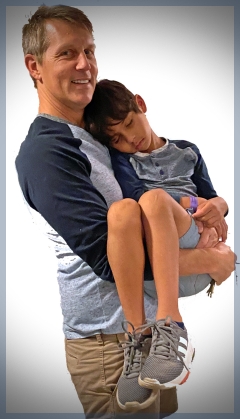
carrying his childMy daughter-in-law sent photos of the family’s day at the apple orchard. The grands picked apples, pet the farm animals, climbed the tractors, raced the pedal karts, did the zip-line, raced through the corn maze, traversed the goat bridge, and enjoyed their fill of donuts and apple cider. It was a fun-filled but exhausting day. The last picture was of my son carrying the youngest grand (who’d fallen asleep on the ride home) into the house.
The photo brought me back to my childhood when, like my grand, I’d fall asleep in the car on the way home from a family outing. Once home, my father would scoop me up in his strong arms to carry me into the house and up to my room. I remember feeling safe and loved as he carried me in his arms.

The oversized La-Z-Boy in our den was my father’s chair but, when he wasn’t home, my mother and I would snuggle there and talk for hours. I’d pour out my troubles, questions, hopes, and fears. She would quietly listen and then comfort, guide, encourage and pray with me. Holding me in her arms, she’d dry any tears and reassure me that life would eventually work out for the best.

Those childhood days are long gone; my parents passed away more than half a century ago and all that’s left are fond memories. Nevertheless, there still are times I’d like to shed the duties of adulthood and be a child again: to be the one carried instead of the one doing the carrying—the one falling apart instead of the one putting it together again. I don’t think I’m the only person who’s ever wanted to resign from adulthood. The responsibilities that come with maturity can weigh on us all.

In these troubled times, today’s responsibilities feel especially heavy. Every day seems to bring another challenge. We may be grown up but we haven’t outgrown the need to be nurtured, encouraged, comforted and restored. Many of us, however, seem to have outgrown the willingness to stop and admit our vulnerability and need. Just because we’re adults doesn’t mean we can’t rest in the arms of our Heavenly Father and let Him carry us when we’re weary. Although we can’t return to childhood, we have a Father in Heaven who loves each of us as if we were His only child. He will hold and comfort us as only a loving parent can. Rather than bandaging skinned knees and feeding our bodies, He bandages wounded hearts and nourishes our souls. He may not carry us up to our rooms but He we will carry us close to His heart for the rest of our days.

Snuggle in God’s arms. When you are hurting, when you feel lonely, left out. Let Him cradle you, comfort you, reassure you of His all-sufficient power and love. [Kay Arthur]

He tends his flock like a shepherd: He gathers the lambs in his arms and carries them close to his heart. [Isaiah 40:11 (NIV)]

Even to your old age and gray hairs I am he, I am he who will sustain you. I have made you and I will carry you; I will sustain you and I will rescue you. [Isaiah 46:4 (NIV)]

Copyright ©2020 jsjdevotions. All rights reserved.

HIS CLOAK (Part 2 – Mark 10:46-52)

So throwing off his cloak, he sprang up and came to Jesus. Then Jesus said to him, “What do you want me to do for you?” The blind man said to him, “My teacher, let me see again.” Jesus said to him, “Go; your faith has made you well.” Immediately he regained his sight and followed him on the way. [10:50-52 (NSRV)]

eastern bluebird

There is so much packed into the seven verse story of Bartimaeus that it justifies a closer look. Let’s back up just a few verses in Mark 10 to when, after reminding Jesus that they’d given up everything to follow Him, James and John asked for a favor. When Jesus inquired what they wanted, the disciplines said they desired privileged places in His coming Kingdom. In stark contrast, Bartimaeus didn’t ask a favor; instead he pled for mercy and asked only for his sight. The blind man got his request but the selfish disciples didn’t. If we have unfulfilled prayers, perhaps we should consider what we’re asking—are they favors for our advantage or pleas for God’s mercy?

If we back up a few more verses in Mark’s gospel, we come to when Jesus was just starting his journey toward Jerusalem and a young rich man approached Him. While he was sure he’d kept all the commandments, the man sensed something was missing so he asked Jesus what he needed to do to inherit eternal life. When Jesus told him to sell his possessions, give the proceeds to the poor, and come follow Him, the man’s face fell in disappointment. Treasuring his possessions more than eternal life, he departed.

In another contrast, we have Bartimaeus, the blind beggar who followed Jesus immediately and without question. It’s easy to think the sightless beggar left nothing behind when he followed Jesus but we’d be wrong. Mark adds an interesting detail—when Jesus called to Bartimaeus, the man threw aside his cloak before jumping up and going to Him. That cloak, a wide vest reaching to the ankles, was far more than an outer garment worn during the day. A man’s cloak was so valuable that it could be used as collateral for a loan. Mosaic Law, however, prohibited a lender from keeping it overnight because a cloak often was the only shelter, bed, pillow, or blanket a man had at night. Bartimaeus’ cloak was more than a coat; it was his home. While begging, he would have been sitting on his cloak with its lower part spread out in front of him to collect any coins dropped his way.

Throwing aside his cloak was an act of faith. That piece of clothing (and whatever money may have been on it) was all Bartimaeus had and as valuable to the beggar as all the rich man’s possessions were to him. The moment Bartimaeus threw it aside, the cloak and money were as good as gone—either stolen or kicked aside along the road. Whether blind or sighted, any man would be in dire straits without a cloak, but Bartimaeus did what the rich man couldn’t and left all he had to follow Jesus!

Bartimaeus left his cloak, John and James left their father, Simon Peter and Andrew left their fishing nets, Matthew left a lucrative job as a publican, and Paul left a promising career as a Pharisee but the rich young man wanted to take his old life with him. Thinking that we can keep our old lives while following Jesus is a little like expecting to stay dry when we jump into the pool! It just can’t be done!

When God becomes your only source, you don’t need plan B or C. He is more than enough! [Buky Ojelabi] 

Then Jesus told his disciples, “If any want to become my followers, let them deny themselves and take up their cross and follow me. For those who want to save their life will lose it, and those who lose their life for my sake will find it. [Matthew 16:24-25 (NSRV)]

Copyright ©2020 jsjdevotions. All rights reserved.

THE POSSIBILITY OF FAILURE

For I can do everything through Christ, who gives me strength. [Philippians 4:13 (NLT)]

mottled duck“What would you do if you knew you could not fail?” the bumper sticker asked. That’s the sort of query that used to be posed to beauty pageant contestants. Their answers typically had to do with curing cancer, attaining world peace, or solving the problems of illiteracy, poverty and hunger. Of course, we’d all like to be able to wave a magic wand and solve the world’s difficulties. Unfortunately, it’s not that easy.
The question, however, continued to intrigue me. Is there something I would do if there was absolutely no possibility of failure? Would I even want to? Would there be joy in achievement if there were no struggles, no hurdles to jump and no problems to solve? There’s no sense of victory in playing a game when the opponent doesn’t present a challenge. The value of a diploma would be cheapened if we never had to study for final exams. The sense of satisfaction at a job well done would be diminished if we never had the possibility of failure. Failure is part of God’s training plan. The risk of failure brings us closer to God and reminds us that we can do nothing without faith in Him.

When Paul wrote the Philippians that he could do all things through Christ, did he mean he would be successful in every endeavor? Rather than a statement of self-reliance or guaranteed success, Paul was declaring his reliance on Christ. He wasn’t denying the possibility of adverse circumstances or failure; he was affirming his faith.

If we knew we couldn’t fail in an endeavor, we’d have no need for faith. Furthermore, the possibility of success or failure should never keep us from obediently following God’s direction. While the risk of failure should never stop us, lack of faith will.  As long as His Spirit is in us and we are walking in His footsteps, whether we succeed or fail, we will not fail the test of faith!

What would I do if I knew I couldn’t fail? Exactly what I’m doing now—sometimes successfully and other times not, but always in obedience to Him.

Our greatest fear should not be of failure but of succeeding at things in life that don’t really matter. [Francis Chan]

Examine yourselves to see if your faith is genuine. Test yourselves. Surely you know that Jesus Christ is among you; if not, you have failed the test of genuine faith. [2 Corinthians 13:5 (NLT)]

Three different times I begged the Lord to take it away. Each time he said, “My grace is all you need. My power works best in weakness.” So now I am glad to boast about my weaknesses, so that the power of Christ can work through me. That’s why I take pleasure in my weaknesses, and in the insults, hardships, persecutions, and troubles that I suffer for Christ. For when I am weak, then I am strong. [2 Corinthians 12:8-10 (NLT)]

Copyright ©2020 jsjdevotions. All rights reserved.

THE BUTTERFLY EFFECT

Remember the things I have done in the past. For I alone am God! I am God, and there is none like me. Only I can tell you the future before it even happens.  Everything I plan will come to pass, for I do whatever I wish. [Isaiah 46:9-10 (NLT)]

For want of a nail the shoe was lost, For want of a shoe the horse was lost, For want of a horse the rider was lost, For want of a rider the battle was lost, For want of a battle the kingdom was lost, And all for the want of a horseshoe nail. [Poor Richard’s Almanack (1758)]

painted lady - marigoldOf course, in another time or place, a missing nail might have better consequences. Without the nail, horseshoe and rider, the horse wouldn’t have been on the road, reared at the sight of a snake, and thrown off his rider (who died from his injuries)! Life is unpredictable.

Theorizing that weather prediction models are inaccurate because knowing the precise starting conditions is impossible and a tiny change can throw off the results, meteorology professor Edward Lorenz posed this question in 1972: “Does the flap of a butterfly’s wings in Brazil set off a tornado in Texas?” Of course, a single act like the butterfly flapping its wings won’t cause a cyclone but Lorenz’s point was that nature’s interdependent cause-and-effect relationships are too complex to resolve. Small variations in conditions can have massive, minor, or imperceptible consequences and it is impossible to predict which will be the case.

As if the magnitude of this pandemic isn’t proof enough, Lorenz’s “butterfly effect” reminds us that life is amazingly unpredictable. We often pray that God will fix, heal, repair, reverse, or resolve situations or people and are disappointed when it seems that God has turned a deaf ear to us. The answers to our prayers, however, are not up to us—they are up to Him and the people and situations we want God to change are frequently the people and circumstances that God is using to change us!

As weather forecasters have learned with the “butterfly effect,” we mortals can’t possibly see all of the consequences of the changes we request in our prayers. God is the only one capable of knowing the repercussions of any alteration. While we have a limited concept of what the future will bring, His view is all-encompassing; He sees not just our lives, but all of the lives before us, with us, and those yet to come. God knows exactly what will happen if He grants our prayers, not just to us but also to everyone else. Our faith is not that God will give us what we want but that God will give us what is best!

In retrospect, I can only offer thanks that God, in His infinite wisdom and love, didn’t give me everything for which I asked. When Garth Brooks thanked God for unanswered prayers, he was wrong. God always answers prayers; it’s just that sometimes He answers with a “No!”

Sometimes I thank God for unanswered prayers.
Remember when you’re talkin’ to the man upstairs
That just because he doesn’t answer doesn’t mean he don’t care.
Some of God’s greatest gifts are unanswered prayers. [Garth Brooks]

Oh, how great are God’s riches and wisdom and knowledge! How impossible it is for us to understand his decisions and his ways! For who can know the Lord’s thoughts? Who knows enough to give him advice? [Romans 11:33-34 (NLT]

Copyright ©2020 jsjdevotions. All rights reserved.