
And it came to pass, that, when Elisabeth heard the salutation of Mary, the babe leaped in her womb; and Elisabeth was filled with the Holy Ghost: And she spake out with a loud voice, and said, Blessed art thou among women, and blessed is the fruit of thy womb. [Luke 1:41-42 (KJV)]
 Yesterday, I mentioned Dr. Frank Crane’s comments about the wonders of everyday life. After saying, “The miracle of miracles is life,” Crane adds, “The most amazing, baffling, mysterious thing in all the universe is a seed.” While cutting into an orange this morning, I looked at the seeds hidden in the juicy fruit and recalled his words. Think how a single orange seed can grow into an orange tree that produces countless flowers that almost miraculously transform into oranges that will then produce even more seeds. The amazing power and potential held in the core of one small seed is there because it was designed by God.
It was my granddaughter’s 17th birthday recently and, since I couldn’t be with her, I looked through old photos of her instead. I recalled the day I first saw her. Only a day old and small enough to fit in a Christmas stocking, Bree was in her mother’s arms. The sight of the two of them took my breath away. For some odd reason, I recalled Elizabeth’s greeting to the Virgin Mary, “Blessed is the fruit of thy womb.” I’d read and heard that phrase countless times yet I’d never really considered it. But there, right in front of me, was my daughter, the child who’d been the fruit of my womb, and she was holding her own child, the fruit of her womb. By extension, that infant also was the fruit of my womb along with my mother’s and grandmothers’ and the wombs of their mothers before them. That little girl’s DNA held fragments of people she’d never know. Both past and future were locked within her being. Remembering that sense of wonder I felt upon seeing her, I thought of Crane’s words about the miracle of miracles: the life within a seed. How does God pack soul, blood, hair, skin, teeth, eyes, bones, nerves, talent, heart, personality, imagination, sense of humor, fingernails, and the ability to love, laugh, and cry into the two microscopic cells that join to become a human being?
We just celebrated the miracle of Jesus’ incarnation when God took on human flesh. He became a fetus in a woman’s body—the fruit of her womb—and was born. In some miraculous way, the hand of God touched a virgin and impregnated her. How He did this is a matter beyond our comprehension and yet He did. As Christians, we attest to the virgin birth in both the Nicene and Apostles’ Creeds. There are, however, some people who accept all of Scripture’s miracles except for this one. Yet it really is no more amazing than God’s many other miracles. Parting the Red Sea, manna from heaven, Jericho’s destruction, turning water into wine, stilling a storm, the sun standing still, feeding a multitude, giving sight to the blind, walking on water, resurrecting the dead, and ascending into heaven all defy the laws of nature.
We don’t have to look to Scripture to be witnesses to God’s ability to do the unbelievable; just look at the miracle of miracles—life itself! The birth of a child, even when conceived the usual way, is miracle enough to convince me that the author of nature’s laws can rewrite them any time and any way He wants. The Human Genome Project spent thirteen years mapping all 3.1 billion base pairs in human DNA—the entire genetic blueprint of a human being—and yet they never found the innate sense of right and wrong that exists within each one of us from the moment we’re born or the very essence of humanity. What is the DNA of an immortal soul? My 23andMe report doesn’t say and the Human Genome Project still doesn’t know!
For us men and for our salvation he came down from heaven: by the power of the Holy Spirit he became incarnate from the Virgin Mary, and was made man. [Nicene Creed]
 “Don’t worry, be happy,” sang Bobby McFerrin. Right now, for many of us, that’s easier sung than done. This pandemic has turned our lives upside down. Between rising numbers of COVID cases and concern about on-line schooling, money troubles, closing businesses, political divisiveness, and quarantining, it’s hard not to worry!
 When I was in college, most of the girls in my sorority house played bridge. After watching a few games, newcomers would sit in and learn from the more experienced players as they played. We novices lost a lot of games in the process but, eventually, we became good players. One friend, however, wanted to start as an expert. She sat alone in her room with a deck of cards and a bridge book trying to teach herself. Unwilling to make rookie mistakes, she wouldn’t play a hand until she was a skilled player; that day never came. She wasn’t much different from the people who say they’ll join a gym once they’ve gotten in better shape; rarely does that day come either.
 With the back-to-back hurricanes that tore through Louisiana, two others that devastated Nicaragua and Honduras, and the consecutive typhoons that flooded the Philippines, a great many people must be asking, “Why us, Lord?” In spite of the meteorological explanations for the paths taken by those storms, there is something discomforting about the seeming randomness of such destruction. I can’t help but wonder, “Why them and not us?” In a universe of retribution and reward, we’d have a sense of being able to control our destiny; only bad things would happen to bad people and only good things to the good ones. If we did all the right things, life would go smoothly and, if we didn’t, we’d just be getting what we deserved! That, however, is not the way of the world and back-to-back hurricanes along with cancer, ALS, hit-and-run-drivers, stray bullets, and tornadoes hit both the deserving and undeserving.
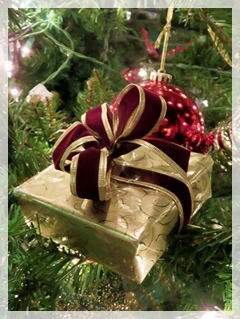 My daughter has become quite adept at hiding Christmas gifts from her husband. If she doesn’t, he will find the presents and open them early; patience is not one of his strong suits. It wasn’t one of Sarah and Abraham’s either. Although they’d been promised a son and many descendants, they grew impatient waiting and took matters into their own hands. Sarah gave Abraham her maidservant Hagar with whom to make a child. Although she made the offer, he didn’t have to accept—but he did. The boy Ishmael was the result of their rashness and the rivalry and strife that continue today in the Middle East came from that impatience. Like Sarah and Abraham, when my son-in-law knows a gift is coming, he just can’t wait until the correct time to receive it. Fortunately, while his wife may get annoyed when he takes matters into his own hands, his impulsiveness hasn’t resulted in centuries of international conflict.
 Devotions of the Heart