
 Call to me and I will answer you, and will tell you great and hidden things that you have not known. [Jeremiah 33:3 (ESV)]
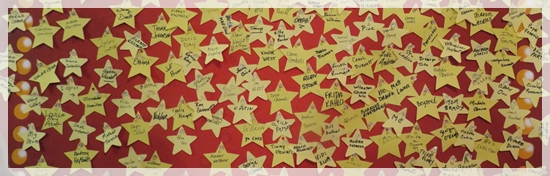
The bulletin board outside the auditorium posed this question: “If you could be someone famous for a day, who would you be?” People had written their answers on paper stars and pinned them to the board. Including both living and dead, the answers ranged from entertainment, royalty and sports to technology, government, and the arts. They included Thomas Edison, Beyoncé, Georgia O’Keefe, Chrissie Evert, Isaac Newton, Thomas Jefferson, Maya Angelou, and Coco Chanel. Oprah received several stars as did Alexander Hamilton, Audrey Hepburn, and Michele Obama. Warren Buffet was the only entrepreneur listed but someone else was satisfied to be “any rich person;” one man wished to be Penélope Cruz’s husband.
I looked at the stars and pondered my answer. Although God had one star, He certainly wouldn’t be my choice. I have enough trouble running my life; running the universe, even for just a day, would be way too much responsibility for me. In the end, I had to agree with the one star that said “Me;” being me is all I can manage. This exercise, however, reminded me of a similar question asked in our small group: “If you could have a conversation with someone famous, who would it be?”
Even though I wouldn’t have much in common with sport stars like Joe DiMaggio or Bobby Orr and probably wouldn’t understand Giacomo Puccini or Leonardo DaVinci, I would enjoy being in the presence of nearly everyone whose star appeared on the board (with the exceptions of Christopher Hitchens, Hugh Hefner and whoever is Penelope Cruz’s husband). If I actually did have an opportunity to meet with one of those people, you can be sure I wouldn’t waste my time talking about me, my background, ambitions, needs and desires. A conversation with Bishop Desmond Tutu, Florence Nightingale, or even Lucille Ball would have no point if I never let them get a word in edgewise. I’d want to hear what they had to say: to ask about them, to know what was important to them, what made them tick, and what advice they’d pass on to me.
Alas, with one notable exception, most of us will never have the opportunity to converse with any of the people whose names were on that bulletin board. The exception, of course, is God, the greatest one of them all. Unlike all of those stars we’ll never meet, we can talk with God in prayer any time we want. Prayer gives us the opportunity not just to know about God but to actually know Him—to have a relationship with Him—and not just for a day, but forever!
I wonder why I’m so willing to jabber on when talking with God—the one who knows all things—when I’d quietly listen intently to a celebrity. The creator of the universe doesn’t require my guidance on world management any more than Ina Garten needs my cooking advice or Billie Jean King needs my tennis pointers. God doesn’t need me to tell Him what it is I need or want and He certainly doesn’t need me to list my concerns or register my complaints; He already knows all there is to know about me! In fact, He knows what I need before I know I even need it!
It is when we quiet our voices that we can hear the voice of God. Thomas Merton describes this listening or contemplative prayer as “not so much a way to find God as a way of resting in him whom we have found, who loves us, who is near to us, who comes to us to draw us to himself.” Let us bask in His presence; let us pray.
Prayer is not asking. Prayer is putting oneself in the hands of God, at His disposition, and listening to His voice in the depth of our hearts. [Mother Teresa]
 This is the message you have heard from the beginning: We should love one another. [1 John 3:11 (NLT)]
 Not that I was ever in need, for I have learned how to be content with whatever I have. [Philippians 4:11 (NLT)]
 Some prophets weren’t bothered by the truth and were available for hire. Ahab, for example, had 400 prophets on his payroll acting as his “yes men.” When he asked Jehoshaphat to join him in a campaign against Aram, Jehoshaphat requested the advice of prophets so Ahab summoned his seers. Jehoshaphat, however, recognized them as pagans; when he asked for a true “prophet of the Lord,” Micaiah was summoned.
 In 539 BC, thousands of Medes and Persians were digging outside Babylon’s walls. Thinking they were futilely trying to undermine the city’s impregnable walls, Babylon’s King Belshazzar was unconcerned. While carousing with 1,000 of his nobles, he gave orders to bring out the gold and silver cups that Nebuchadnezzar had looted from Jerusalem’s temple 47 years earlier. The revelers were drinking to their false Babylonian gods with vessels dedicated to the one true God when a human hand appeared and started writing on the plaster wall. No longer so arrogant, the frightened Belshazzar called for his astrologers and diviners but, when the pagans were incapable of deciphering God’s message, Daniel was called to interpret the words.
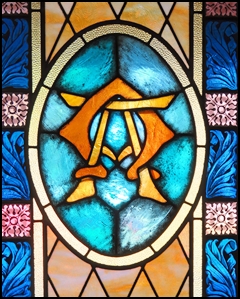 In the book of Revelation, when Jesus says He is the Alpha (the beginning), He also says He is the Omega (the end). He’s not talking of alphabets but rather the absolute beginning, revealed in Genesis, and the absolute end, revealed in Revelation. God had the first word when He spoke the universe into existence and He will have the last word when the world as we know it ends.
