
Don’t store up treasures here on earth, where moths eat them and rust destroys them, and where thieves break in and steal. Store your treasures in heaven, where moths and rust cannot destroy, and thieves do not break in and steal. Wherever your treasure is, there the desires of your heart will also be. [Matthew 6:20-21 (NLT)]
 We’re selling our northern home and, with limited space in Florida, I must winnow out our 52 years of accumulated possessions. “How can I give them away?” I wondered while looking at the beautiful hand-painted Bavarian dinner and dessert plates that belonged to my mother and her mother before that. My fondness for the plates, however, has less to do with their beauty than with their provenance.
When my mother died, I was only fifteen. I remember sitting with my older brother and sister as my father read her hand-written note to us. He tried to hold back his tears as he spoke her words of farewell that passed along various family heirlooms to each of us children. Mentioning her joy at never having broken a plate in the 23 years she’d used them, my mother gave her mother’s china to me. When I look at what is little more than clay, bone ash, flint, feldspar, glaze, paint, and gold gilding, I don’t see plates—I see my mother’s exquisitely set table, the two of us setting it, our family gathering together for a holiday dinner, and my father reading her farewell words to me.
Later, when sorting through books, I came to some that had been my mother’s. Inside the front covers, she’d carefully written her name and home address. “How can I give away these books that meant so much to her?” I thought. Many of them were written by C.S. Lewis and I suspect my affinity for the author comes from her. She belonged to a women’s guild at our church—sort of the 1950’s version of a small group. The women gathered twice a month for fellowship and service and often met at our house. They would sit around the dining room table and sew something called “cancer pads.” My mother couldn’t even thread a needle and her poor eyesight and clumsiness with a needle probably made her more of a hazard than a help in the women’s work. What she excelled at, however, was reading aloud, analyzing the written word and leading discussions. When the women realized that busy hands didn’t keep their mouths from minding other people’s business, my mother suggested that she read to them while they worked.
As I ran my finger over her name, I decided to save just one of her books. The rest of them will go to the church’s library so they can bring someone else pleasure and knowledge. Then, realizing that I don’t need the china to remember the beautiful woman who gave me life, I decided to keep just one of the dessert plates and give away the rest. Rather than hold onto things, I will hold on to my memory of a woman who, recognizing her limitations, wisely used the gifts God gave her.
While the Old Testament speaks of material inheritance and even gives guidelines to ensure the financial welfare of the family, the New Testament speaks of a spiritual inheritance. Rather than worrying about amassing things here on earth, Jesus told us to store up treasures in heaven. Granted, we want our families cared for once we’re gone but more crucial than passing along possessions is the passing along of good character, love, and faith in God.
The important thing is not to hold on to material possessions but to remember the people we associate with them, the love they offered, and the lessons they taught us. I think of the words of Morrie Schwartz (in Mitch Albom’s Tuesdays with Morrie) who said we continue to live on in the hearts of everyone we’ve touched and nurtured while we were here. “Death ends a life, not a relationship,” said the wise old professor. My children don’t need old china or books to know my mother; they know her through me!
 Not so long ago, it was hard to face my computer with any enthusiasm. Every beginning led to a dead end or took me down a rabbit hole of confusion. The paragraphs over which I’d struggled had come to nothing and my hours at the keyboard seemed an exercise in futility. It’s as if I had little scraps of useless fabric but couldn’t find a way to quilt them together. I wondered where God was when I so desperately needed His guidance.
 Remembering that Elisha burned both plow and oxen to become an itinerate prophet for the Lord, let’s rethink the way he may have said “What can I do to help you?” With no home or money and possessing only what he could carry, how does the widow expect him to help? In the very next sentence, however, Elisha tells her to take stock of what she already has. Although she expected Elisha to solve her problem, he showed her how to solve it herself (with God’s help, of course). As it turned out, with a little work on her part and God’s intervention, the little she had was more than enough; she didn’t just pay her debts, she had money left over.
 When writing about Elisha, the widow, and the oil, I thought the first conversation between the prophet and distraught woman worth a deeper look. From their exchange, it is clear that the prophet either knew or knew of the widow’s husband. One of Elisha’s followers, the widow reminds the prophet of how much her husband revered and feared the Lord.
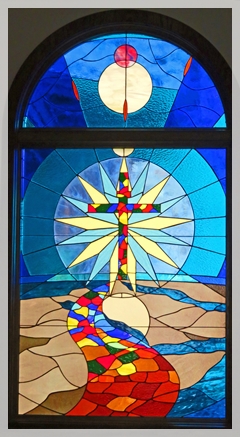 While speaking of salvation, our pastor suggested that there are four kinds of people we might find in any church. While sure of their salvation, the people in the first group are not secure in it. It’s not that they’ve lost their salvation; they never had it! Often called nominal or cultural Christians, their faith is in religion rather than Jesus and they mistake sitting in a church pew for having a relationship with God. Thinking they can purchase their ticket on the glory train with money or works, Christianity is an insurance policy for the hereafter rather than anything affecting heart or soul. They don’t understand that looking like a Christ follower, even with impressive God talk and charitable acts, isn’t the same as being one. There is a vast difference between true faith and false professions.
 We are pressed on every side by troubles, but we are not crushed. We are perplexed, but not driven to despair. We are hunted down, but never abandoned by God. We get knocked down, but we are not destroyed. [2 Corinthians 4:8-9 (NLT)]
