
If we say we have no sin, we deceive ourselves, and the truth is not in us. If we confess our sins, he is faithful and just to forgive us our sins and to cleanse us from all unrighteousness. [1 John 1:8-9 (ESV)]
 While “Don’t cry over spilled milk,” isn’t one of Solomon’s proverbs, that wise advice is several centuries old. “No weeping for shed milk,” appeared in a book of English proverbs back in 1659 and some historians believe the saying dates back to medieval days. Superstitious, people left spilled food for the fairies or elves to eat and drink. If someone cried over spilled milk, it was feared that the fairies might think the offering was begrudged and bad luck would visit the house.
For some unknown reason, today (February 11) is designated as “Don’t Cry Over Spilled Milk Day” and is a day dedicated to not letting the little things get us down. We all have a long list of past mistakes, large and small, over which we’ve shed a few tears. While a dog or cat might lap up spilled milk, no elves or fairies are going to come along to correct our mistakes and our tears accomplish nothing! Rather than lamenting over our blunders and missteps, our job is to clean up the mess we’ve made before it starts to stink! Before we get out our mops and pails, however, we’ve got to forgive ourselves. If God can forgive us, we should be able to forgive ourselves!
In actuality, for most of us, spilled milk is the least of our problems. We all make mistakes; sadly, we’ll continue to make them. There’s no point beating ourselves up and reliving past errors. The milk can’t go back in the bottle, the words can’t return to our mouths, the money can’t get unspent, the email can’t be retrieved, and the expletive can’t be deleted! When possible, we make right what we can, as soon as we can, and then forge on ahead, hopefully more prudently. Learning from our mistakes makes more sense than crying over them!
Just as we mustn’t let the little things get us down, we can’t let the big ones take us down either. Perhaps every day should be dedicated to not crying over milk that has spilled as we take a positive attitude, forgive ourselves (and others), fix what we can, accept what can’t be changed, and move forward.
Finish each day and be done with it. You have done what you could. Some blunders and absurdities no doubt crept in; forget them as soon as you can. Tomorrow is a new day. You shall begin it serenely and with too high a spirit to be encumbered with your old nonsense. [Ralph Waldo Emerson]
 More than thirty years ago, a friend confided that she wanted her obituary to be a good one. A few years ago, explaining that she wanted an updated photo in case it was needed for her obituary, she asked me to take her picture. Although she was in excellent health at the time, this woman clearly understood the fragility of life. Sadly, she died unexpectedly just a few days ago.
 In an attempt to avoid the day’s heat, I went walking immediately after breakfast, leaving the bed unmade and the dishes on the counter. Thinking I would tend to the bedroom and kitchen later in the day, I cleaned the lanai when I returned home. Just as I was finishing up, the gate house called: I had unexpected guests! One of my visitors is a “neatnik” and nothing about me or the house (except for the lanai) was neat or clean. In the few minutes between the gate’s call and their arrival, I managed to pull up the bedspread, throw the dishes in the sink, wipe the counter, slip on a fresh t-shirt, put on lipstick and don a baseball cap. I was thankful for the advance call that gave me just enough time to make things semi-presentable.
 A.W. Tozer’s words remind me of Jesus’s parable about the Pharisee and tax collector who prayed in the Temple. Acting as if God should feel grateful to receive his prayers, the Pharisee didn’t understand that he should be grateful that God listens! Rather than express thanks for God’s righteousness, power and majesty, the proud Pharisee thanked God for his own righteousness and then listed his virtues! Although it wasn’t required, he fasted twice weekly and was so fastidious about tithing that he tithed not just what was earned but also anything he acquired. If he were unsure that a farmer had tithed his produce, the Pharisee would tithe it again! Standing before God and proclaiming both his good works and his contempt for others (like the tax collector), the Pharisee is a perfect illustration of a man “who believes that he is worthy of heaven.” How wrong he was! Perhaps the Pharisee’s refusal to recognize his own self-righteousness was his biggest sin of all.
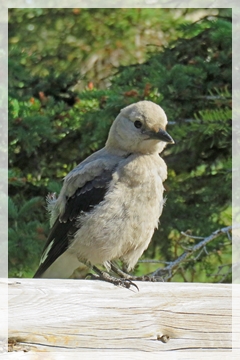 A few weeks ago, in Charles Schultz’s classic comic Peanuts, Snoopy sat on his doghouse and decided not to tell his little bird friend Woodstock about Santa Claus. “He’ll never get any presents anyway. Santa Claus never brings presents to tiny, nondescript, nobody birds,” he thought before concluding, “It’s kind of sad at Christmastime to be a nobody bird.” I wasn’t so sure about Santa ignoring the “nobody birds.” The previous day, several from our church had participated in a project that demonstrated just how much “Santa” really does care.
 Cutting in and out of traffic, the sports car sped around us and raced through a red light. A few minutes later, we saw it pulled off to the side of the road with a policeman at the driver’s side window. While the driver deserved the ticket, what happened was not karma. Nevertheless, when seeing someone suffer the consequences of their bad behavior, people often say, “It was karma—what goes around comes around!” Granted, what goes around often comes back around but the word “karma” is not a word that should be in our Christian vocabulary.
 Devotions of the Heart