DEADLINES

The king said to me (the queen also was sitting beside him), “How long will you be gone, and when will you return?” So it pleased the king to send me, and I set him a date. [Nehemiah 2:6 (NSRV)]

wiggens pass sunset“Work expands to fill the time available for its completion,” is what’s known as Parkinson’s Law. Writing those words in 1955, Parkinson wasn’t talking about deadlines; he was taking aim at the British Civil Service and government bureaucracies that become less efficient as they increase in size. Nevertheless, later studies have shown that without strict time constraints, we tend to waste time and work takes longer than necessary to complete.

When this pandemic began, all sorts of obligations were cleared from my calendar and, with nowhere to go and nothing to do, I was sure lots of writing would get done. How wrong I was! Like others who found themselves with excess time and no deadlines or sense of urgency, instead of getting more done, I’m accomplishing less.

When Jerusalem fell to Babylon, the Temple was destroyed and the city left in shambles. After Zerubabbel led the first group of exiles back, it took twenty years to rebuild the Temple. Seventy years after its completion, however, the city walls were still in ruins. When Nehemiah asked King Artaxerxes permission to return to Jerusalem to rebuild the city, the King asked how long he would be gone. Given Nehemiah’s weighty responsibilities in court, it’s logical to assume that the king would not agree to a lengthy absence. As the king’s cup-bearer, Nehemiah’s presence was essential to the king. His duties included being the chief financial officer and bearer of his signet ring. As the king’s wine taster, his job was to sample royal beverages to test for poison.

Before making his request, Nehemiah must have carefully considered both the amount of time necessary for such a task and the length of time the king would allow his absence. Although we don’t know Nehemiah’s answer, the king found it reasonable and the men agreed upon a time frame. With no target date, the wall hadn’t been repaired in over ninety years; with a deadline, the project was completed in a record 52 days!

Although Scripture mentions Nehemiah returning to Babylon twelve years later, it’s difficult to think the king would have agreed to be without his cup-bearer for that length of time. It’s more likely that a specific deadline, perhaps as brief as two months, had been set and Nehemiah returned promptly after the wall’s completion. Having shown his excellent leadership qualities, it probably was then that Artaxerxes appointed Nehemiah Judah’s governor and sent him back to Jerusalem. If the King originally had agreed to a twelve year absence, I suspect the wall may have taken nearly that long to complete!

Deadlines motivate us; they keep us from growing lethargic or unconcerned. Let us never forget that we all live with two deadlines: our own personal expiration date and the world’s. Although we know that both cutoff dates will occur, we don’t know when. Let us never grow lax and apathetic or lose a sense of urgency about doing the Lord’s work. Viewing every day as a gift, we must use our time wisely and enthusiastically to glorify God and bring about His Kingdom. Let us live this day to the fullest as if it were our last. After all, it very well could be!
But about that day and hour no one knows, neither the angels of heaven, nor the Son, but only the Father. … Therefore you also must be ready, for the Son of Man is coming at an unexpected hour. [Matthew 24:36,44 (NSRV)]

You therefore, beloved, since you are forewarned, beware that you are not carried away with the error of the lawless and lose your own stability. But grow in the grace and knowledge of our Lord and Savior Jesus Christ. To him be the glory both now and to the day of eternity. Amen. [2 Peter 3:17-18 (NSRV)]

Copyright ©2020 jsjdevotions. All rights reserved.

HANDS

Lift up your hands in the sanctuary and praise the Lord. [Psalm 134:2 (NIV)]

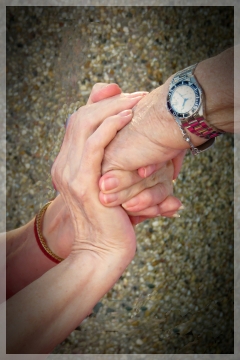
handsWhile social distancing has put an end to breaking bread with friends and holding hands while sharing a table blessing, I recall a dinner several years ago when I held the hand of our pastor’s wife during grace. For a small woman, her hands were larger and stronger than I expected. After grace, I looked at them and, comparing her youthful hands with mine, admit to feeling a twinge of envy. Like her, I played the piano but, unlike her, I could barely span an octave. Her sturdy hands had incredible reach and, unhampered by arthritis, there was power in her touch on the keyboard. I was overwhelmed by the strength of her hands and the beautiful way she uses them to praise the Lord as the worship leader at our mountain church.

As I pondered hands, I thought of a friend who used her hands to sign for the hearing impaired, the men whose hands set up chairs for Bible study, people who use their hands to pack meals for the food bank, and the ones serving soup at the homeless shelter. Some people’s hands warmly greet people as they enter church, bake cookies for Bible study (and lonely neighbors), fold programs or pass out communion. I thought of the preschoolers’ hands acting out “Zacchaeus” or “This Little Light of Mine” and the adult hands making a joyful noise in the bell choir and band. I thought of the calloused hands that mow the lawn and shovel the snow at our northern church, the patient hands that help the church’s children create sheep from cotton balls and tongue depressors, and the little hands that make those crafts. I thought of the hands that comfort the sick and hospitalized, baptize new believers, are raised in praise during worship, or enthusiastically clap during a spirited song. I considered the hands that prepare meals for families in need, hold babies in the church nursery so their mothers can have a few quiet minutes during worship, and fold in intercessory prayer for their church family. I thought of the hands that knit or crochet for the prayer shawl ministry and those that went from sewing colorful pillowcases for hospitalized children to making masks during the pandemic. What of the hands that so freely drop money into the offering baskets and those that carefully count the money and keep the books? They may not be leading worship while playing a keyboard or strumming a guitar but those hands are doing God’s work in their own unique way.

Today I looked at my wrinkled hands with their short fingers and knobby knuckles—hands that ache at night, are stiff in the morning, struggle to open jars and no longer fly over the piano’s keys. Nevertheless, they are hands that still can serve God. Mother Teresa often defined herself as “a little pencil” in the hand of the Lord. Indeed, we all are pencils in God’s hands and leave his mark on those we touch.

Thank you, God, for our hands; show us what you want us to do with them so they bring glory to your name. While this pandemic means we can’t hold hands with one another, show us how we can use our hands and hearts to reach out to your children. Bless our hands, O Lord, to do your holy work.

I don’t claim anything of the work. I am like a little pencil in His hand. That is all. He does the thinking. He does the writing. The pencil has nothing to do with it. The pencil has only to be allowed to be used. [Mother Teresa] 

May the favor of the Lord our God rest on us; establish the work of our hands for us – yes, establish the work of our hands. [Psalm 90:17 (NIV)]

Copyright ©2020 jsjdevotions. All rights reserved.

EXCUSES

The lazy person claims, “There’s a lion out there! If I go outside, I might be killed!” [Proverbs 22:13 (NLT)]

lions - serengettiAlthough ancient Israel did have lions, they rarely wandered the streets and today’s verse about the sluggard who uses preposterous excuses to avoid work reminded me of more than 45 years ago when I regularly hosted a support group for nursing mothers. Among the chairs in our family room was a large La-Z-Boy rocking recliner. On meeting nights, that chair should have been occupied by the mom with infant twins or the woman within days of giving birth but the women who usually made a bee-line for the comfy rocker were the ones I came to think of as “the excusers.” Although they arrived with a litany of new mother complaints and said they wanted advice, they always had a reason why every suggestion wouldn’t work. While not quite as far-fetched as claiming a stray lion was in the road, some of their excuses came close. Perhaps, operating under the mistaken belief that motherhood was undemanding and trouble-free or that their lives weren’t going to change substantially with a baby’s arrival, these young mothers found it easier to wallow in their misery in a La-Z-Boy than to make an effort to solve their problems and find a way to make their new normal work. Apparently, they weren’t familiar with Proverbs 19:20: “Get all the advice and instruction you can, so you will be wise the rest of your life.”
While pondering excuses, I wondered if mine are as flimsy as claiming a lion is in the street; we all invent excuses to justify both our actions and inaction. The dog may not have eaten our homework but we often try to exonerate ourselves with equally empty excuses. What ones do we use when we’re opposed to trying something new or we want to rationalize not doing something we should have done? What are our excuses when we haven’t prayed, read Scripture, shared our faith, given generously, been patient, made the doctor’s appointment, studied for the test, paid the overdue bill, exercised, attended church, or treated our neighbor with love? Behind every excuse is a real reason; while it can be laziness, it also can be fear, lack of commitment, immaturity, stubbornness, shame, or pride.

Our excuses might be able to fool others and, sometimes, they may even fool us, but they can’t fool God; He’s heard them all! Jesus didn’t offer flimsy excuses and neither should we!

He that is good for making excuses is seldom good for anything else. [Benjamin Franklin]

Nothing in all creation is hidden from God. Everything is naked and exposed before his eyes, and he is the one to whom we are accountable. [Hebrews 4:14 (NLT)]

Search me, O God, and know my heart; test me and know my anxious thoughts. Point out anything in me that offends you, and lead me along the path of everlasting life. [Psalm 139:23-24 (NLT)]

Copyright ©2020 jsjdevotions. All rights reserved.

A LONG SABBATH 

Martha was frantic with all the work in the kitchen. “Master,” she said, coming in to where they were, “don’t you care that my sister has left me to do the work all by myself? Tell her to give me a hand!” [Luke 10:40 (NTE)]

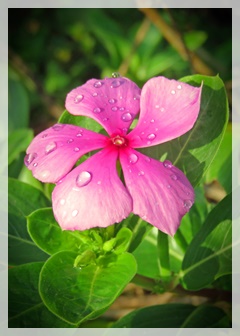
madagasgar periwinkleNo one has remained untouched by the trials and misfortune of this challenging year. That’s why my friend admitted feeling uncomfortable when acknowledging that she’s come to enjoy the downtime and slow pace of sheltering in place and social distancing. I had to agree with her. You see, pre-pandemic, we’d been more like Martha than Mary and our lives were filled with activities and obligations. I never seemed to have quite enough time and often felt overwhelmed by obligations. In an odd way, we both feel blessed by the slower pace of this quieter time.

When Jesus came to dinner, Martha was honored to host the famous rabbi. Fulfilling cultural expectations, she busied herself with her domestic duties. Wanting to impress her guests, she probably did whatever the 1st century equivalent was of setting the table with the finest tablecloth, Lenox china, sterling silver, Waterford goblets, flower centerpiece, and candles while preparing a four course gourmet dinner and baking a triple berry pie from scratch. Breaching society’s expectations, however, her sister Mary sat with the men at the feet of Jesus.

Translated as distracted or frantic, the Greek word used to describe Martha’s state of mind is periespato. Meaning drawn away, it indicates being pulled in different directions at once, just as a hostess is when she’s got meat on the grill, rolls in the oven, a pot boiling on the stove, water glasses to fill, and guests in the living room! Not knowing which way to turn and thinking Mary was the solution, Martha complained to Jesus. When He told her only one thing mattered, He may have meant one simple dish was all the men needed. It’s more likely that He meant spending time in His presence was the important thing, which was what Mary was doing. While busy Martha was working to feed Jesus, contemplative Mary was feeding on His words.

Life has taken on a simpler shape during this pandemic and I’ve learned that activity doesn’t necessarily mean accomplishment. Like Martha, I’d become distracted while trying to serve the Lord. Now, with my calendar cleared of concerts, plays, date nights, guests, fund raisers, lectures, assorted appointments, classes, tours, and get-togethers, I’m taking the time to be like Mary: to be with Jesus at His feet.

On the seventh day of creation, God rested from His work, blessed the day and made it holy. When He gave us the Sabbath, it was to be a day of rest, refreshment, and recuperation dedicated to the Lord. Sheltering in place is like a very long Sabbath. Requiring us to depend on God’s provision, it affords us a beautiful opportunity to step out of our normal routine and into God’s presence. Let us all make the most of this extended Sabbath. May it become a blessed opportunity to become less like Martha and more like Mary.

“Martha, Martha,” he replied, “you are fretting and fussing about so many things. Only one thing matters. Mary has chosen the best part, and it’s not going to be taken away from her.” [Luke 10:41-42 (NTE)]

Copyright ©2020 jsjdevotions. All rights reserved.

TRUE FREEDOM – INDEPENDENCE DAY 2020

Sin is no longer your master, for you no longer live under the requirements of the law. Instead, you live under the freedom of God’s grace. [Romans 6:14 (NLT)]

fireworksTomorrow, as we commemorate our nation’s birthday, the celebration will be a little different. Beaches are closed and the brat fests, chicken roasts, band concerts, parades, fireworks, neighborhood picnics, rodeos, and ice cream socials typical of this national holiday have been cancelled. Friends and family won’t be joining us to light sparklers, have a water balloon fight or baseball game, catch fireflies, eat popsicles and watermelon, or enjoy s’mores around a campfire.

Restrictions because of this pandemic have made some people bristle at their loss of personal freedom and these last few weeks have put a spotlight on both the shortcomings of our nation and the imperfections of our national heroes. Nevertheless, regardless of our nation’s faults and problems, we have an incredible amount of personal freedom. Here, we are free to disagree but, in nations like Syria, Turkmenistan, South Sudan, North Korea, and even our close neighbor Cuba, those demonstrations would never have taken place. There we’d have suppression of political opposition, restrictions on internet use, a one-party political system, government controlled media, prohibitions on worship, and harsh authoritarian rule with even more injustice and inequalities. While we’re far from perfect, we’re better than most!

As thankful as I am for the statesmen and patriots (flawed as they were) who made this great nation a reality, I am even more thankful for Jesus and his small band of Apostles who made it possible for us to live in true freedom! True freedom has more to do with belief in Jesus than it does with a Declaration of Independence or a Bill of Rights. Without Christ we will never truly be free because, no matter where we live or what kind of government we have, we will still be in bondage to sin. The Liberty Bell rang out for our nation’s freedom but it was the cross and an empty tomb that gave us our spiritual freedom. Our nation’s freedom began with its Declaration of Independence 244 years ago; our spiritual freedom came when we accepted Jesus and learned to live in dependence on Him.

We lift up our hearts, O God, on this day of celebration in gratitude for the gift of being Americans. We rejoice with all those who share in the great dream of freedom and dignity for all. 

With flags and feasting, with family and friends, we salute those who have sacrificed that we might have the opportunity to bring to fulfillment our many God-given gifts. 

As we deny all prejudice a place in our hearts, may we also clearly declare our intention to work for the time when all people, regardless of race, religion, or sex, will be granted equal dignity and worth. 

Come, O gracious God, who led your children Israel from slavery, keep us free from all that might hold us in bondage. 

Bless our country and join our simple celebration that we may praise you, our Source of freedom, the One in whom we place our trust. [Edward Hays, “A Pilgrim’s Almanac”]

For the Lord is the Spirit, and wherever the Spirit of the Lord is, there is freedom. So all of us who have had that veil removed can see and reflect the glory of the Lord. And the Lord—who is the Spirit—makes us more and more like him as we are changed into his glorious image. [2 Corinthians 3:17 (NLT)]

Copyright ©2020 jsjdevotions. All rights reserved.

BEING AN INSTRUMENT

tiger swallowtail butterflyBlessed are the peacemakers, for they will be called children of God. [Matthew 5:9 (NIV)]

Lord, make me an instrument of Your peace;
Where there is hatred, let me sow love;
Where there is injury, pardon;
Where there is doubt, faith;
Where there is despair, hope;
Where there is darkness, light;
And where there is sadness, joy.
O Divine Master,
Grant that I may not so much seek
To be consoled as to console;
To be understood, as to understand;
To be loved, as to love;
For it is in giving that we receive,
It is in pardoning that we are pardoned,
And it is in dying that we are born to Eternal Life.

We’ve come to know this prayer as “The Prayer of St. Francis” and usually attribute it to Francis of Assisi (1181-1226), the founder of the Franciscan religious orders. The patron saint of ecology and animals, Francis often is portrayed surrounded by animals. Stories first recorded by Thomas of Celano in the 13th century tell of the gentle man taming a wolf that had been terrorizing the town and preaching to the birds, rabbits, and fish (who both listened and obeyed).

Francis, however, was much more than a man who loved animals; he loved Jesus above all things, preached a gospel of simplicity, repentance, and radical obedience to Christ’s teaching, and put into practice the gospel life he preached. His contemporaries claimed that Francis lived out the spirit of the Sermon on the Mount better than anyone other than the One who originally spoke those words. It’s easy to see how this prayer might have been penned by this godly man who endeavored to have the mind of Christ, but its origins are more recent.

Originally written in French and titled “A Beautiful Prayer to Say During the Mass,” the prayer was published anonymously in 1912 in a small French Catholic magazine. In 1915, a French marquis sent the prayer to Pope Benedict XV and, in 1916, it appeared in Italian in L’Osservatore Romano (the Vatican’s daily newspaper). In 1920, titled “Prayer for Peace,” its original French translation was printed on the back of a prayer card bearing the image of St. Francis. The prayer circulated through Europe and, in 1927, it was attributed to St. Francis in print by French Protestants. Translated into English in 1936, the prayer was widely disseminated and, wherever it went, the name of St. Francis went with it.

This peace prayer became popular in an era not much different from ours. We may be able to travel from New York to London in seven hours rather than five days but we still are without peace! In spite of advances in technology, science, communication, medicine, and transportation we continue to have wars, financial disparity, social inequality, prejudice, injustice, unemployment, poverty, and even a global pandemic. We desperately need to pray for peace today as much as they did a century ago!

The author of this prayer asked to be an instrument—a tool, implement, or conduit—of peace. He continued with the actions of sowing (not gathering) love, pardon, faith, hope, light, and joy. Rather than receiving consolation, understanding and love, he sought to console, understand, and love others and then finished with the acts of giving and pardoning. His prayer reminds us that it is the peace makers, not the peace experiencers, Jesus said would be called the children of God! Being a peace maker takes us out of our comfort zones and into the territory of conflict resolution, relationship restoration, and change. Yet, we can’t resolve, restore or change anything if we are part of the problem! What seeds are we sowing? Are we seeking to console, understand, and love? Are we willing to give and forgive? Let us be peace makers and instruments of peace!

Turn from evil and do good; seek peace and pursue it. [Psalm 34:14 (NIV)]

Make every effort to live in peace with everyone and to be holy. [Hebrews 12:14a (NIV)]

Copyright ©2020 jsjdevotions. All rights reserved.