
When the master of the house has locked the door, it will be too late. You will stand outside knocking and pleading, “Lord, open the door for us!” But he will reply, “I don’t know you or where you come from.” [Luke 13:25 (NLT)]
Not to decide is to decide. [Woodrow Kroll]
 “Meh,” the verbal equivalent of a shoulder shrug, was added to the dictionary in 2008. Popularized by The Simpsons, it is a decisive assertion of non-commitment (or as decisive as having no opinion about something can be.) The New York Times used to run a list with the tagline, “Not hot. Not not. Just meh.” The list has included assorted celebrities and such things as Harrison Ford’s earring, petting zoos, Febreze, stocking stuffers, Tufts University, pumpkin ale, mugs with slogans, and the Golden State Warriors. The magazine’s culture editor, Adam Sternbergh, said the list was meant “to celebrate all those things in life that [are]…neither adored nor reviled, but, simply, meh.”
Whether we say “meh,” or dismissively use words and phrases like “whatever, it is what it is, I don’t care, not my problem, booooring, who cares” and “so what” we’re expressing indifference and an unwillingness to think about something. Apathy and disinterest are insulting: we don’t care enough to muster up any sort of approval, support, or regard for something but we also don’t care enough to dislike, oppose, or reject it.
Some in the media call Millennials “The Meh Generation,” but I fear that indifference, cynicism, disillusionment and jadedness are not limited to those born between 1982 and 2002. They’re not the only ones who find it easier to live together than commit to marriage or to walk away from a marriage than fight to save a family. They’re not the only ones who find it simpler to go along with the crowd than to stand up and speak or to accept what’s wrong rather than try to make it right. They’re certainly not the only ones who’ve decided the concept of sin is out of date, right and wrong is relative, or that anything goes as long as they aren’t the ones who get hurt. An ostrich puts its head in the sand to turn eggs but we put our heads there to avoid seeing what we don’t want to see. And, sadly, way too many in this world would put Jesus on “The Meh List” because He is “neither adored nor reviled, but, simply, meh.”
Jesus spoke of going through the gate to God’s Kingdom. At some point, we can’t ignore the gate’s presence or fail to form an opinion about the gatekeeper. We can no longer remain impartial, dispassionate or wishy-washy; a decision about following the shepherd has to be made. While neither death nor taxes can be avoided, remember that only the IRS grants extensions! Adore Jesus or revile Him but don’t simply shrug your shoulders and say, “Meh!”
I believe in my soul that there are more at this day being lost for want of decision than for any other thing. [Dwight L. Moody]
 Jesus replied, “‘You must love the Lord your God with all your heart, all your soul, and all your mind.’ This is the first and greatest commandment. A second is equally important: ‘Love your neighbor as yourself.’ The entire law and all the demands of the prophets are based on these two commandments.” [Matthew 22:37-38 (NLT)]
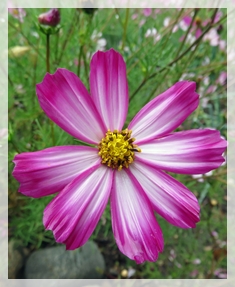 “I don’t do desserts!” my neighbor said. My initial thought was, “Anyone can bake brownies!” As it turns out, my neighbor was absolutely right; a horrible cook, she is proof that not everyone can bake a tray of brownies! Unlike me, however, she has a gift with animals and volunteers at the Conservancy caring for injured wildlife.
 A 2013 United Healthcare Group study found that volunteering is linked to better physical, mental and emotional health. Apparently it reduces stress, brings people together, promotes personal growth and self-esteem, strengthens our sense of community, and helps us learn new skills. Something their study did not mention is that volunteering is an act of worship and sacrifice. A sacrifice is an offering to God and every time we sacrifice time, talents, or resources by doing for His Kingdom, we are worshipping Him.
 Occasionally, bands of marauding Arameans would go out into neighboring nations. It was during one of those raids into Israel that they captured a young girl and brought her back to Aram. Picture her fear as she stood on the auction block and was sold to the highest bidder. This child, a spoil of war, became the servant to Naaman’s wife. The commander-in-chief of the army, Naaman developed leprosy. Had I been that girl, I probably would have rejoiced silently at his plight. He was the enemy; it was because of his soldiers that she’d been kidnapped and made a slave in a strange land. A lesser person would have thought Naaman deserved all the pain and misery he could get! Although it would have been easy to remain silent and watch him suffer, this nameless slave girl didn’t. Instead, she sang the praises of Elisha and told her mistress that Naaman should go to “the prophet who lives in Samaria” where he could be healed.
 Devotions of the Heart