
 I appeal to you, dear brothers and sisters, by the authority of our Lord Jesus Christ, to live in harmony with each other. Let there be no divisions in the church. Rather, be of one mind, united in thought and purpose. [1 Corinthians 1:10 (NLT)]
Now I say to you that you are Peter (which means ‘rock’), and upon this rock I will build my church, and all the powers of hell will not conquer it. [Matthew 16:18 (NLT)]
Since she is new to town, I invited Alice to our church. “What denomination?” she asked. When I told her we were non-denominational she thought I meant we were a church of whatever the individual wanted to believe and asked, “Do you mean Unitarian?” I assured her we’re Bible-based Christians but, unable to wrap her mind around the concept, she rattled off a set of questions. No hierarchy, bishops or diocese? No formal liturgy? No membership requirements or official canons or procedures? Who tells you what to believe? To whom are you accountable?
In Letters to the Church, Francis Chan asks the reader to imagine someone on a desert island, having no experience with Christianity, with only the Bible as reference. Asking first how this person might picture church and worship, he then asks the reader how his church and worship stack up to those first century expectations. Here in Florida, we attend two different churches and one fits Alice’s expectations: denominational, organizational hierarchy, church campus, sanctuary, chapel, liturgy, hymnals, pews, pulpit, choirs, choir director, organ, meeting rooms, video screens, stained glass, sound system, and several services. While Alice would identify it as a traditional church, that marooned person and the Apostle Paul probably wouldn’t recognize it.
Because I love the liturgy and hymns, we do attend that church Saturday nights. The church to which I invited Alice, however, is the church I think of as home. Less than a year old, while the early church met in homes, we meet in a city park and, since we’re in Florida, we can meet there all year long. Although non-denominational, we do have a core set of Bible-based beliefs and, to maintain doctrinal, financial, and leadership accountability, we belong to several Christian organizations. We have no formal liturgy, prayer books, hymnals, sound system, or choir (although the birds usually sing throughout the service). Rather than stained glass, we have palm trees, sea grapes, blue sky, and the Gulf of Mexico decorating our sanctuary. When we meet for Bible study, we rent a room in a community center. By today’s standards, our “outside the box” church is anything but traditional but I think the Apostle Paul would easily recognize it.
Last week, our similarity with the 1st century church came to mind when we met together at the community center for an early Thanksgiving dinner. Everyone brought a dish to share and, along with more than enough food, there was laughter, joy, and plenty of fellowship. I think Paul would have recognized Christ’s church as the sixty of us ate dinner, prayed and, in true early church tradition, partook of communion as a family.
Whether we are part of a traditional or unconventional church, let us remember that Christ’s church is not about a building but rather a group of believers. A church structure without a family of believers is not a church whereas a family of believers without a building is one! Christ’s church, regardless of where or how it worships, exists wherever two or three are gathered together!
 “He will deliver us from our troubles or carry us through them. Either way, we will be free of them eventually.” How easily these words can be uttered until, of course, those troubles apply to us. Had Job’s friends been Christian and said those words, I don’t think they would have been any more comforting than what was said. While true, they won’t bring back the amputated limb or cancerous breast, pay the staggering medical bills, tuck the motherless child in bed at night, change the diagnosis of Parkinson’s or schizophrenia, or bring back an abused child’s innocence. While true, those words can’t wipe the tears of a mother holding her stillborn baby, the husband watching his wife vanish into dementia, or the man whose body is in mutiny because of ALS.
 Walk in wisdom toward outsiders, making the best use of the time. Let your speech always be gracious, seasoned with salt, so that you may know how you ought to answer each person. [Col. 4:5-6 (ESV)]
 But the Holy Spirit produces this kind of fruit in our lives: love, joy, peace, patience, kindness, goodness, faithfulness, gentleness, and self-control. There is no law against these things! [Galatians 5:22-23 (NLT)]
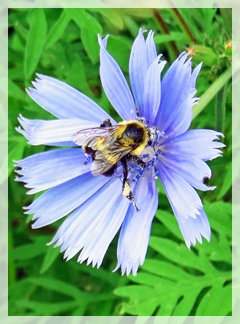 “Dream small. Don’t bother like you’ve gotta do it all. Just let Jesus use you where you are, one day at a time,” sang Josh Wilson. Reminding me that a tiny rock made Goliath fall and five loaves and two fish fed them all, he sang that it is simple moments that change the world. I thought of his song when I received an email from a local charity including the sentence, “We may not be able to change the world, but we can change the world for some people.”
 Unlike the bruised and broken butterflies in yesterday’s devotion, this one looked perfect as it lay on the trail. When we approached, the Viceroy fluttered its wings but only managed to skim a few inches across the gravel. As intact as it looked, one wing was entirely useless. To protect it from walkers’ feet and speeding bicycles, we managed to get the creature off the trail into the grass. Unfortunately, without some sort of butterfly super-glue to reattach the loose wing, while we could help, we couldn’t save it.
 Devotions of the Heart