
Listen to the Lord, you leaders of Sodom. Listen to the law of our God, people of Gomorrah. “What makes you think I want all your sacrifices?” says the Lord. “I am sick of your burnt offerings of rams and the fat of fattened cattle. I get no pleasure from the blood of bulls and lambs and goats.” [Isaiah 1:10-11 (NLT)]

Although Hosea and Micah told Israel that God rejected their insincere sacrifices, when Isaiah addressed the people of Judah as the wicked Gentile cities of Sodom and Gomorrah, the vehemence of God’s words was unmistakable. The prophets’ words did not mean that God was rejecting the sacrificial system but that He found their offerings and sacrifices meaningless because of the people’s depravity, hypocrisy, and superficial worship.
Sacrifices and offerings of incense, grain and animals were an essential part of the Israelites’ rituals at the time. They were made as a way of praising God, showing dedication to Him, in thanksgiving for His many gifts, as a way of asking forgiveness, and as atonement for sins. Most of Leviticus is dedicated to the conduct of sacrifices and Numbers includes additional requirements concerning offerings. Yet, some 600 years after being given those regulations, the prophets told the people that God did not want their sacrifices and burnt offerings because, without faith in and love for Him, their offerings were meaningless.
Since we no longer make burnt sacrifices at our altars, what do those prophets’ words mean to us? To me, it means that it is not enough to simply go to church, sing in the choir, usher, recite Bible verses, teach Sunday school, bring treats, participate in a small group, or be diligent about our financial offerings to the church. God wants more!
As a girl, in confirmation class, I learned that the sacraments were “an outward and visible sign of an inner and spiritual grace.” The prophets’ words tell us that, no matter what the “outward and visible sign” may be, without an “inner and spiritual grace” it is meaningless. Even being dunked in a baptismal tank or regularly taking Communion are nothing more than empty rituals if our hearts and souls are not committed to God. Just as God wanted changed lives rather than bulls, lambs, and goats from the Israelites, He wants more from us than simply going through the motions of being a Christian.
God doesn’t want us just to know His word; He wants us to live it. He doesn’t want us just to know about Him, He wants us to know Him. He doesn’t want us going through the motions; He wants us! Rather than lip service; He wants our hearts. He must be an essential part of our lives. God wants us to serve Him not just with our bodies, but with our hearts and souls. The prophets told the Israelites what God wanted; we should listen to them!
 Because of the Jewish prohibitions about images, I understand why no pictures of Jesus were drawn by His followers. Nevertheless, any decent author gives a minimal word picture of his characters but the gospels’ writers give us nothing. With Melville’s description of Captain Ahab’s gray hair, scarred face, and whale-bone peg-leg, we know more about the fictional whale hunter’s looks than we do about the real Jesus! The most we know about His exterior is found in Isaiah’s prophecy: “There was nothing beautiful or majestic about his appearance, nothing to attract us to him,” [53:2] which describes most of us! Adjectives are few and far between in Scripture but the Bible isn’t a novel and its words were God-breathed not writer created. If God wanted us to know about Jesus’s appearance, He would have told us. After all, if we knew what Jesus looked like, wouldn’t we focus more on His looks rather than His words? Rather than wanting to emulate His character, we’d probably want to match His features—after all, He was God!
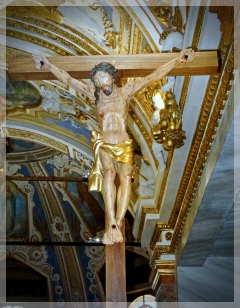 In any cathedral or art museum, we’ll find many pictures of Jesus and even rather graphic depictions of Him on the cross. None of them, however, tell us anything about His appearance because they were created long after His time. Still, in a world where we seem to memorialize everything with pictures, you’d think one of Jesus’ followers would have sketched Him while blessing the children, giving the Sermon on the Mount, or feeding the multitude! 1st century rabbis in Judah, however, vehemently objected to the depiction of human figures because the second commandment prohibited making a “graven image.” With its Jewish roots, this prohibition carried into the early church and inhibited early Christian art.
 Among the 613 mitzvot were laws about not adding to or detracting from the commandments. Unfortunately, man’s need for rules and regulations must be ingrained. Finding the original 613 laws an insufficient guide to Jewish life, the religious leaders stayed busy for the next several centuries clarifying the law by creating even more laws about how to keep the initial ones and then determining the proper way to atone for every infraction.
 Devotions of the Heart