
The Lord will mediate between nations and will settle international disputes. They will hammer their swords into plowshares and their spears into pruning hooks. Nation will no longer fight against nation, nor train for war anymore. [Isaiah 2:4 (NLT)]
 Commissioned in 1946, the USS Midway served the entire length of the Cold War, during the Vietnam War, and in Operation Desert Storm. Decommissioned in 1992, this retired Naval aircraft carrier is now a museum in San Diego. It was fascinating to wander through this floating city and see the flight deck, bridge, hangar bay, engine room, crew quarters, ready room, and sick bay and inspiring to speak with vets who actually served aboard the ship. Unfortunately, not all of the sailors who boarded that ship during its 46 years of service walked off it. For some, if they returned home at all, it was in a box.
While in California, we also visited the Mt. Soledad National Veteran’s Memorial. Set on a hill with panoramic views of San Diego and the Pacific Ocean, an impressive 27-foot concrete cross rises from its center. This unique memorial honors veterans from the Revolutionary War all the way to the current global war on terror. Over 3,500 black granite plaques are etched with the name of a veteran and most include a picture and a brief summary of the vet’s military experience. Although many of those named on the plaques safely came home, the stories on those plaques told me that some were killed in action.
In our Florida town, we often walk at a park where banners hanging from the light posts honor those who served in the armed forces. Names and dates of service are on the banners and most of those honored by the banners returned after serving our country. I hadn’t given them much thought until I looked up and noticed a banner honoring a beautiful young woman whose dates included “KIA.” This young woman was probably no more than thirty when she died in 2011. I don’t know if she was married or had children. I only know that she left behind some people who loved her enough to honor her with that banner.
I never knew any of the people who died while serving on the USS Midway or whose names were on those granite plaques. I never met the young woman whose face smiled down at me or any of the other dead whose pictures grace those banners. More important, not one of them knew me or you. Nevertheless, they gave their lives for us so that we can have the freedom to travel, walk in a local park, read or write a blog, donate to our favorite causes, vote the way we want, disagree with the government and one another, worship freely, and read whatever newspapers, books or magazines we want to read.
Memorial Day is more than a holiday to enjoy free time. It’s a day to remember people like that young woman and all those others who sacrificed their lives to help preserve the many freedoms we enjoy as Americans. Recently, five new walls were built at Mt. Soledad to accommodate 2,400 more names. Let us pray for peace so that, someday, we won’t have to keep adding plaques and banners to memorials!
Hear our prayer for those who put the welfare of others ahead of their own and give us hearts as generous as theirs. Hear our prayer for those who gave their lives in the service of others, and accept the gift of their sacrifice. Help us to shape and make a world where we will lay down the arms of war and turn our swords into ploughshares for a harvest of justice and peace. [Austin Fleming]
 By 1658 in England, it had become illegal to conduct a religious service differing from the Church of England’s official liturgy or for “one not in Episcopal orders” to address a congregation. A Puritan, John Bunyan, was arrested for preaching the gospel without a license. After three months in the Bedford jail, he was offered his freedom if he’d agree not to preach publicly. He refused saying, “If I was out of prison today, I would preach the gospel again tomorrow by the help of God.” Bunyan spent twelve years imprisoned. During that time, he wrote The Pilgrim’s Progress. No country cub prison, the Bedford jail was overcrowded, unsanitary, unheated, and the plague of 1665 claimed forty prisoners as victims. Years later, Bunyan wrote: “Satan can make a jail to look like hell itself.” Although all looked hopeless for the man, he found strength in prayer and in his writing.
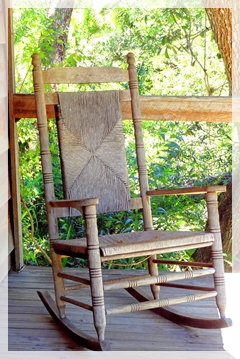 When we’re told to “Be still” in Psalm 46, we tend to think in terms of stopping movement—our busyness, frantic activity, or agitated actions. We associate it with a director yelling, “Cut!” the ref blowing his whistle, or a frustrated parent’s “Cut it out!” Being still can entail all of that, but it is much more. The root of the original Hebrew word used for “still” is the verb rapa which means to be faint, forsake, or sink down. When used as the imperative ra’pha’h, as it is in Psalm 46, it means to drop or release our concerns, to become weak, or surrender. While most Bible versions translate this as “Be still,” some translate as desist, stop fighting, cease striving, be quiet, or be at peace. In short, we’re being told to stop anxiously fighting a situation and leave the matter to God—to relax our grip on things, stop worrying and let it be.
 In our pastor’s absence, I led worship for two Sundays. For me, giving the sermons was far easier than leading the prayers. Our pastor has a way with words that inspire, enlighten and lift my spirits and his extemporaneous prayers appear to flow effortlessly from his heart through his mouth to my ears and up to God. He always seems to have the perfect Bible verse up his sleeve, the wisest thoughts in his mind, and the power of the Holy Spirit in his words. The Holy Spirit has truly given him a beautiful spiritual gift and our entire congregation is blessed by it.
 We know Jesus was capable of big miracles: twice He ended up with leftovers after feeding thousands with only a few scraps and He brought the widow’s son, Jairus’ daughter, and Lazarus back to life. Nevertheless, when Jesus was at the pool of Bethesda and surrounded by a crowd of sick, paralyzed, blind and lame people, He healed only one man before disappearing into the crowd! That crippled man didn’t even ask for healing. From his later encounter with Jesus, we know he was a sinner so he couldn’t have been more deserving than anyone else gathered at that pool! Jesus could have healed, not just everyone at that pool, but every malady in all of Palestine. Why just that one man?
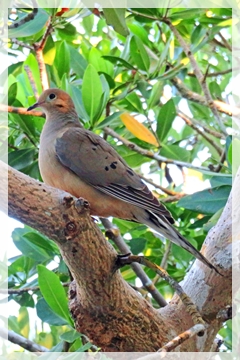 One of the hymns at our Easter Eve service was Christ is Alive and we sang, “In every insult, rift and war, where color, scorn or wealth divide, Christ suffers still, yet loves the more, and lives, where even hope has died.” I thought of how hate must be like another nail in His hands and intolerance another scourging on His skin. The text of the hymn was written by Brian Wren in April of 1968, just two weeks after the assassination of Martin Luther King, Jr. “I could not let Easter go by without speaking of this tragic event which was on all our minds, “ he explained. “The hymn tries to see God’s love winning over tragedy and suffering in the world.”
 Devotions of the Heart