
 We, therefore, can confidently say: ‘The Lord is my helper; I will not fear. What can man do to me?’ [Hebrews 13:6 (PHILLIPS)]
“The only thing we have to fear is fear itself,” said Franklin D. Roosevelt in his first inaugural address. It was 1933 and the nation was in the dark days of the Great Depression. Although the reason for our nation’s darkness differs, his words still hold true.
Like many others, our church spent last week discussing and implementing security measures. How can a house of worship—a place that welcomes the lost and the least, the weary and the burdened—protect itself from the violence that increasingly surrounds us? As so many schools do, should we require everyone to have laminated ID cards for entrance through our doors? Do we pat down people or pass them through metal detectors? Should we carry guns in shoulder holsters and purses? Do we cease welcoming strangers? Will we refuse entry to anyone involved in a domestic dispute lest their angry spouse chooses to vent his anger on our doorstep?
Will we allow fear to stop us from attending church? If we do, we might as well stop going to concerts, schools, theaters, shopping centers, street festivals, airports, parades, marathons, or sporting events—all of which are perfect targets for both terrorists and the mentally ill. No place is entirely safe, especially when cars and trucks can become weapons with just a turn of the wheel and a little pressure on the gas pedal.
I admit to being more cautious nowadays. I look for exits and avoid confrontations but that’s being sensible rather than afraid. Told to say something if we see something, I am attentive to my surroundings but for what are we supposed to look? The concert goers in Las Vegas never saw the shooter and, by the time the parishioners in Texas saw the gunman, it was too late. Once it was easy to identify the deranged—they were the ones talking or screaming to themselves, gesturing wildly, or dancing to their own inner music. Now, because of cell phones, blue tooth, and iPods, many on the street seem unbalanced when they aren’t and terrorists don’t wear t-shirts announcing their hateful plans.
Admittedly, we live in a world of random violence but it’s not nearly as violent as we think it is. The odds of dying of either heart disease or cancer are more than 30,000 times greater than dying at the hands of a terrorist. While those odds are of no comfort to the families who have lost loved ones to terror, they tell us to be watchful rather than afraid.
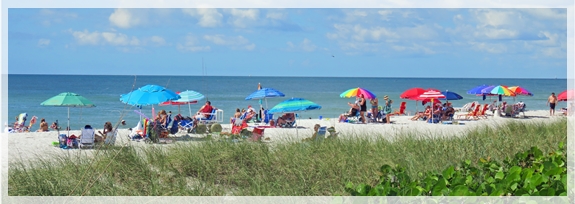
There is more to FDR’s quote: “The only thing we have to fear is fear itself—nameless, unreasoning unjustified terror which paralyzes needed efforts to turn retreat into advance.” When we allow fear to keep us from our daily routine, when fear keeps us from attending our children’s football games or flying on a plane, when we become too afraid to go the beach or even to church, we are retreating from the real enemy—Satan. Rather than arming ourselves with weapons, let’s put on the armor of God and, as Christ’s soldiers, bravely advance onward into battle.
 As he took us to the car rental agency, the van’s driver welcomed us to Cleveland, explained where to get gas before returning our cars, and reminded us not to text and drive. After asking if there were any other questions, a voice from the back asked, “What is the purpose of life?” The driver quickly replied, “Finding comfortable shoes!” While we might rank finding comfy shoes high on our life list, that’s not the purpose of life.
 Most of us think of sloth as laziness: a dislike of work or any physical exertion. Having watched the local zoo’s sloth in action (or, rather, inaction), I think the sluggish animal is appropriately named. Spiritual sloth, however, is far different than being a couch potato. Originally, the sin of sloth was two sins: sadness and acedia. Compiled by Evagrius of Ponticus, a 4th century monk, these two “capitals sins” were part of a list of eight he believed to the greatest threats to devout monasticism.
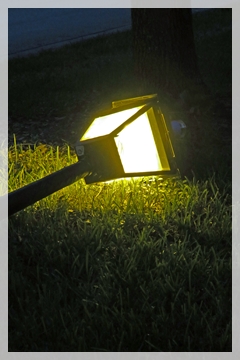 To avoid the southwest Florida heat, I waited until dusk to take my walk. Thanks to Hurricane Irma, most of the street lamps in my neighborhood don’t work. For a light to function, electrical energy has to be converted into light energy and both a source of electricity and a working connection are needed. For many of the lights, the connection was broken when blowing debris shattered their bulbs. For others, Irma’s 150 mph winds broke the connection when it blew off their tops, wrapped their poles around trees, or knocked them to the ground. Without a connection to their source of power, those street lights are useless—they’re just a tangle of wires and a pile of glass, plastic and metal. Even though they don’t work, people have been cautioned to remember that their exposed wires are live. It’s not the electricity that is missing; it’s the connection that is inoperative. Two poles, however, were down but not out. Even though they’d been flattened by the storm, neither wires nor bulb had broken. In spite of the storm’s violence, they remained connected and were beacons in the night’s darkness.
 The damage done by Hurricane Harvey seemed unbelievable until Irma hammered the entire state of Florida. Fortunately, our Florida home was prepared and we were safely situated in the Midwest during Irma’s tirade. Would that all the storms of life announced themselves a week in advance to give us time to put up storm shutters and evacuate to safety.
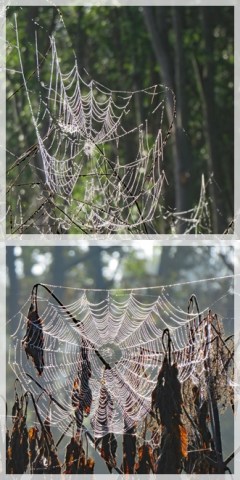 It rained last night. During our early morning walk, we looked out over the prairie and saw hundreds of sparkling spider webs. As the morning sun caught the water droplets on the silk, the master weavers’ work glistened in the mist. Although we take that trail several times a week, it was the first time this season we saw those arachnidan works of art. The spiders didn’t start spinning just the previous night; their webs have been there all summer but weather and light conditions kept us from seeing them. In fact, had we chosen to walk the loop in the other direction, we never would have seen them at all!
