
We were crushed and overwhelmed beyond our ability to endure, and we thought we would never live through it. In fact, we expected to die. But as a result, we stopped relying on ourselves and learned to rely only on God, who raises the dead. And he did rescue us from mortal danger, and he will rescue us again. We have placed our confidence in him, and he will continue to rescue us. [2 Corinthians 1:8-10 (NLT)]
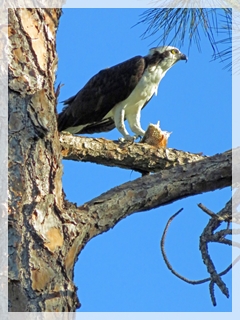 600 war chariots and at least 1,200 soldiers were fast approaching and the Israelites were trapped between the mountains and the Red Sea. Panicking, they immediately blamed Moses for their predicament. No longer regarding Moses as the man who freed them from years of suffering slavery, he was now the fool who’d led them to certain death in the wilderness. In despair, the Israelites second-guessed their decision to leave Egypt. Facing such a formidable army and sure they were to die, the miseries of slavery now appealed to them. Ungrateful, unarmed, on foot, and with no place to turn, they lost heart. Failing to recall God’s powerful hand in releasing them from Pharaoh’s tyranny just a few weeks earlier, they immediately conceded defeat.
Have you ever felt like the Israelites: between a rock and a hard place, with no place to turn? When that happens, we usually do what they did: panic, find someone to blame, lose heart and want to quit because the circumstances seem greater than our God. Assuring the people that God would fight for them, Moses said, “Watch the Lord rescue you today.” I’m not sure he had any idea how the Lord planned on doing that but Moses trusted the God he knew for a solution he didn’t know.
Following God’s instructions, Moses raised his hand over the waters, the Red Sea parted as blowing winds turned the sea into dry land, and the Israelites walked across the seabed. Although we know that all the Israelites safely made it across, they didn’t know that’s what would happen! Can you imagine the faith it took when the first of them stepped onto the dry seabed with a wall of water positioned on each side? Were they fearful the waves would come rushing at them without warning? Did they literally run for their lives as they crossed? We know the rest of the story: Pharaoh and his army gave chase, their chariots got stuck, Moses raised his hand once again, the waters surged over the Egyptians and none of them survived.
Seeing God’s tremendous power, the Israelites were filled with awe and again put their faith in Moses and the Lord. What a great ending to their story, but we know it doesn’t end there. That won’t be the last time they complain, the last time they think slavery in Egypt a better option than freedom in the Promised Land, the last time they rebel against Moses’ leadership, or the last time they stop having faith in the Lord. Sadly, it won’t be the last time they forget God’s faithfulness, power and might!
Sometimes God brings us to what seems to be an impossible situation: to that spot between a rock and a hard place or an army and the deep blue sea. Those barriers are put before us so that we have nowhere to turn but to God. While He may not have parted the Red Sea for us, there have been many times that He’s led us safely through a whole sea of troubles. Unlike the Israelites, may we never forget His power and faithfulness in those trying times. Let us always be willing to trust our unknown future to our known God.
 My Advent devotional suggested taking a prayer walk while looking for signs of hope. I took my regular route and, since I often pray while walking, I wasn’t sure how this walk would be different. Nevertheless, I went in search of hope. The first thing I noticed was the sun rising in the east—a sure sign of hope with its promise of a new day and all of its possibilities. I spotted a family of ducks waddling down to the pond. The five youngsters were no longer little yellow fluffs of feathers but mama duck still kept her eyes on them. Mothers of every species hope to keep their children safe—even when they’re no longer children! I noticed the lilies, canna, and arrowhead that had been planted at waters’ edge last spring to prevent shoreline erosion. They were starting to bear their first flowers—another sign of hope because it means they took root and will serve their purpose. A few people had decorated their houses for the holiday; since not all the décor was secular, I found hope that some people still keep Christ in Christmas. Further on, a patient great blue heron stood absolutely still, neck fully extended, hoping to catch a tasty fish breakfast. It reminded me that we must remain patient in our hope—all things in God’s time. Seeing a few wood storks wading in the water also was a hopeful sign; once an “endangered” breed, their status has been upgraded to “threatened,” meaning there is hope for the survival of their species.
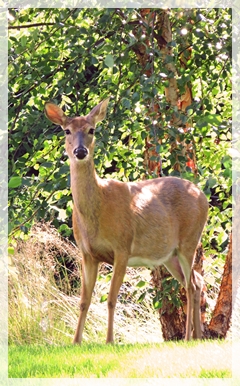 “It never occurred to me,” my friend said, “that I could outlive my wife.” Several years older than his spouse, overweight, diabetic and nearly blind, he always thought she’d be there to care for him. That, however, was before she suffered a stroke, had complications from carotid artery surgery, was diagnosed with cancer, had another surgery, and started a regimen of chemotherapy (all within a few months’ time.) Like a deer caught in the headlights, he was almost frozen in disbelief, bewilderment, and fear.
 On the night He was betrayed, Jesus forewarned the disciples of the grief and fear they’d encounter in the days ahead. In his short parable about labor and delivery, Jesus prepared the remaining eleven disciples for the emotions they would encounter over the next three days: their anguish and despair as He hung upon the cross, died, and was buried. For His followers, those three days would feel like an eternity of hopelessness. But, as happens when a woman beholds her newborn baby after hours of painful labor, their despair would turn to joy when they saw the resurrected Christ!
 The billboard’s message read, “When push comes to shove, don’t!” It was sponsored by a nonprofit foundation that uses a variety of media sources to encourage positive values, good role models, and a better life. “Hard to argue with a goal like that,” I thought before discovering that some people took exception to their peaceful message. Re-tweeting it, one rock musician told his fans just to “shove harder.”
 “Get Fuzzy,” a comic strip drawn by Darby Conley, chronicles the life of Rob and his somewhat eccentric pets: Bucky Katt, a temperamental feline with “cat-attitude,” and the gentle Satchel Pooch who frequently is the butt of Bucky’s jokes and the target of his bullying. In one comic, Satchel pondered the concept of free will. “Having free will means you also have the freedom to not,” says the dog, who then resolves, “I choose to exercise free won’t and not get mad.”
 Devotions of the Heart