SPIDER WEBS

spider webs - corckscrew swampOh, the depth of the riches and wisdom and knowledge of God! How unsearchable are his judgments and how inscrutable his ways! [Romans 11:33 (ESV)]

Last Friday, I wrote that I preferred visiting the enigmatic swamp to the impeccable Botanic Garden because it more closely resembles the confusion and disorder of this holy mess we call life. Nevertheless, hidden in its mystifying disarray of vines, trees, lichens, ferns and other assorted plants and animals, order can be found.

On certain days, when conditions are just right, beautiful orb spider webs can be seen in the early morning light. These amazing feats of engineering begin when a spider floats just one strand of silk on the wind to another surface. After securing the line, the spider crosses the “bridge,” reinforcing it as he goes and continues to drop and secure lines. Eventually, a nearly perfect circular web is constructed of numerous concentric circles with spokes going out from the center. A spider’s web can be anything from a few inches to six feet across. Ounce for ounce, spider silk is five to six times stronger than the same weight of steel. More elastic than rubber, it can stretch two to four times its length without breaking. Only a tenth the diameter of a human hair, a strand of spider silk long enough to circle the earth would weigh less than a bar of soap! I find it humbling that one diminutive eight-legged creature can construct a complex web from a thread we humans can’t even reproduce. There is nothing haphazard or chaotic about spiders and webs. Their amazing creations tell me that, unplanned as the swamp or our lives may seem, there is nothing random or haphazard about them—they are as much a part of God’s amazing and complex plan as are spider webs.

On most days, the spiders’ delicate webs are difficult to see; yet, even when they are indiscernible, I know they are there. God’s plan is much like that—sometimes it appears crystal clear and other times it seems undetectable. Nevertheless, there is a divine plan for each one of us! Whether or not I see their webs, I know the spiders are there and haven’t abandoned the swamp. Regardless of our perception of His plan, we can be sure that God is in control and won’t abandon us either. If we believe in the goodness of God, we must trust His plan (whether or not we understand or appreciate it). Like the spiders’ webs, it is intricate and sometimes difficult to discern. It is, however, a plan of strength, resilience and exquisite beauty.

God from all eternity did by the most wise and holy counsel of his own will freely and unchangeably ordain whatsoever comes to pass. [Westminister Confession of Faith]

In the infinite wisdom of the Lord of all the earth, each event falls with exact precision into its proper place in the unfolding of His divine plan. Nothing, however small, however strange, occurs without His ordering, or without its particular fitness for its place in the working out of His purpose; and the end of all shall be the manifestation of His glory, and the accumulation of His praise. [B.B. Warfield]
For we are his workmanship, created in Christ Jesus for good works, which God prepared beforehand, that we should walk in them. [Ephesians 2:10 (ESV)]

Copyright ©2017 jsjdevotions. All rights reserved.

THE WINNER

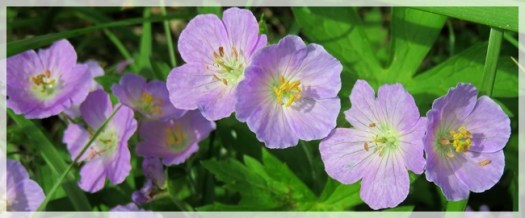
wild geranium
I find joy in the way shown by your written instructions more than I find joy in all kinds of riches. [Psalm 119:14 (GW)]

It’s March Madness time for basketball fans and my team is already out of the competition. Last year, however, my choice won—but not in basketball. After placing sixteen popular Bible stories in brackets, my preferred Bible resource site had its followers tweet votes for their favorite story to see which one moved forward. The choices were: Esther and the king, Jesus walking on water, the Good Samaritan, the Prodigal Son, Joseph and his coat, Jonah and the fish, Noah and the ark, the exodus from Egypt, David and Goliath, Ezekiel and the dry bones, Jericho’s walls, Balaam’s donkey, Daniel and the lion’s den, Jesus healing the blind, Rahab and the spies, and the burning bush. Which would you expect to be the final winner?

Ezekiel and the dry bones didn’t make it past the first round (which I understand since that one sort of creeps me out). Unfortunately, the lovely story of Esther, up against the more familiar parable of the Prodigal Son, was defeated in the first round. In the final round, on one side was the historical account of the young David defeating the giant Goliath. The story is exciting, has danger and violence, and illustrates the supernatural power of God. It’s a tale of a brave young man who demonstrates the power of God with just a sling and a few stones. It tells us that, when we step out in faith, the God we serve can defeat any of the giants in our lives. Everyone loves a story where faith in God beats brute strength and the little guy defeats the big one.

David’s underdog opponent was the parable of the Prodigal Son. It’s a moving story with a not totally happy ending. After the younger son insults his father and foolishly demands his inheritance, he squanders it all. In desperate circumstances, he returns home with his head hanging low and is welcomed by his father. The dark side to the story is that the older son, the one who faithfully remained at his father’s side, is indignant and can’t understand his father’s compassion and forgiveness.

At first glance, David’s defeat of the formidable Philistine would appear to be the favorite. Nevertheless, the undefeatable youth was trounced by the Prodigal Son. When we first meet David, even though he’s young, he seems larger than life. He’s handsome, a skilled musician, and described as having good judgment and being a brave warrior. Among all of Jesse’s sons, he is the one chosen by God to become king. Most of us don’t resemble David nor have we been anointed as a king. We’re not heroic future monarchs, but we are God’s troubled children. As much as we appreciate a story of good triumphing over evil, we can personally relate to Jesus’ parable because we all are God’s prodigal sons.

The parable is a story of hope (the father is waiting at the gate for his son), mercy (the boy is not punished), love (he is hugged and greeted with a kiss), forgiveness (he is welcomed as a son, not a slave) and joy (there’s to be a huge celebration). Like the son, we all disappointed our parents and, if we were blessed with children, they disappointed us at times. Moreover, just as the son misused his father’s money, we have misused the gift of free will and squandered the blessings given us by our heavenly Father. This story reassures us that no matter how immoral, unscrupulous, self-indulgent or corrupt we’ve been, God welcomes his children home when they come with humble and repentant hearts. Once dead because of sin, we can come alive again. Knowing what sinners we are, this demonstration of the Father’s love and forgiveness is reassuring. The parable reminds us that blessings aren’t earned and obedience is not what gives us eternal life. God’s grace is not something we deserve but something He freely gives. Thank you, Heavenly Father, for loving and forgiving your undeserving prodigal children.

He has not treated us as we deserve for our sins or paid us back for our wrongs. As high as the heavens are above the earth—that is how vast his mercy is toward those who fear him. As far as the east is from the west—that is how far he has removed our rebellious acts from himself. As a father has compassion for his children, so the Lord has compassion for those who fear him. [Psalm 103: 10-13 (GW)]

Copyright ©2017 jsjdevotions. All rights reserved.

LIVING WATER

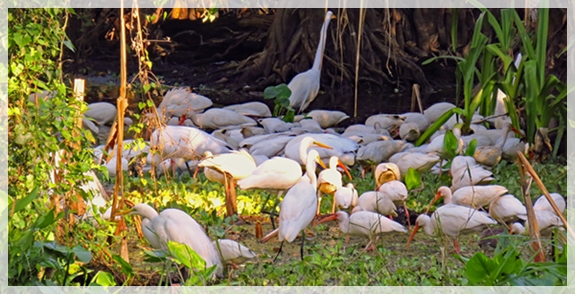
ibis - corkscrew swamp sanctuary
Jesus replied, “Anyone who drinks this water will soon become thirsty again. But those who drink the water I give will never be thirsty again. It becomes a fresh, bubbling spring within them, giving them eternal life.” [John 4:13-14 (NLT)]

For a state that receives over 55-inches of rain a year, the words “Florida drought” seem an oxymoron. Nevertheless, southwest Florida is in moderate drought and the water in the swamp is receding at record pace. The dry down of the swamp concentrates fish into the shallow water that remains and they become easy prey for the wading birds. There is a feeding frenzy as hundreds of birds (and several alligators) gather to enjoy a virtual buffet table lined with fish, frogs, and crayfish. The water in the swamp sustains these beautiful birds and, when it evaporates, they will fly elsewhere. I watched in awe as the birds vied for spots in the diminishing lakes and thought about the importance of water.

About 60% of the human body is made up of water and every living cell needs it to function. It lubricates joints, regulates temperature, flushes waste, and carries nutrients through the body. We can last three weeks without food but we can last only three to five days without water (and as little as three to four hours in extreme heat). Once deprived of water, the cells and organs of the body start to deteriorate. Water in our bodies is the difference between life and death.

Jesus offers us living water and His water truly is the difference between life and death. The water in the swamp is not living water – with no springs, it’s really just a large cistern that collects rain and will eventually evaporate. When the water is gone, only some vultures eating the scraps will remain. The living water offered by Jesus is never-ending; it is poured out in all seasons and will never disappear. Unlike the birds, we don’t have to fight for our spot in the pond or, like the Samaritan woman, come to the well. All we have to do is ask for the living water of eternal life. One drink of His Holy Spirit and we’ll never thirst again.

I find it ironic that some of the last words spoken by the man who offered living water were, “I am thirsty.” [John 19:28] Dehydrated by the torture He’d endured, was it just His dry mouth that led to those words? Did He thirst for the end of His pain and suffering? Or did He make a final demonstration of His humanity by speaking words that showed how much he thirsted for fellowship with God? Let us gather at His table, drink deep of His love, wash in His forgiveness, and never thirst again.

O God, you are my God; I earnestly search for you. My soul thirsts for you; my whole body longs for you in this parched and weary land where there is no water. [Psalm 63:1 (NLT)]

As the deer longs for streams of water, so I long for you, O God. I thirst for God, the living God. When can I go and stand before him? [Psalm 42:1-2 (NLT)]

Copyright ©2017 jsjdevotions. All rights reserved.

OUR AUTHENTIC SELVES (HYPOCRISY – Part 1)

Jesus told them, “Isaiah was right when he prophesied about you hypocrites in Scripture: ‘These people honor me with their lips, but their hearts are far from me.’” [Mark 7:6 (GW)]

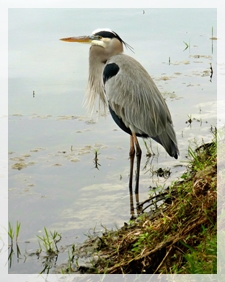
great-blue-heronI’ve been reading a book about discovering one’s “authentic” self; among other things, the author concluded that her authentic self wears make-up. I admit to wearing make-up, coloring my hair, wearing a padded bra and using Spanx, but I’d never call that my authentic self! Without a doubt, that’s my more attractive self, but hardly the authentic one! While I don’t consider it “authentic,” trying to appear as attractive as possible isn’t hypocritical. Pretending to be one person in public and actually being another one in private is!
Jesus spent a great deal of time condemning the hypocrisy of the Pharisees. Like the Greek thespians who wore masks while acting in the theater, they presented one face to the world while their real one was hidden behind their masks. In fact the word “hypocrite” comes from the Greek word “hypokrites” which means actor. The Christian church has taken a lot of flak for being filled with hypocrites and, unfortunately, some of it is justified. I’m the first to admit that my actions often don’t match my words and there frequently is a shortage of spiritual fruit in my orchard.

Fortunately, the validity of Christianity depends on the truth of Jesus Christ—his death, resurrection and ascension—rather than the behavior of His followers. We’re all sinners and even the most devout among us misses the mark on occasion (or frequently, in my case). Being a Christian doesn’t mean we don’t struggle with sin—Jesus set a high standard and we all fall short of it. Nevertheless, we can do our best to live as we profess to believe by relying on the Holy Spirit to convict, empower and change us. Being a sinner isn’t hypocrisy—it’s just part of being human. Christian sinners know what they are and admit it; they recognize, acknowledge and repent of their sins. On the other hand, hypocrites recognize their sin but neither acknowledge nor repent of it. Clearly, not all sin is hypocrisy; all hypocrisy, however, is a sin!

Why is it that a community that talks so much about supernatural transformation shows so little of that transformation? We will have to be men and women who embody the message that we are preaching, whose lives are faithful to the claims we are making. [Ravi Zacharias]

So get rid of every kind of evil, every kind of deception, hypocrisy, jealousy, and every kind of slander. [1 Peter 2:1 (GW)]

Copyright ©2017 jsjdevotions. All rights reserved.

UNREALISTIC EXPECTATIONS

So brothers and sisters, since God has shown us great mercy, I beg you to offer your lives as a living sacrifice to him. Your offering must be only for God and pleasing to him, which is the spiritual way for you to worship. Do not be shaped by this world; instead be changed within by a new way of thinking. Then you will be able to decide what God wants for you; you will know what is good and pleasing to him and what is perfect. [Romans 12:1-2 (NCV)]

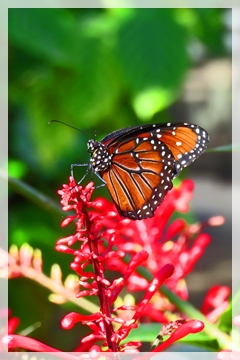
queen butterflyWhile in my early thirties, in an attempt to straighten my teeth and correct an overbite, I wore braces for four years—and even had to wear the dreaded head-gear at night! For some reason, as the years dragged on, I seemed to think that everything I didn’t like about myself and my body would be miraculously corrected once the braces were removed. I imagined that, with straight teeth, I could possibly bear some resemblance to Cheryl Tiegs, a super-model of the era. Needless to say, I was disappointed when the braces were finally removed and I still looked just like me—only with nicer teeth. Not that looking like me was so bad, but I certainly wasn’t going to be asked to appear on the cover of the Sports Illustrated swimsuit issue! The fact that I didn’t want to do so made no difference; I just wanted everything I didn’t like about myself to miraculously change. It took some much needed maturing, both spiritually and emotionally, to understand that my discontent had nothing to do with my appearance and that real change doesn’t come from the outside; it comes from within.
Too often prayer expectations are a bit like my unrealistic expectations about the braces. We pray to change the world around us so that we (and those we love) will be happier. We ask God to make the teacher more understanding or the judge more lenient. We ask God to make the stock market improve, the house to sell, the spouse more loving, the job more fulfilling, and the boss to give us a raise. We ask God for prosperity, the healing of our loved one’s disease, successful children and the removal of our pain. We ask God to give us the life we want. Perhaps we’d be less disappointed in His answers if we asked God (with praise and thanksgiving) to make us accept and love the life we already have.

Rather than pray for God to change our little corner of the world to suit our wants, we need to ask God to make internal changes in us so that we can live well in His world and the life He has given us. If we ask God to use us in some way, He surely will. If we ask God to get us through our pain, rather than remove it, He will. If we ask God for peace, forgiveness, courage, wisdom or strength, He will supply it abundantly. If we ask God to guide us or give us a task, He surely will. What He isn’t likely to do is to change the world to fit our hopes and desires…or make us look like super models!

And shall I pray Thee change Thy will, my Father,
Until it be according unto mine?
But, no, Lord, no, that never shall be, rather
I pray Thee blend my human will with Thine. [Amy Carmichael]

 Prayer is not a battle, but a response; its power consists in lifting our wills to God, not in trying to bring his will down to us. [Stephen S. Smalley]

 With God’s power working in us, God can do much, much more than anything we can ask or imagine. [Ephesians 3:20 (NCV)]

Copyright ©2017 jsjdevotions. All rights reserved.

SAFETY NETS

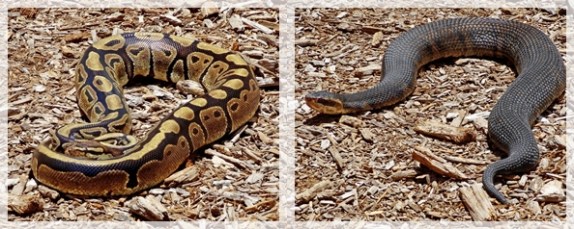
bald python and florida cottomouth snakes
If you think you are standing strong, be careful not to fall. [1 Corinthians 10:12 (NLT)]

Our local zoo does a fascinating presentation called “Snakes Alive.” Two snake handlers stand in a walled area while the spectators stand on the other side of the waist-high wall. Using snake hooks and tongs, the keepers bring out their reptilian charges—including venomous snakes such as rattlers and cottonmouths. As the snakes roam freely around the enclosure, the keepers talk about each species. There may be as many as three snakes loose at once. Even though the keepers are speaking to the audience, they keep their eyes on the snakes at all times. Since they wear low-cut hiking boots, I wondered about their footwear and asked why they didn’t wear high boots. The keeper responded that they’ve found wearing high boots gives them a false sense of security. When trusting boots to keep them from harm (which they won’t), the keepers tend to become complacent and less vigilant, adding that lack of caution can have disastrous results.

I thought of that response when five of the famed Flying Wallendas fell over 30-feet while practicing an eight-man high-wire pyramid stunt earlier this month. Known for performing without a net, the Wallendas weren’t using a safety net that day. “We don’t train with a net. It’s been taught for generations a net can be a false sense of security,” said spokesman Nik Wallenda. “It’s all about training and preparing,” he added. Like high boots for zoo keepers, even a net cannot fully protect someone. In the 1930s, one of the troupe died when he fell into the net and bounced out of it.

While I don’t advocate performing on a high-wire without a net or sharing an enclosure with venomous snakes at any time, I think both the Wallendas and the zoo’s reptile handlers make a good point. High boots can’t prevent snake bites, nets can’t prevent falls, and being a Christian doesn’t mean the enemy won’t get his fangs in us or make us lose our balance.

Satan wants us to get so comfortable and relaxed in our lives that we start going through the motions rather than truly keeping the faith. We are so sure of heaven that we forget about hell. Being Christians it isn’t enough to protect us from the enemy—we must live as Christians. When life is going smoothly, we tend to get lax in Bible reading, prayer and even church attendance. Although we have the armor of God, we get too self-confident to put it on. We become self-reliant rather than God-dependent. When we stop bubbling over with heartfelt enthusiasm for God, we become tepid and lackadaisical and the enemy is ready to strike while we’re looking the other way. When our worship becomes perfunctory, our prayers are half-hearted and our good intentions regarding Bible study and service remain just intentions, Satan distracts us and we start wobbling! When we become spiritually apathetic and stop paying attention to God, Satan is right there waiting to attack. As well trained and prepared as both the snake handlers and the Wallendas are, they can’t allow themselves to let down their guard or become complacent and overly confident in their abilities; neither can we! A lack of caution can have disastrous results!

Not everyone who calls out to me, “Lord! Lord!” will enter the Kingdom of Heaven. Only those who actually do the will of my Father in heaven will enter. On judgment day many will say to me, “Lord! Lord! We prophesied in your name and cast out demons in your name and performed many miracles in your name.” But I will reply, “I never knew you. Get away from me, you who break God’s laws.” [Matthew 7:21-23 (NLT)]

Copyright ©2017 jsjdevotions. All rights reserved.