ONE OF THE BEST DAYS

Not that I was ever in need, for I have learned how to be content with whatever I have. I know how to live on almost nothing or with everything. I have learned the secret of living in every situation, whether it is with a full stomach or empty, with plenty or little. For I can do everything through Christ, who gives me strength. [Philippians 4:11-13 (NLT)]

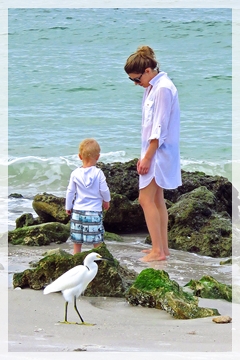
clam pass - naplesThe weatherman declared it to be “one of the ten best days of summer” and I thought of his words throughout the day. How many of those ten days have we already had this summer? What if, not knowing it was one of the ten best days, I missed it? Could I have been blinded to its beauty by the routine obligations, boring chores, petty annoyances, and minor frustrations of everyday life?
When reading the list of his ordeals in 2 Corinthians, is would seem that the Apostle Paul probably missed enjoying most of the best days of every season. He faced death many times and endured several imprisonments, countless beatings (three times with rods), and numerous whippings (five times with 39 lashes which was the maximum punishment allowed). The victim of stoning once, Paul also was adrift at sea for a day and night and shipwrecked three times. Not only was Paul weighted down with his concern for the early church but he also had a “thorn” in his flesh, quite likely a chronic ailment, that had tormented him for fourteen years. Since he lived another nine to twelve years after writing the Corinthians, that thorn probably continued to plague him and more trials and troubles certainly followed. All in all, Paul travelled about 15,000 miles on land and sea and endured sleepless nights, hunger, thirst and cold, faced hazards from bandits and even his own people, and spent between five and six years of his life imprisoned before being beheaded by the Romans between 64 and 67 AD. He endured all of this to proclaim the gospel and yet Paul never complained about missing out on any of the “best” days because he knew the secret of living in every situation—of making every day his best day.

We shouldn’t need a weatherman to tell us it’s one of the ten best days and we certainly don’t need good weather for the day to qualify. In fact, every day should qualify as one of the ten best days of whatever season it happens to be. Paul, a man who endured horrible ordeals both physically and emotionally for the church, knew that best days had nothing to do with circumstances but everything to do with attitude. He tells us to be joyful, to pray, and to give thanks to God in all circumstances (and not just on the good days). With an attitude like his, in spite of his sufferings, every day Paul experienced must have been one of his best. I’d venture to say that most of us suffer far less than did the Apostle and yet, instead of starting the day cheerfully saying, “Good morning, Lord!” many of us grumble, “Good Lord, it’s morning!” Let this day be one of your ten best; after all, you don’t know how many more remain!

Always be full of joy in the Lord. I say it again—rejoice! [Philippians 4:4 (NLT)]

Always be joyful. Never stop praying. Be thankful in all circumstances, for this is God’s will for you who belong to Christ Jesus. [1 Thessalonians 5:16-18 (NLT)]

Copyright ©2018 jsjdevotions. All rights reserved.

ALL THINGS BRIGHT AND BEAUTIFUL

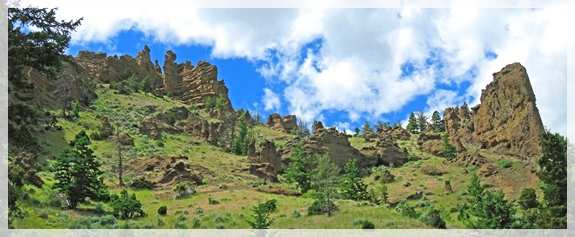
Absarokas - Cody WyomingFor ever since the world was created, people have seen the earth and sky. Through everything God made, they can clearly see his invisible qualities—his eternal power and divine nature. So they have no excuse for not knowing God. [Romans 1:20 (NLT)]
All things bright and beautiful, All creatures great and small,
All things wise and wonderful: The Lord God made them all.
[“All Things Bright and Beautiful” by Cecil F. Alexander]

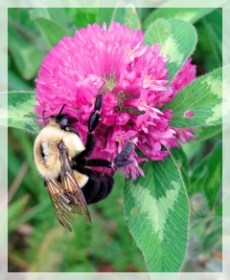
“When in doubt, trust your horse!” was the sign I’d seen earlier in the corral and so, as we slowly wended our way through the pinyon-juniper forest and up the mountain trail, I trusted my mount. After all, he didn’t want to fall down the ravine any more than did I. When we reached the ridge, I gasped—somewhat out of relief but more so out of wonder. The scenery was breathtaking! As I looked across the Wapiti Valley, I saw the incredible volcanic rock formations of the Absaroka Mountain Range and, when I looked down into the valley, I saw some of what Teddy Roosevelt called “The fifty most beautiful miles in America”. Surrounding us in the sage meadow on the ridge was an incredible array of wildflowers. An abundance of color, there were red Wyoming paintbrush, bright yellow mule’s ears and sunflowers, purple lupine, white snowbells, low pink bitterroot, tall green gentians, delicate bluebells, and a few pale yellow prickly pear cactus. Fritillaries and a white admiral red clover - beebutterfly flitted among the blossoms and a marmot peeked out from behind a rock. So as to not spook the horses or spoil the day for my fellow riders, I silently sang the chorus to All Things Bright and Beautiful.

Only able to remember the hymn’s chorus, I looked up the lyrics when I got home. The author is Cecil F. Alexander. An Irish woman known as Fanny to her friends and family, she lived in the mid-19th century and was married to a clergyman. It is said that she based her hymn on the words of the Apostles’ Creed: “I believe in God the Father, Maker of heaven and earth.” She easily could have been inspired by Psalms 19 or 104. I doubt she ever visited a ranch in Wyoming so she wasn’t thinking of the Absarokas and a colorful mountain meadow. Nevertheless, I imagine the Irish countryside can be just as extraordinary; perhaps Fanny’s inspiration came from visiting some place like Ireland’s Cliffs of Moher where she stood in awe of God’s handiwork.

I couldn’t help but think of the Apostle Paul’s words in the first chapter of Romans; we see evidence of God everywhere in His amazing creation and there is no excuse for denying His existence or not knowing Him. It doesn’t have to be majestic mountains and spectacular scenery; God’s workmanship is just as evident in our backyards in the exquisiteness of things like red clover and the wings of a bumblebee. Indeed, “How great is God Almighty, who has made all things well!”

Each little flow’r that opens, Each little bird that sings,
He made their glowing colors, He made their tiny wings.
The purple-headed mountains, The river running by,
The sunset and the morning That brightens up the sky. …
He gave us eyes to see them, And lips that we might tell
How great is God Almighty, Who has made all things well.
[“All Things Bright and Beautiful” by Cecil F. Alexander]

The heavens proclaim the glory of God. The skies display his craftsmanship. Day after day they continue to speak; night after night they make him known. They speak without a sound or word; their voice is never heard. Yet their message has gone throughout the earth, and their words to all the world. [Psalm 19:1-4 (NLT)]

O Lord, what a variety of things you have made! In wisdom you have made them all. The earth is full of your creatures. [Psalm 104:24 (NLT)]

Copyright ©2018 jsjdevotions. All rights reserved.

OUR PRAYERS

Sing praises to God, sing praises; sing praises to our King, sing praises! For God is the King over all the earth. Praise him with a psalm. [Psalm 47:6-7 (NLT)]

O what peace we often forfeit, O what needless pain we bear, All because we do not carry Everything to God in prayer! Have we trials and temptations? Is there trouble anywhere? We should never be discouraged, Take it to the Lord in prayer. [“What a Friend We Have in Jesus” by Joseph Scriven]

ZINNIA“That’s more like it!” I thought as I read Psalm 47; I certainly preferred it to the curses of the previous set of Psalms I’d read. I’m reading the Bible in chronological rather than in canonical order which means that the various books and chapters have been divided and rearranged. As a result, the psalms of lament and complaint were grouped together during David’s trials and the praise psalms were placed after the chapters outlining the duties in the Temple. These psalms of worship, adoration and thanksgiving seem more appropriate for Israel’s book of hymns than the earlier ones about wickedness, treachery, calamity and vengeance.
Although I prefer the joyful psalms, there is a reason Israel’s prayer book has lasted over 3,000 years and continues to be our prayer book today. Rather than a sappy feel-good book of poetry, Psalms reflects the gamut of human experience and emotions. When the disciples asked Jesus how to pray, I’m surprised He didn’t tell them they already knew and direct them to the Psalms for guidance. The Psalms’ words are intense, raw and honest; they conceal nothing. If the Psalmist is suffering, fearful, angry, depressed, or exhausted, he says so as readily as when he expresses his elation, adoration and thanksgiving. Never pretending that all is well when it isn’t, he fearlessly lays out his emotions before God. Wretchedness and joy, pain and jubilation, wickedness and virtue, despair and hope, grief and thanksgiving, fear and confidence: all are articulated. It is in that depth of personal expression and experience that we find words of consolation, faith, trust, and hope.

When I seriously evaluate my own prayer life, I’m nowhere near as honest and bold as the psalmists. Of course, God knows my personal struggles but, unlike David and the rest of the psalmists, I’m not as willing to lay them so passionately or openly at His feet. When Joseph Scriven wrote the words, “Take it to the Lord in prayer,” he meant all of it, not just the pretty stuff. I’m sure God would prefer honest words of grievance to false words of praise any day.

A human heart is like a ship on a wild sea, driven by the storm-winds from the four quarters of the world. Here it is struck with fear, and worry about coming disaster; there comes grief and sadness because of present evil. Here breathes a breeze of hope and of expectation of happiness to come; there blows security and joy in present blessings. These storm-winds teach us to speak with earnestness, and open the heart, and pour out what lies at the bottom of it. … What is the greatest thing in the Psalter but this earnest speaking amid these storm-winds of every kind? Where does one find such words of joy as in the psalms of praise and thanksgiving? … On the other hand, where do you find deeper, more sorrowful, more pitiful words of sadness than in the psalms of lamentation? … And, as was said, it is the best thing of all that they speak these words to God and with God. [Martin Luther, Preface to the Psalter]

The Lord is close to all who call on him, yes, to all who call on him in truth. [Psalm 145:18 (NLT)]

Copyright ©2018 jsjdevotions. All rights reserved.

YOU ARE LOVED

The Lord passed in front of Moses, calling out, “Yahweh! The Lord! The God of compassion and mercy! I am slow to anger and filled with unfailing love and faithfulness. I lavish unfailing love to a thousand generations. I forgive iniquity, rebellion, and sin. [Exodus 34:6-7a (NLT)]

Surely your goodness and unfailing love will pursue me all the days of my life, and I will live in the house of the Lord forever. [Psalm 23:6 (NLT)]

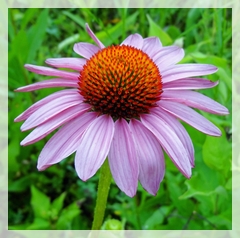
purple coneflower

I have a friend who always signs her cards and notes with “Remember you are loved.” What a beautiful sentiment. I’m not sure if she’s thinking of the love we have for one another or of the love someone else has for both of us. There is one who will pursue us with His love like an ardent suitor. He loves us as a father loves his children. There is one whose love is eternal; His love won’t quit when we get sick, hurt, disfigured, old or in trouble. There is one who loves us, flawed as we are, and who never tires of forgiving us for our many failures. There is one who loved us enough to sacrifice His only son for our salvation. There is one who doesn’t just do loving things for us; His whole essence is love. That one is God.

Remember, my friend, you are loved

God does not love us because we are valuable. We are valuable because God loves us. [Fulton J. Sheen]

 Put together all the tenderest love you know of, multiply it by infinity and you will begin to see glimpses of the love and grace of God. [Hannah Whitall Smith]

We know how much God loves us, and we have put our trust in his love. God is love, and all who live in love live in God, and God lives in them. [1 John 4:16 (NLT)]

Copyright ©2018 jsjdevotions. All rights reserved.

THE OTHER SIX

Remember the Sabbath day, to keep it holy. Six days you shall labor, and do all your work… [Exodus 20:8-9 (ESV)]

naples botanic gardenUpon retirement, many people consider their productive years over. Having been a CEO in a major corporation, a friend’s father felt worthless without his corporate identity. Prior to retirement, he could call any number of powerful people and get a meeting simply because of his position but, without his title, he felt like a nonentity. His previous business triumphs couldn’t sustain him and he saw no victories in the future. Unfortunately, many seniors who found their identity in their career, corporate title or paycheck are at loose ends when retirement comes along. Some of my friends who were homemakers aren’t much different from those in the business world. It’s just that they found their identity in motherhood and their self-esteem in their children’s achievements. Now, with an empty nest and adult children living their own lives far away, they feel unnecessary. Like my friend’s father, they are looking back at who and what they’ve been rather than forward to who and what they can be.

A quick glance around the room at my noon women’s Bible study tells me that most of us qualify for senior discounts. When discussing keeping the fourth commandment, our pastor told us to read all of the words. While we should observe the Sabbath, she reminded us that those other six days of the week are meant for productive work. A few of the women attending are still employed and others are caregivers for ailing spouses or handicapped children. Like me, however, the majority of the sixty women present are happily unemployed and our time is our own. The pastor’s words clearly were meant for us.

Well into her 70s, this pastor lives her advice. After reaching the mandatory retirement age in this church, she stopped getting a paycheck but continued in her mission. She still teaches at least two Bible studies a week, oversees the women’s organization, conducts both the weekly preschool chapel and the Saturday evening worship services, and, during Lent, added a daily 7:00 AM communion service to her schedule. She did not give up her purpose when she stopped getting a paycheck!

Our work schedule after retirement doesn’t need to be as rigorous as this pastor’s, but it seems that God wants more for us than days in front of the TV, at the beach, shopping, Facebooking, or playing bridge, mah jongg, golf, bocce, or tennis. Yes, daily activities like cleaning, cooking, laundry, gardening, and making repairs qualify as “work” but the people I know who truly enjoy their golden years are the ones who regularly devote some part of their week to service and learning. One friend has parlayed her HR experience into a volunteer job helping seniors navigate insurance and another uses her love of animals as a zoo docent. A former teacher tutors the disadvantaged, a retired nurse does blood pressure screening, and a neighbor uses his marine skills as a boat driver for the Conservancy. Former CEOs help stock shelves at the food pantry, advise new businesses or build houses for Habitat.

God gave us the gift of the Sabbath but, before He gave us the Sabbath, He gave us the gift of work. No matter our age, let’s use those other six days both wisely and productively.

The Lord God took the man and put him in the Garden of Eden to work it and keep it. [Genesis 2:15 (NLT)]

Let the favor of the Lord our God be upon us, and establish the work of our hands upon us; yes, establish the work of our hands! [Psalm 90:17 (ESV)]

Copyright ©2018 jsjdevotions. All rights reserved.

MORE WAG, LESS BARK!

Finally, brethren, whatever is true, whatever is honorable, whatever is just, whatever is pure, whatever is lovely, whatever is gracious, if there is any excellence, if there is anything worthy of praise, think about these things. [Philippians 4:8 (RSV)]

 My son, sweeten thy tongue and make savory the opening of thy mouth; for the tail of a dog gives him bread, and his mouth gets him blows. [Story of Ahikar]

dogLast month, my husband and I attended a “Sweetheart” dinner at church. The men were in charge of the entire event and there were a few rough spots in the night. Then again, at the risk of being accused of political incorrectness or gender bias, most of the men probably were novices at that kind of event planning. Unlike the men, we women have had decades of organizing (and attending) school parties, PTA fund raisers, charity galas, birthday parties, showers, weddings, anniversary bashes, and other assorted celebrations. In spite of the glitches, there was much that went right and the evening was enjoyable and entertaining. Unfortunately, the woman sitting beside me kept criticizing how things were done—from name tags and table assignments to flowers and dessert. Her nit-picking comments became as annoying as the yapping of a bad-tempered dog and I thought of a bumper sticker I’d recently seen: “Wag More, Bark Less!”

Bad tempered dogs (and people) are nothing new; a similar proverb dates back to 500 B.C. in an Aramaic papyrus found in Egypt called the Story of Ahikar. “Wag More, Bark Less!” may be bumper sticker philosophy, but I wish more people (including me) did just that. After reading the qualifications and concerns of the candidates for our property association board, I was struck by how many were unpleasantly barking and nipping at each other rather than wagging their tails and showing me how well they’d work with one another and our management company. An on-line community newsletter was so filled with bark (and bite) that we stopped subscribing. Rarely are the letters to the editor in the newspaper anything but bark in the way of anger and criticism. While waiting at the bakery counter yesterday, an impatient woman yelled at the harried clerk and stormed away in a huff. Sometimes, it feels like we’re in a kennel full of angry upset dogs—yapping, baying, growling and snarling! Worse, once one dog (or person) starts barking, other dogs (and people) tend to join in the unpleasant clamor.

Like the woman beside me at that dinner, there are times I bark or snarl in disparagement, annoyance or anger rather than wag in happiness, appreciation, or compassion. In his letter to the Philippians, the Apostle Paul reminds us that we are responsible for what we put in our minds. Even in the bleakest of circumstances or worst of conditions, there is some small thing worthy of praise. Our job, as Christians, is to find it and think about it! Fortunately, we have the Holy Spirit to help us in that task. Moreover, as my mother used to say, “If you can’t say something nice, say nothing at all!” Thankfully, the Spirit gives us the self-control to do just that! If we can’t wag, at least we can muzzle ourselves so we don’t bark!

But the fruit of the Spirit is love, joy, peace, patience, kindness, goodness, faithfulness, gentleness, self-control; against such there is no law. … If we live by the Spirit, let us also walk by the Spirit. Let us have no self-conceit, no provoking of one another, no envy of one another. [Galatians 5:22-23, 25-26 (RSV)]

Copyright ©2018 jsjdevotions. All rights reserved.