
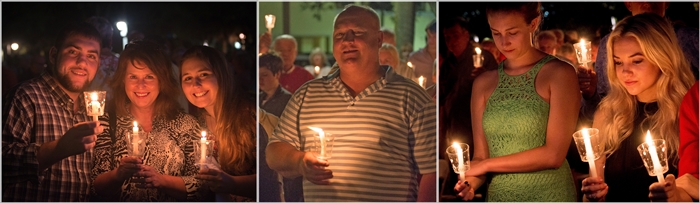
The people who walk in darkness will see a great light. For those who live in a land of deep darkness, a light will shine. [Isaiah 9:2 (NLT)]
Tomorrow night is Christmas Eve and most of us will gather with friends and family around a table heavy laden with delicious food, exchange gifts, sing carols, pray and gather in worship. Before the evening is over, many will light candles as part of our worship services. Other candles will be lit tomorrow night by our Jewish brothers and sisters as they celebrate the first night of Hanukkah, the Festival of Lights. They will light two candles on their menorahs and, like us, celebrate their holiday with traditional food, family and friends, gifts, prayers, and songs.
More than twenty-one centuries ago, Israel was ruled by the Seleucids (Syrian-Greeks) who wanted to wipe out all Jewish traditions. The study of the Torah was prohibited as was kosher food, circumcision, and the observance of other Jewish rituals. The Temple in Jerusalem was vandalized, defiled by pig sacrifices and an altar to Zeus was erected. A revolt against this paganism was led by the Jewish priest Mattathias and his five sons. When Mattathias died, his son Judah Maccabee led the rebels. Against all odds, they drove the Seleucids from Jerusalem and reclaimed the Temple. In 165 BC, the temple was restored and, during its rededication, the seven-branched candelabrum was relit. Although this light was supposed to burn constantly, there was only enough untainted oil for one night. Miraculously, the flame continued for eight days until new ritual oil was prepared. In memory of this miracle of God’s provision, the sages appointed an annual celebration of thanksgiving and candle lighting known as the Festival of Dedication, now known as Hanukkah.
For the next eight nights, Jews throughout the world will light their menorahs as a way of memorializing and publicizing God’s miracle of victory and His eight-day provision of oil. Using the center candle to light the others, one other candle is lit the first night. Each night, another candle is added until all nine are aflame the eighth night. Traditionally, the menorah lights are to be displayed in windows or on doorsteps making them visible to the public.
Like Hanukkah, Christmas celebrates a victory over evil and a miracle of God’s provision, not just for eight days but for all eternity. Christmas, like Hanukkah, is a Festival of Lights, or rather a festival of one light: Jesus Christ. Although the Maccabees defeated the Seleucids with their swords, God defeated the forces of darkness by sacrificing His son for our salvation. Unlike a candelabrum that needs a source of fuel to shine, the light of Christ truly is an eternal light—it can’t be diminished, depleted or extinguished. Moreover, just as a menorah should be displayed for all to see, the light of Christ should shine through Christians for the world to see. Unlike Hanukkah with only eight days of lit candles, however, the light of Christ should be visible all year long. Let your light shine and Merry Christmas!
We are indeed the light of the world—but only if our switch is turned on. [John Hagee]
Jesus spoke to the people once more and said, “I am the light of the world. If you follow me, you won’t have to walk in darkness, because you will have the light that leads to life.” [John 8:12 (NLT)]
You are the light of the world—like a city on a hilltop that cannot be hidden. No one lights a lamp and then puts it under a basket. Instead, a lamp is placed on a stand, where it gives light to everyone in the house. In the same way, let your good deeds shine out for all to see, so that everyone will praise your heavenly Father. [Matthew 5:14-16 (NLT)]
Copyright ©2016 jsjdevotions. All rights reserved.
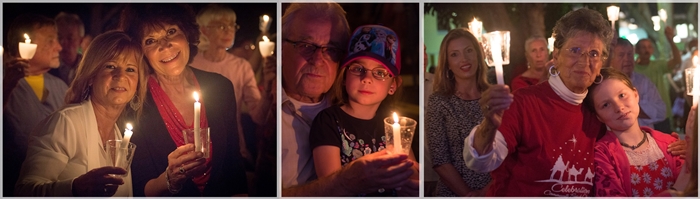
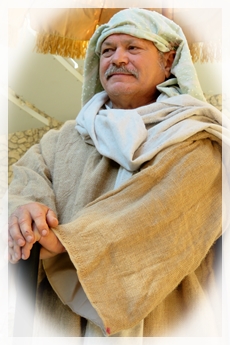 That night there were shepherds staying in the fields nearby, guarding their flocks of sheep. Suddenly, an angel of the Lord appeared among them, and the radiance of the Lord’s glory surrounded them. They were terrified, but the angel reassured them. “Don’t be afraid!” he said. “I bring you good news that will bring great joy to all people. The Savior—yes, the Messiah, the Lord—has been born today in Bethlehem, the city of David! And you will recognize him by this sign: You will find a baby wrapped snugly in strips of cloth, lying in a manger.” [Luke 2:7-12 (NLT)]
 When I was young, back in the 1950s, sex education pretty much consisted of some talk about bees pollinating flowers. Married couples on television didn’t sleep in the same bed and husbands always seemed completely surprised when wives announced a baby was arriving. As a little girl, I naively thought marriage (not intercourse) was what produced babies and that God put babies in a woman’s tummy once she was married.
 It’s that time of year again. Signs in stores say it, holiday lights in yards and on rooftops proclaim it, and we might greet one another in church with it. We send out cards with its message, sing of it and, yet, we’re bereft of it. We think we’ll have it when our chores are done, the cards mailed, the house cleaned, the tree decorated, the lights up, the cookies baked, the gifts purchased, the packages wrapped, and the bills paid. We sure we’ll get it if we reach our destination without delay or losing luggage or once our children arrive safely home. As long as everyone stays healthy, no food gets burnt, nothing is broken, politics isn’t discussed, no one gets drunk, and the back-ordered gift arrives in time, we’re sure to have it then. Yet, even when everything goes as planned (and believe me it won’t), it seems to escape us.
 As earth’s first gardener, God knew a thing or two about agriculture. Recognizing that continually working a field depletes the soil of valuable nutrients, He commanded the Israelites to let their land remain fallow every seven years. During this yearlong land Sabbath, no produce was to be planted, pruned or harvested and any food that grew by itself, such as grapes or figs, could not be harvested, sold or stored. God promised to grant an abundant crop in the sixth year so there would be plenty of food to carry the people through the Sabbath year and well into the next years until a new crop was harvested. Considered ownerless, the produce that grew by itself could be eaten by anyone or fed to the animals. The Sabbath year was a test of faith; it required the Israelites to acknowledge God as the true master of the land, to trust Him for His provision, and to share with those less fortunate.
 If I told you that 88% of Americans own four or five of these, you’d probably think of televisions until I told you that less than a fifth of Americans actually use them regularly. It’s the Bible—almost all of us have more than one and yet few of us ever open it more than a few times a year.
 Devotions of the Heart