
What can we bring to the Lord? Should we bring him burnt offerings? … No, O people, the Lord has told you what is good, and this is what he requires of you: to do what is right, to love mercy, and to walk humbly with your God. [Micah 6:6a,8 (NLT)]
In the Holy Place of the Tabernacle, there was a table on which the showbread was placed. Consisting of twelve loaves of unleavened bread stacked in two columns, it remained on the table for a week. When new loaves replaced it, the showbread was removed and eaten by the priests in the sanctuary. Because it was holy, no one other than a priest could eat it. Nevertheless, when David and his hungry men arrived in the town of Nob where the Tabernacle was located, Ahimelech the priest gave them the previous week’s showbread once he was assured the men were ceremonially clean. Having no other food for the famished men, the priest understood that feeding them was more essential than compliance with the ceremonial law. He knew the laws of compassion, mercy and love took precedence over ritual.
A thousand years later, Jesus and his disciples were walking through a grain field on the Sabbath when the hungry men picked some heads of grain and ate them. The Pharisees charged them with breaking the law, but not because they were picking grain in someone else’s field. It was perfectly permissible to do what they’d done any other day of the week but they’d done it on the Sabbath! Although harvesting grain was one of the thirty-nine categories of forbidden work on this day of rest, it’s not as if they were reaping sheaves of grain! Actually, the hungry men were doing no more work than someone feeding himself at a table. Moreover, Jewish tradition prohibited fasting on the Sabbath.
That subtle difference, however, was lost on the Pharisees who couldn’t see beyond the technicalities of the law. After Jesus reminded them of the story of David and the sacred loaves, He pointed out that they clearly didn’t understand God’s words in Micah about preferring mercy to sacrifices and that compassion was as important as the Law. Declaring Himself Lord over the Sabbath, Jesus then claimed authority over how the Sabbath was to be observed. To the Pharisees, however, His words were heresy.
Soon after, the Pharisees continued to exhibit their lack of mercy when they condemned Jesus for healing a man on the Sabbath. Jesus exposed their inconsistency by asking if they could save an animal on the Sabbath and then pointing out that a man was more valuable than a sheep. The laws of the Sabbath were never meant to release people from the need for mercy, whether to feed the hungry or relieve the misery of the afflicted.
Jesus regularly came into conflict with the Pharisees regarding the Sabbath but His issue wasn’t with the Sabbath; it was with the Pharisees. God didn’t create the Sabbath before making man! After creating humanity, God knew people would need a rest from the burden of work so He created the Sabbath for them. “The Sabbath,” Jesus explained, “was made to meet the needs of the people, and not the people to meet the requirements of the Sabbath.”
While this sacred day of rest and worship should have been viewed as a gift from God, by Jesus’ day, it had been complicated with an extensive list of restrictions (along with a variety of devious ways to skirt them). The Pharisees, however, had built their lives around rules and regulations and when Jesus questioned their authority, they called a meeting to plot His death. They didn’t understand that our God is a God of love not ritual, a God of people not regulations, a God who asks us to do is what is right, love mercy, and walk humbly with Him.


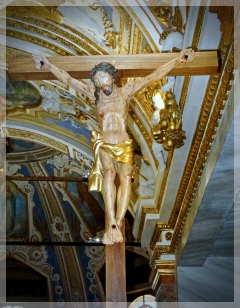 In any cathedral or art museum, we’ll find many pictures of Jesus and even rather graphic depictions of Him on the cross. None of them, however, tell us anything about His appearance because they were created long after His time. Still, in a world where we seem to memorialize everything with pictures, you’d think one of Jesus’ followers would have sketched Him while blessing the children, giving the Sermon on the Mount, or feeding the multitude! 1st century rabbis in Judah, however, vehemently objected to the depiction of human figures because the second commandment prohibited making a “graven image.” With its Jewish roots, this prohibition carried into the early church and inhibited early Christian art.
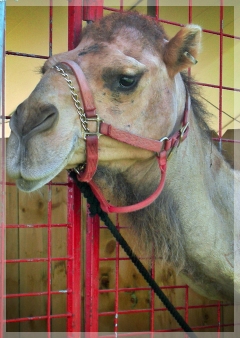 After the rich young ruler departed, Jesus compared the difficulty of a rich man entering heaven to a camel trying to squeeze through the eye of a needle. Because of its impossibility, people find this metaphor troubling. To rationalize it, some scholars speculate that a narrow gate called “The Needle” was located in the wall surrounding Jerusalem. Supposedly used after dark when the main gates were closed, it was so small that a camel had to be unburdened of rider and cargo before getting down on its knees to pass through the gate. They interpret the metaphor as meaning that people must leave behind their baggage, repent, and humble themselves to get through the gate to God’s kingdom. While that’s correct and their explanation makes an excellent Sunday school lesson, no historical or archeological evidence exists that such a gate existed.
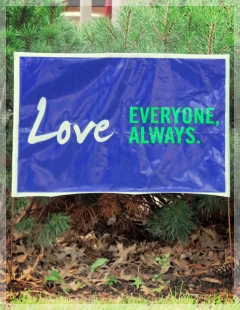 Decades ago, I found an interesting article in a parenting magazine having to do with negative and positive commands. Because our brains tend to best process the end of a sentence rather than its beginning, when a mother says, “Don’t tease your sister,” the child tends to hear “Tease your sister!” Moreover, telling children not to do something requires them to double process. First, they have to figure out what it is they’re not supposed to do and then they have to figure out what it is they’re supposed to do instead! While there are an infinite number of alternatives to not doing something, there is only one alternative when told what to do! Since vague instructions like “Behave!” leave a lot of gray area, a clear course of action should be given.
