
Keep on asking, and you will receive what you ask for. Keep on seeking, and you will find. Keep on knocking, and the door will be opened to you. For everyone who asks, receives. Everyone who seeks, finds. And to everyone who knocks, the door will be opened. You parents—if your children ask for a loaf of bread, do you give them a stone instead? Or if they ask for a fish, do you give them a snake? Of course not! So if you sinful people know how to give good gifts to your children, how much more will your heavenly Father give good gifts to those who ask him. [Matthew 7:7-11 (NLT)]
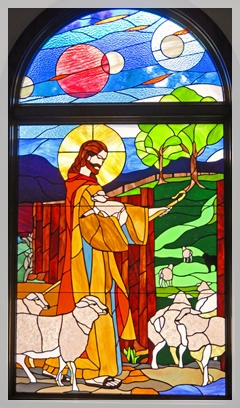 Thrilled at the result of her biopsy, Mary joyfully announced, “God is good and God always answers prayers!” Indeed, He is and does but we must remember that God does not always answer prayers the way we want Him to. I recently wrote that God is not a miser and our prayers should not be puny half-hearted ones. Nevertheless, regardless of the size of our petitions, we must remember that it is God’s will, not ours, that will be done. In spite of fervent prayers, some biopsies will say “malignant,” some prodigals will never return, some marriages will fail, and some people will not recover.
People often claim that Jesus’s words in Matthew 7 are a promise that God will give us anything we ask. But, seen in context, this verse is about seeking and finding God rather than having all of our wishes fulfilled. If we ask for things like His wisdom, discernment, patience, love, compassion, peace, and understanding, He will give them to us. That promise, however, does not mean God will answer all of our prayers with a “Yes!”
Just as loving parents wouldn’t give their children something bad when they ask for something good, Jesus tells us neither will God. But, what if, in his naiveté, the child unwittingly asks for something that isn’t what’s best? When my son was a teenager, he pled for a shiny new sports car; we answered with a second-hand Ford Tempo. Older and wiser, we knew a sixteen-year old boy didn’t belong behind the wheel of a Corvette. Now that he has a sixteen-year-old boy of his own, our son understands. A loving parent, like God, knows how to say “No!”
God is God and we are not. It is His will that reigns and our prayers are answered according to His plan rather than our wants. Both Elijah and Jonah asked God to take their lives, but He refused. God denied King Zedekiah’s prayer for help in defeating Nebuchadnezzar. When Jesus prayed in the garden, Paul prayed to be rid of the thorn in his flesh and David wanted to build the temple, God said “No” to them. When the disciples wanted Jesus to go back and heal in Capernaum, when a man asked Him to intervene in a family dispute, and when James and John wanted places of honor in heaven, our Lord answered them all with, “No!”
God always answers prayers but frequently not the way we expect or desire. Just because we don’t get what we want, however, doesn’t mean we get nothing. Although God’s answers often are mysterious and even heart-breaking, they always are purposeful. God’s “No!” is His “Yes!” for a far greater end, be it protection, teaching, spiritual growth, or guidance. Let us be thankful that God keeps us from what we thought we wanted and blesses us with what we didn’t know we needed!
When God says no, we are sometimes tempted to wonder if He loves us. In reality, it’s because He loves us, He sometimes says no. [Lysa TerKeurst]
 Although my husband attended law school, there is one law he never knew until he became a father: the Toddler Property Law. Starting out with the basic premise of “What’s mine is mine!” it then defines exactly what is meant by “mine.” The toddler defines “mine” as the following: it’s mine if I like it; if I think it’s mine, it is; if it’s yours, it’s mine; if I can take it from you, it’s mine; if I had it but put it down, it’s still mine; if you had it but put it down, then it’s mine; and, if it is broken, it’s yours.
 My Great-aunt Camilla began to lose her hearing as a girl and was completely deaf by the time she reached adulthood. Although she didn’t sign, she did lip-read quite well. In spite of her deafness, as long as we were face-to-face, we were able to converse without much difficulty. However, if Camilla didn’t want to continue the discussion or disagreed with us, she’d simply turn away and refuse to look at us. Tug as we might at her sleeve, she’d not turn back to rejoin the conversation until we’d convinced her that the subject had changed to one she preferred or that we agreed wholeheartedly with her opinion.
 To explain her sisters’ bitterness and sour outlook on life, my mother-in-law would say, “Well, their lives didn’t turn out the way they’d hoped.” Those women had no reason to complain when comparing their lives to Naomi (the mother-in-law in the book of Ruth).
 We’ve heard of helicopter parents—those over-involved and over-protective parents who hover over their children, taking responsibility for their experiences and protecting them from failure. With the college admission scandal in the news, we now see helicopter parents on steroids. Called lawnmower, snowplow, or bulldozer parents, they don’t just hover over their youngsters. Not wanting to see their children struggle, they mow down challenges, plow through hurdles, and demolish any obstacles facing them.
 We know Jesus was capable of big miracles: twice He ended up with leftovers after feeding thousands with only a few scraps and He brought the widow’s son, Jairus’ daughter, and Lazarus back to life. Nevertheless, when Jesus was at the pool of Bethesda and surrounded by a crowd of sick, paralyzed, blind and lame people, He healed only one man before disappearing into the crowd! That crippled man didn’t even ask for healing. From his later encounter with Jesus, we know he was a sinner so he couldn’t have been more deserving than anyone else gathered at that pool! Jesus could have healed, not just everyone at that pool, but every malady in all of Palestine. Why just that one man?
 Devotions of the Heart