
Who, though in God’s form, did not regard his equality with God as something he [Jesus] ought to exploit. Instead, he emptied himself, and received the form of a slave, being born in the likeness of humans. And then, having human appearance, he humbled himself, and became obedient even to death, yes, even the death of the cross. [Philippians 2:6-8 (NTE)]
My son is the third generation to run the family business. Although he is now its CEO, he didn’t begin that way. As his father had done before him, he started by sweeping floors and emptying trash.
The business expanded when my husband purchased a company in another town. With manufacturing processes that were unfamiliar, our son needed to learn new fabrication procedures and started working in the new facility. When he began, only his supervisor knew his relationship to the business’s new owner. He may have been the boss’s son but, to everyone else, he was just Jim, the new guy on the line. In his work shirt and steel-toed shoes, he looked like everyone else, kept the same hours, followed the same rules, and made the same money. What he didn’t do was pull rank or take advantage of his identity.
Although our son originally thought he could learn everything he needed by reading about it, a few days operating the machinery and getting his hands dirty told him there was nothing like first-hand experience! Now that he’s the boss, his employees recognize that he understands and appreciates the challenges they face in doing their jobs.
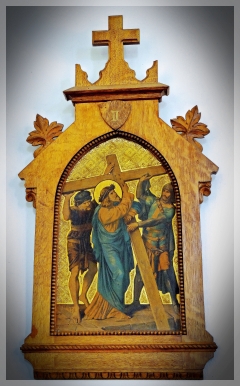
I tell this story to help us understand what it was like when Jesus put on human flesh and lived as a man. Clothed in work clothes, my son looked like every other hourly employee on the line. Although Jesus is often depicted with a halo, when He was clothed in human flesh, there was no halo and He looked like any other man. Instead of giving up coat and tie for overalls, Jesus gave up His immortal perfect form and took on the aches, indignities, and illnesses that come with a mortal body.
Just as my boy remained the boss’s son but gave up any status or privileges that came from that, Jesus remained God’s son but gave up the benefits that came with His divinity. Of course, Jesus gave up far more than did my son! He set aside the glory of heaven for life on earth and relinquished the divine life He had in heaven to be an itinerant rabbi in Galilee. Even though equal with His Father, Jesus chose to submit to Him as an earthly son does to his father.
Just as our boy never stopped being the boss’s son, Jesus remained fully God while fully man. Just as his co-workers didn’t know our boy’s real identity, people had trouble recognizing Jesus as God’s Son. While my son did what he did so he could learn the family business, Jesus did what He did to take away the sins of the world. Our son may have humbled himself by starting at the bottom but Jesus humbled himself by deliberately choosing to die a torturous death as a criminal on the cross!
My son knows what it means to be one of his employees and he’s a better boss because of it. Jesus knows what it’s like to be human and we are better because of that! Jesus knows what it is to hurt, be disappointed, suffer, struggle, get tired, thirst, feel hungry, bleed, hope, love and die. Because He lived as one of us, we can come to Him confidently and without fear; instead of condemnation, we will receive God’s grace and mercy!

 I used the NTE version of today’s verse because it better captures the original meaning with the words “turn inside out.” Usually translated as change, turn, or convert, the original Greek was strephō which meant more than a slight change of direction. It meant being turned (even from one thing into another) which requires submission. Far more than a mental acknowledgment or intellectual assent to certain ideas, it’s a turning of one’s whole life and person toward God. The kind of conversion or turning meant in strephō is like having one’s life turned inside out.
 She washes her hands with soap and water but, doubting the brown liquid coming from the faucet (water that’s unsafe to drink) could rid her hands of germs, my friend also uses hand sanitizer. She’s not in a third world country but at a Native American pueblo less than a half hour from a major American city. One third of its residents live in “poverty” and the rest aren’t much better. Several generations live together in overcrowded homes, no one has appliances like washers, dryers or dishwashers, and cell service is iffy at best. In spite of all they lack, the people she meets are kind and generous. Never apologetic for their homes, they welcome her and always offer food and bottled water; proud of their heritage, they invite her to their feasts. Serving this indigenous nation in a medical capacity, she tries to shake off the feeling of guilt as she pulls into her driveway. She knows that her ethnicity is much of the reason she enjoys a life easier than theirs.
 The wages paid by sin, you see, are death; but God’s free gift is the life of the age to come, in the Messiah, Jesus our Lord. [Romans 6:23 (NTE)]
 Devotions of the Heart