
If we say we have no sin, we deceive ourselves, and the truth is not in us. If we confess our sins, he is faithful and just to forgive us our sins and to cleanse us from all unrighteousness. [1 John 1:8-9 (ESV)]
 While “Don’t cry over spilled milk,” isn’t one of Solomon’s proverbs, that wise advice is several centuries old. “No weeping for shed milk,” appeared in a book of English proverbs back in 1659 and some historians believe the saying dates back to medieval days. Superstitious, people left spilled food for the fairies or elves to eat and drink. If someone cried over spilled milk, it was feared that the fairies might think the offering was begrudged and bad luck would visit the house.
For some unknown reason, today (February 11) is designated as “Don’t Cry Over Spilled Milk Day” and is a day dedicated to not letting the little things get us down. We all have a long list of past mistakes, large and small, over which we’ve shed a few tears. While a dog or cat might lap up spilled milk, no elves or fairies are going to come along to correct our mistakes and our tears accomplish nothing! Rather than lamenting over our blunders and missteps, our job is to clean up the mess we’ve made before it starts to stink! Before we get out our mops and pails, however, we’ve got to forgive ourselves. If God can forgive us, we should be able to forgive ourselves!
In actuality, for most of us, spilled milk is the least of our problems. We all make mistakes; sadly, we’ll continue to make them. There’s no point beating ourselves up and reliving past errors. The milk can’t go back in the bottle, the words can’t return to our mouths, the money can’t get unspent, the email can’t be retrieved, and the expletive can’t be deleted! When possible, we make right what we can, as soon as we can, and then forge on ahead, hopefully more prudently. Learning from our mistakes makes more sense than crying over them!
Just as we mustn’t let the little things get us down, we can’t let the big ones take us down either. Perhaps every day should be dedicated to not crying over milk that has spilled as we take a positive attitude, forgive ourselves (and others), fix what we can, accept what can’t be changed, and move forward.
Finish each day and be done with it. You have done what you could. Some blunders and absurdities no doubt crept in; forget them as soon as you can. Tomorrow is a new day. You shall begin it serenely and with too high a spirit to be encumbered with your old nonsense. [Ralph Waldo Emerson]
 A.W. Tozer’s words remind me of Jesus’s parable about the Pharisee and tax collector who prayed in the Temple. Acting as if God should feel grateful to receive his prayers, the Pharisee didn’t understand that he should be grateful that God listens! Rather than express thanks for God’s righteousness, power and majesty, the proud Pharisee thanked God for his own righteousness and then listed his virtues! Although it wasn’t required, he fasted twice weekly and was so fastidious about tithing that he tithed not just what was earned but also anything he acquired. If he were unsure that a farmer had tithed his produce, the Pharisee would tithe it again! Standing before God and proclaiming both his good works and his contempt for others (like the tax collector), the Pharisee is a perfect illustration of a man “who believes that he is worthy of heaven.” How wrong he was! Perhaps the Pharisee’s refusal to recognize his own self-righteousness was his biggest sin of all.
 There was a bit of a kerfuffle behind us during church last week; it started during the Old Testament reading and continued to the Gospel. As best as I can figure, a bottle of water had leaked onto the pew. The women behind me sat on the damp cushion and made quite a production of detecting, discussing, and complaining about it first to her husband and then to her neighbor (whose water it had been). There was room enough to move down in that pew and plenty of other pews (with dry cushions) available, but the couple never moved. Nevertheless, throughout the rest of the service, I felt the woman’s breath on my neck every time she exhaled another loud sigh of misery.
 Last week, when Brandt Jean chose to offer his forgiveness and embrace the woman who killed his brother, he did it out of Christian love. Judge Tammy Kemp, moved by Brandt’s example, then handed the convicted murderer one of her personal Bibles and encouraged her to forgive herself. When the defendant asked her for a hug, the judge remembered a recent sermon about love and compassion and couldn’t deny her. Nevertheless, many people were outraged and turned their simple acts into political statements. They saw issues of race, civil rights, proselytizing, and something called “post-traumatic slavery syndrome” where there was only love, kindness, and forgiveness. Neither brother nor judge excused or absolved Amber Guyger of her crime; they simply extended compassion and forgiveness. Let us not forget that their actions were also in obedience to Christ!
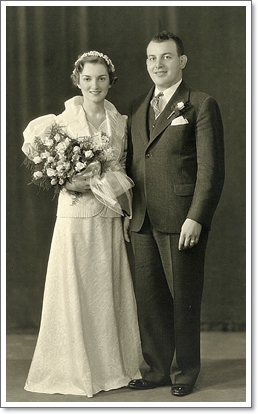 As I sorted through the papers that my mother-in-law had saved through the years, I came to a letter written to her in 1936 by her soon to be mother-in-law, Hattie. Hoping the young couple liked the mixer she’d given them, Hattie sent best wishes for a “long happy wedded life.” Wondering why such a mundane letter had been saved for 83 years, I read on. “May there be lots of love, joy and contentment in your home,” she continued, “forgiving each other as God forgives you.” Praying that my in-laws would have a long and “sweet contented life,” Hattie signed the letter “One who wishes you well in everything, Mother.”
 Devotions of the Heart