
I can do all things through him who strengthens me. [Philippians 4:13 (ESV)]
 Years ago, facing overwhelming responsibilities, I stood in the middle of the Home Depot garden center, broke into tears, and prayed, “God, I just can’t do it all.” A very gentle voice said, “You don’t have to!” and then put into my mind the names of people who could help me in the many tasks that lay ahead. Not long ago, when planning another major event, I approached that same feeling of desperation and felt much like a gerbil on an exercise wheel—running hard and getting nowhere. I was running out of ideas, time, energy and patience. Circumstances over which I had no control were part of the problem but so was I! Pride made me both hesitant to ask for help and reluctant to share the glory. Fortunately, I’ve learned a few things since that day at Home Depot so I did some serious praying and humbly asked for help. Friends and family came together in the most amazing way and incredible solutions appeared for what had seemed to be unsolvable problems. It was as if God was saying, “See, you can do it—just not all by yourself!”
Solomon’s kingdom flourished because the wise king delegated responsibility; he appointed governors over twelve districts, another governor over them, and eleven other high officials. Even Jesus knew He couldn’t do it all when He lived as a man. He chose seventy-two disciples to act as advance men in the towns He would later visit. Later, when the Apostles learned that the widows weren’t getting their share of the food, they asked the church to appoint seven men to take on that responsibility. Paul appointed elders in every church, delegated leadership responsibilities to men like Timothy and Titus, and encouraged them to find other trustworthy men to pass on God’s word.
God gave Eve to Adam for more than procreation; “I will make a helper who is just right for him.” [Genesis 2:18] We’re not meant to go it alone. When Solomon delegated, his kingdom prospered and grew. When Jesus delegated, He trained the disciples to pass on the faith. When the Apostles delegated, they were better able to use their gift of teaching. When Paul delegated to other evangelists and elders, he demonstrated his trust in their ability. When I delegated, the result was far better than I could have imagined and I was able to share the joy of accomplishment with all who helped.
God is God and we are not. As mere mortals, we can only do our best. Sometimes, however, doing our best means allowing other people to do it! We have been instructed to serve one another but, for that to happen, we must be willing to let others serve!
Be strong enough to stand alone, smart enough to know when you need help, and brave enough to ask for it. [Ziad K. Abdelnour]
 And after the earthquake there was a fire, but the Lord was not in the fire. And after the fire there was the sound of a gentle whisper. [1 Kings 19: 12 (NLT)]
 In 1978, Merck Research Laboratories was approached by a scientist who thought a drug he was developing to treat parasitic infections in animals might be useful in treating a parasitic infection in humans. Called onchocerciasis or river blindness, it is transmitted through the bite of black flies and had no known cure. The pharmaceutical company faced a dilemma. Since onchocerciasis is found only in third world areas, the people needing the medication could never afford to buy it. How could the company expend money to develop a drug they’d never be able to sell? Nevertheless, they did and, in 1987, Merck announced that, for as long as was necessary, they would give away the drug (Mectizan®) for the treatment of onchocerciasis to any country that needed it. Eleven years later, they expanded their commitment and started donating Mectizan® for the treatment of Lymphatic filariasis, a mosquito-transmitted disease which can develop into elephantiasis. Since 1987, more than a billion treatments have been donated to thirty-three countries and the World Health Organization forecasts that both diseases could be eradicated by 2020.
 A few years ago, unaware of what the day would bring, a family friend kissed her new husband good-bye as he left for work. While riding the train that morning, the young man collapsed; he died of sudden cardiac arrest less than an hour after that tender kiss. That same year, another friend, whose wife’s body was ravaged by cancer, knew how short the time was he had with her. “While watching TV,” he confided downheartedly, “I looked over at Maureen and realized that next year her chair will be empty and I’ll be alone!” Today is Patriot Day, an annual remembrance of those who died or were injured during the terrorist attacks on September 11, 2001. Thinking about that tragic morning seventeen years ago when so many lost their loved ones unexpectedly, I remembered these two widowed friends. Which is worse: watching the one you love deteriorate and knowing that you’re running out of time for kisses or kissing a loved one in the morning and not knowing that will be the last kiss you’ll ever share?
 Several years ago, my husband came upon a wonderful opportunity to buy a business in another state. He also knew a talented young man capable of running it there. Rather than simply buying the business and hiring the fellow as CEO, my husband loaned him money so that he could buy a share in the business. A firm believer in having what he calls, “skin in the game,” my husband found that partners in a business care about its success far more than any employee ever will. When he and his partner retired, they sold the business to the employees through an ESOP program—now everyone working there is a partner and has “skin in the game.”
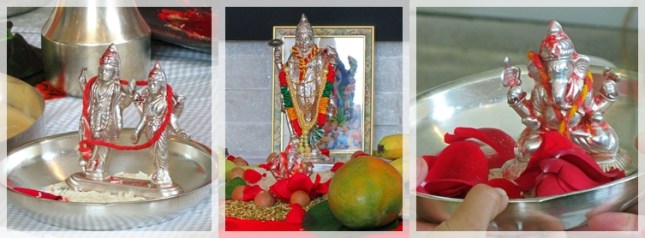 So then, about eating food sacrificed to idols: We know that “An idol is nothing at all in the world” and that “There is no God but one.” For even if there are so-called gods, whether in heaven or on earth (as indeed there are many “gods” and many “lords”), yet for us there is but one God, the Father, from whom all things came and for whom we live; and there is but one Lord, Jesus Christ, through whom all things through whom we live. [1 Corinthians 8:4-6 (NIV)]
