VAMPIRES

vampires and ghoulsBut the Holy Spirit produces this kind of fruit in our lives: love, joy, peace, patience, kindness, goodness, faithfulness, gentleness, and self-control. There is no law against these things! [Galatians 5:22-23 (NLT)]

Tonight, we’ll probably see people costumed as skeletons, pirates, Disney princesses, super heroes, and Harry Potter characters. Although some people may dress as Dracula, no one ever dresses up as an emotional vampire. Unlike fiction’s vampires with their deathly white skin, blood red lips, high collared black capes and fangs, emotional vampires look just like everyone else. Instead of sucking our blood, they suck the life out of us with their self-absorption, selfishness, sense of entitlement, unending drama, defensiveness, lack of boundaries, and other toxic qualities. Once attacked, we’re drained: emotionally exhausted, anxious, depressed, and feeling used and abused.

Unfortunately, being Christians (people filled with the fruit of the Spirit) makes us excellent targets for these predators. Loving God and loving others as ourselves, however, does not mean we have to allow anyone to inject his or her poison into our lives. Turning the other cheek does not mean lying down and getting walked over or enduring unhealthy relationships.

In the old vampire movies, the victim had to invite the vampire inside and we must be wary of doing the same thing with emotional vampires. Jesus’s life was not taken from Him—it was His choice and He willingly gave it up for us. While we can choose to be martyrs for Jesus, we must never allow someone to turn us into martyrs for them. The cross we are asked to carry is ours alone; emotional vampires, however, want us to carry theirs, as well!

Although emotional vampires don’t recognize boundaries, it’s important for us to know and keep ours. Jesus did that when He refused to settle a legal dispute between a man and his brother. [Luke 12:13-14] Like Jesus, we need to know when a mess isn’t ours to fix, the responsibility isn’t ours to take, we’re not the ones at fault, or the demand on us is unreasonable. It’s not easy to deny these bloodsuckers but we must remember that carrying one another’s burdens does not mean taking the blame, getting taken advantage of or being victimized. While enabling people often seems easier in the short run, it is never kinder or wiser. As loving as Jesus was, His exchanges with the scribes and Pharisees tell us He didn’t tolerate or enable bad behavior; neither should we!

We can hand candy to the vampires that knock in our doors tonight but we must never hand our lives to emotional vampires. The only one to whom we are to surrender our lives is Jesus! The Apostle Paul told us, “For we are each responsible for our own conduct.” [Galatians 6:5] That also means we are not responsible for anyone else’s conduct. Rather than using garlic, silver bullets, or wooden stakes, we must remember that walking in love never means getting walked on like a doormat!

No one can take my life from me. I sacrifice it voluntarily. For I have the authority to lay it down when I want to and also to take it up again. For this is what my Father has commanded. [John 10:18 (NLT)]

Then Jesus said to his disciples, “If any of you wants to be my follower, you must give up your own way, take up your cross, and follow me. If you try to hang on to your life, you will lose it. But if you give up your life for my sake, you will save it. And what do you benefit if you gain the whole world but lose your own soul? Is anything worth more than your soul? [Matthew 16:24-26 (NLT)]

Copyright ©2018 jsjdevotions. All rights reserved.

OVER COMMITTED

I can do all things through him who strengthens me. [Philippians 4:13 (ESV)]

waterfallYears ago, facing overwhelming responsibilities, I stood in the middle of the Home Depot garden center, broke into tears, and prayed, “God, I just can’t do it all.” A very gentle voice said, “You don’t have to!” and then put into my mind the names of people who could help me in the many tasks that lay ahead. Not long ago, when planning another major event, I approached that same feeling of desperation and felt much like a gerbil on an exercise wheel—running hard and getting nowhere. I was running out of ideas, time, energy and patience. Circumstances over which I had no control were part of the problem but so was I! Pride made me both hesitant to ask for help and reluctant to share the glory. Fortunately, I’ve learned a few things since that day at Home Depot so I did some serious praying and humbly asked for help. Friends and family came together in the most amazing way and incredible solutions appeared for what had seemed to be unsolvable problems. It was as if God was saying, “See, you can do it—just not all by yourself!”

Solomon’s kingdom flourished because the wise king delegated responsibility; he appointed governors over twelve districts, another governor over them, and eleven other high officials. Even Jesus knew He couldn’t do it all when He lived as a man. He chose seventy-two disciples to act as advance men in the towns He would later visit. Later, when the Apostles learned that the widows weren’t getting their share of the food, they asked the church to appoint seven men to take on that responsibility. Paul appointed elders in every church, delegated leadership responsibilities to men like Timothy and Titus, and encouraged them to find other trustworthy men to pass on God’s word.

God gave Eve to Adam for more than procreation; “I will make a helper who is just right for him.” [Genesis 2:18] We’re not meant to go it alone. When Solomon delegated, his kingdom prospered and grew. When Jesus delegated, He trained the disciples to pass on the faith. When the Apostles delegated, they were better able to use their gift of teaching. When Paul delegated to other evangelists and elders, he demonstrated his trust in their ability. When I delegated, the result was far better than I could have imagined and I was able to share the joy of accomplishment with all who helped.

God is God and we are not. As mere mortals, we can only do our best. Sometimes, however, doing our best means allowing other people to do it! We have been instructed to serve one another but, for that to happen, we must be willing to let others serve!

Be strong enough to stand alone, smart enough to know when you need help, and brave enough to ask for it. [Ziad K. Abdelnour]

A friend loves at all times, and a brother is born for adversity. Proverbs 17:17 (ESV)]

I lift up my eyes to the hills. From where does my help come? My help comes from the Lord, who made heaven and earth. [Psalm 121:1-2 (ESV)]

Copyright ©2018 jsjdevotions. All rights reserved.

GOD NUDGES

blanket fower - tulip - golden cannaAnd after the earthquake there was a fire, but the Lord was not in the fire. And after the fire there was the sound of a gentle whisper. [1 Kings 19: 12 (NLT)]

God’s nudges—we all get them and, all too often, we ignore them.

Last week, one of my pastors felt an uncanny impulse to call an old friend who lives across the country. As far as she knew, all was well with her friend and, as often happens with that sort of thing, she got busy and forgot about making the call. Today, she was reminded of her failure when she received a call telling her that her friend had died suddenly over the weekend. As she shared her regret, she reminded us all to respond to God’s gentle nudges. As Elijah learned, sometimes God’s voice is in a whisper!

When asked how to know whether we’re getting a nudge from God or simply have an idea, the pastor suggested we look to the source; if it comes from our heart, it’s probably from God and if it comes from our head, it’s probably us. Nevertheless, our own feelings and desires certainly can influence our perception of the idea and, for some people, “God laid it on my heart,” is just a euphemism for, “This is something I want to do.” A friend’s ex-daughter-in-law claimed that God “laid it on her heart” to leave her husband and children for another man—proof that our hearts can be as deceitful as our thoughts. We must be cautious of attributing our feelings to God. Not every good idea is a mystical message from the Lord; sometimes it’s just an idea!

Discerning the voice of God is not always an easy task. When something is weighing heavy on our heart, perhaps we ought to weigh the message against God’s word. Every one of God’s nudges will match up with His word and none will be something Scripture forbids! Of course, the better we know His word, the easier it is to recognize His voice. Checking Scripture, however, doesn’t mean randomly opening the Bible, picking the first verse we see, and saying that is God’s specific word for us; that’s little different than using a Magic 8-Ball for decisions.

Not everyone will get the same nudge and what God lays on my heart may not be what He lays on yours. His nudge is for us alone and rarely does anyone need to know the reason for our actions. Moreover, we should never say God told us to do something merely to add credibility to what we’re doing. Finally, just because someone says God laid it on his or her heart doesn’t mean He actually did! Just as we, on occasion, can mistake our own desire for one of God’s nudges, so can others. If someone tells us that God laid it on their heart that we should join choir or donate to their cause, we must be wary of getting pressured into something that isn’t God’s plan for us. If God really wants us to do something, most likely, He’ll be the one to tell us!

If God is nudging me about something of major consequence, I pray, study His word, and do research. For the most part, however, those little God-nudges are pretty easy to identify and don’t ask much of us: cross the room to speak with someone, make a call, offer to pray with them, give a hug, ask what you can do, or invite him to church. When in doubt, as long as it’s not contrary to Scripture, I’d rather risk looking foolish than miss a God-given opportunity. Most important, when we get a God-nudge, we should respond (and the sooner the better). We certainly wouldn’t want to miss our last chance to chat with a dear friend.

Your own ears will hear him. Right behind you a voice will say, “This is the way you should go,” whether to the right or to the left. [Isaiah 30:21 (NLT)]

My sheep listen to my voice; I know them, and they follow me. [John 10:27 (NLT)]

Copyright ©2018 jsjdevotions. All rights reserved.

YOUR MISSION

Therefore, go and make disciples of all the nations, baptizing them in the name of the Father and the Son and the Holy Spirit. Teach these new disciples to obey all the commands I have given you. And be sure of this: I am with you always, even to the end of the age. [Matthew 28:19-20 (NLT)]

dahliaIn 1978, Merck Research Laboratories was approached by a scientist who thought a drug he was developing to treat parasitic infections in animals might be useful in treating a parasitic infection in humans. Called onchocerciasis or river blindness, it is transmitted through the bite of black flies and had no known cure. The pharmaceutical company faced a dilemma. Since onchocerciasis is found only in third world areas, the people needing the medication could never afford to buy it. How could the company expend money to develop a drug they’d never be able to sell? Nevertheless, they did and, in 1987, Merck announced that, for as long as was necessary, they would give away the drug (Mectizan®) for the treatment of onchocerciasis to any country that needed it. Eleven years later, they expanded their commitment and started donating Mectizan® for the treatment of Lymphatic filariasis, a mosquito-transmitted disease which can develop into elephantiasis. Since 1987, more than a billion treatments have been donated to thirty-three countries and the World Health Organization forecasts that both diseases could be eradicated by 2020.

Typically, in business, if there’s no chance for profit, there’s no chance for the project. In the case of Mectizan®, however, Merck saw the company’s primary goal as getting the drug to the people who needed it rather than getting a return on their investment. This mindset goes back to a statement by George Merck in 1933 that the company’s mission was to develop scientific breakthroughs to benefit humanity. In 1950, he elaborated by saying, “Medicine is for the people. It is not for the profits.” Merck’s CEO in 1978, Dr. Roy Vagelos, further clarified the company’s mission by directing its scientists to put medical needs before profits and to think of their work as a quest to alleviate worldwide human disease and suffering.

Jesus gave us what’s known as the Great Commission; recently, our northern church wanted to clarify how it intended to fulfill that command. At a congregational meeting to formulate a mission statement, the story of Merck putting people before profit was shared to illustrate the importance of knowing our purpose and what we will or won’t do to achieve it. It’s not just churches, businesses or charitable foundations, however, that need to articulate their mission. “What is my objective? What have I been called to do and how will I do it?” are questions each of us should ask of ourselves and our families.

In that same 1950 speech, George Merck said, “The all-important question in research, which must be asked constantly, is: what is the right thing to do? … We cannot rest till the way has been found…to bring our finest achievement to everyone.” I’m not in medical research but Merck’s words apply to us all. What is the right thing to do? How can we bring our finest achievements to others? A good place to start is to ask two more questions: “What would Jesus do and how would He do it?”

Do all the good you can, by all the means you can, in all the ways you can, in all the places you can, at all the times you can, to all the people you can, as long as ever you can. [John Wesley]

Don’t copy the behavior and customs of this world, but let God transform you into a new person by changing the way you think. Then you will learn to know God’s will for you, which is good and pleasing and perfect. … Don’t let evil conquer you, but conquer evil by doing good. [Romans 12:2,21 (NLT)]

Copyright ©2018 jsjdevotions. All rights reserved.

COULD IT BE TODAY?

Teach us to realize the brevity of life, so that we may grow in wisdom. [Psalm 90:12 (NLT)]

black vultureA few years ago, unaware of what the day would bring, a family friend kissed her new husband good-bye as he left for work. While riding the train that morning, the young man collapsed; he died of sudden cardiac arrest less than an hour after that tender kiss. That same year, another friend, whose wife’s body was ravaged by cancer, knew how short the time was he had with her. “While watching TV,” he confided downheartedly, “I looked over at Maureen and realized that next year her chair will be empty and I’ll be alone!” Today is Patriot Day, an annual remembrance of those who died or were injured during the terrorist attacks on September 11, 2001. Thinking about that tragic morning seventeen years ago when so many lost their loved ones unexpectedly, I remembered these two widowed friends. Which is worse: watching the one you love deteriorate and knowing that you’re running out of time for kisses or kissing a loved one in the morning and not knowing that will be the last kiss you’ll ever share?

I can’t imagine the anguish of either scenario and am thankful that God doesn’t give us a choice in this matter. But, I do know what would be more heartbreaking than either scenario. Instead of kissing one another when parting, it would be worse if our last words were angry or harsh ones. How tragic if, instead of sharing a few loving words, we spent our last moments together in heated discussion or spiteful silence. What if we squandered our last opportunity to say “I love you,” to apologize or forgive, to pray together, to laugh with one another, or to share a kiss?

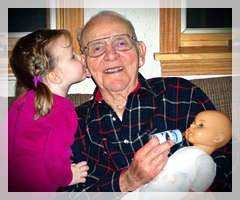
Whenever we say good-bye to my mother-in-law, we always give her a kiss and express our love. Since she’s nearing her 102nd birthday, we understand that each time we see her might be the last. This day of remembrance, however, is a powerful reminder that we can’t see what the next day will bring. There is no guarantee of tomorrow or even the next hour. We don’t know when our last moments with someone may be, whether they are 102 or only 12, dying of cancer or in the prime of life. We mustn’t waste the time with which we’re blessed. Let’s fill our lives, and the lives of others, with love, peace, and joy.

Father in Heaven, may we all learn to live each day as if it is our last. Remind us, O Lord, that this could be the final day, not just for us, but for those we love. May your Spirit guide us so that we truly appreciate the time and people you’ve given us. Let us leave no forgiveness denied, no love unexpressed, no apologies unoffered, no conflicts unresolved, and no thanks unspoken.

I expect to pass this way but once; any good therefore that I can do, or any kindness that I can show to any fellow creature, let me do it now. Let me not defer or neglect it, for I shall not pass this way again. [Stephen Grellet]

Look here, you who say, “Today or tomorrow we are going to a certain town and will stay there a year. We will do business there and make a profit.” How do you know what your life will be like tomorrow? Your life is like the morning fog—it’s here a little while, then it’s gone. [James 4:13-14 (NLT)]

Copyright ©2018 jsjdevotions. All rights reserved.

PARTNERS

Whenever I pray, I make my requests for all of you with joy, for you have been my partners in spreading the Good News about Christ from the time you first heard it until now. And I am certain that God, who began the good work within you, will continue his work until it is finally finished on the day when Christ Jesus returns. [Philippians 1:4-6 (NLT)]

snowy egret - glossy ibisSeveral years ago, my husband came upon a wonderful opportunity to buy a business in another state. He also knew a talented young man capable of running it there. Rather than simply buying the business and hiring the fellow as CEO, my husband loaned him money so that he could buy a share in the business. A firm believer in having what he calls, “skin in the game,” my husband found that partners in a business care about its success far more than any employee ever will. When he and his partner retired, they sold the business to the employees through an ESOP program—now everyone working there is a partner and has “skin in the game.”

Just as there’s a difference between being an employee and a partner, there is a difference between being a member of an organization and being a partner in it. In our northern community, we have 52 members in our home owners’ association. By virtue of moving here and paying their association fees, a resident is a member yet many have little commitment to the welfare of the community and the only time they’re heard from is if they have a complaint. The partners in our community, however, are the ones who attend the meetings, respond to surveys, serve on committees, volunteer on work days, pick up loose trash or broken branches, and show concern for their neighbors. Caring about more than their property, they have invested in their community.

We find a difference between membership and partnership in our churches, as well. Members are names on a roster; partners have a place in the church community. Members are passive but partners are active. Members take and use but partners invest and share. Members complain and criticize but partners build, encourage, and work to correct problems. Members walk away in difficult times but partners stay and try to improve the situation. Members attend church but partners are the church. Reflecting this subtle difference, when people join our old mountain church, rather than becoming members, they now become partners. As partners, they have a vested interest in the success of the church and the welfare of its members.

The church being a partnership is Biblical. There may have been only twelve Apostles and seven elders in the first church but they all were partners in Christ. Luke tells us the believers dedicated themselves to learning about Jesus and their responsibilities as His followers. They worshipped and fellowshipped with one another, shared their resources, and prayed, ate, and celebrated the Lord’s Supper together. People were partners with one another in their common belief and mission and churches partnered with one another by welcoming Christian travelers into their homes, sending relief to those in need, planting new churches, and sharing doctrine, teachers, and resources.

We continue to share a common belief and mission in today’s church but church attendance is only the beginning of achieving that mission. By partnering with the pastor, church staff, and the rest of the congregation, we can bring our unique abilities and gifts together to work toward a common vision and goal: to be God’s hands, mouth and feet.

Member or partner—which one are you?

For you are all children of God through faith in Christ Jesus. And all who have been united with Christ in baptism have put on Christ, like putting on new clothes. There is no longer Jew or Gentile, slave or free, male and female. For you are all one in Christ Jesus. [Galatians 3:26-28 (NLT)]

Copyright ©2018 jsjdevotions. All rights reserved.