
God saved you by his grace when you first believed. And you can’t take credit for this; it is a gift from God. [Ephesians 2:8 (NLT)]
 Unlike the bruised and broken butterflies in yesterday’s devotion, this one looked perfect as it lay on the trail. When we approached, the Viceroy fluttered its wings but only managed to skim a few inches across the gravel. As intact as it looked, one wing was entirely useless. To protect it from walkers’ feet and speeding bicycles, we managed to get the creature off the trail into the grass. Unfortunately, without some sort of butterfly super-glue to reattach the loose wing, while we could help, we couldn’t save it.
Although it was easy to see that saving the butterfly was not within our purview, I’m not sure we understand that about our friends and loved ones. As much as we might want to, we can’t save the people around us. We can’t keep Terry from gambling, stop Mary from dating abusive men, make John quit drinking, or salvage Joan’s failing marriage. Seeing their potential and possibility, we want their lives to be better; they, however, are not our repair projects and their transformation is not our job. We can’t fix our loved ones, change their lives or save them from their own bad decisions. What we want for others is meaningless unless they want it for themselves. We can love them, share God’s word, help to bear their burdens, refuse to enable their destructive choices, and counsel, encourage and pray for them. What we can’t do is save them.
Just as we can’t save the addict from his addiction or the fool from his decisions, we can’t save non-believers from their non-belief. When we share the gospel message, we can impart knowledge but we can’t make people think; we can show people the truth, but we can’t make them believe. Just as we can lead a horse to water but can’t make it drink, we can lead people to Jesus but can’t make them drink of His living water. We can give our testimony, but it is God who opens their hearts. We can sow the seed (and even water and fertilize it) but it is up to that seed and God as to whether or not it will sprout. Let us remember that Jesus will save anyone but not everyone will choose to be saved. Unfortunately, many will reject His offer of salvation. We can witness and pray for their salvation but we can’t save them. We aren’t their savior—Jesus Christ is! In actuality, He’s already done the saving; it’s just up to people to receive His gift of grace.
You will find all true theology summed up in these two short sentences: Salvation is all of the grace of God. Damnation is all of the will of man. [Charles Spurgeon]
 In 1978, Merck Research Laboratories was approached by a scientist who thought a drug he was developing to treat parasitic infections in animals might be useful in treating a parasitic infection in humans. Called onchocerciasis or river blindness, it is transmitted through the bite of black flies and had no known cure. The pharmaceutical company faced a dilemma. Since onchocerciasis is found only in third world areas, the people needing the medication could never afford to buy it. How could the company expend money to develop a drug they’d never be able to sell? Nevertheless, they did and, in 1987, Merck announced that, for as long as was necessary, they would give away the drug (Mectizan®) for the treatment of onchocerciasis to any country that needed it. Eleven years later, they expanded their commitment and started donating Mectizan® for the treatment of Lymphatic filariasis, a mosquito-transmitted disease which can develop into elephantiasis. Since 1987, more than a billion treatments have been donated to thirty-three countries and the World Health Organization forecasts that both diseases could be eradicated by 2020.
 A few years ago, unaware of what the day would bring, a family friend kissed her new husband good-bye as he left for work. While riding the train that morning, the young man collapsed; he died of sudden cardiac arrest less than an hour after that tender kiss. That same year, another friend, whose wife’s body was ravaged by cancer, knew how short the time was he had with her. “While watching TV,” he confided downheartedly, “I looked over at Maureen and realized that next year her chair will be empty and I’ll be alone!” Today is Patriot Day, an annual remembrance of those who died or were injured during the terrorist attacks on September 11, 2001. Thinking about that tragic morning seventeen years ago when so many lost their loved ones unexpectedly, I remembered these two widowed friends. Which is worse: watching the one you love deteriorate and knowing that you’re running out of time for kisses or kissing a loved one in the morning and not knowing that will be the last kiss you’ll ever share?
 Several years ago, my husband came upon a wonderful opportunity to buy a business in another state. He also knew a talented young man capable of running it there. Rather than simply buying the business and hiring the fellow as CEO, my husband loaned him money so that he could buy a share in the business. A firm believer in having what he calls, “skin in the game,” my husband found that partners in a business care about its success far more than any employee ever will. When he and his partner retired, they sold the business to the employees through an ESOP program—now everyone working there is a partner and has “skin in the game.”
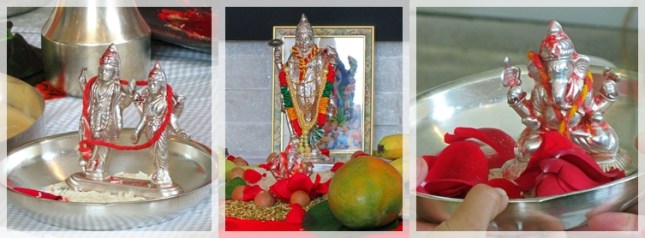 So then, about eating food sacrificed to idols: We know that “An idol is nothing at all in the world” and that “There is no God but one.” For even if there are so-called gods, whether in heaven or on earth (as indeed there are many “gods” and many “lords”), yet for us there is but one God, the Father, from whom all things came and for whom we live; and there is but one Lord, Jesus Christ, through whom all things through whom we live. [1 Corinthians 8:4-6 (NIV)]
  Recently, a pastor shared a troubling experience while at the annual conference for his denomination. Along with other ordained ministers, he was to vote as to whether or not candidates for the ministry would be ordained. While usually a gratifying experience as this ministerial board accepts people into their vocation, on occasion the vote can be heartbreaking. If a candidate receives a negative recommendation from his supervisor, he or she is permitted to offer a defense before the vote is taken. At the last conference, such an instance occurred and, sadly, one individual did not receive an affirmative vote for ordination.
 Devotions of the Heart